How to Pitch Subsidized Lunches to Your CFO
Your CFO won't approve a meal program because "it's nice for the team." Here's the financial case — retention ROI, productivity recovery, and hidden cost elimination — that gets budget approval.
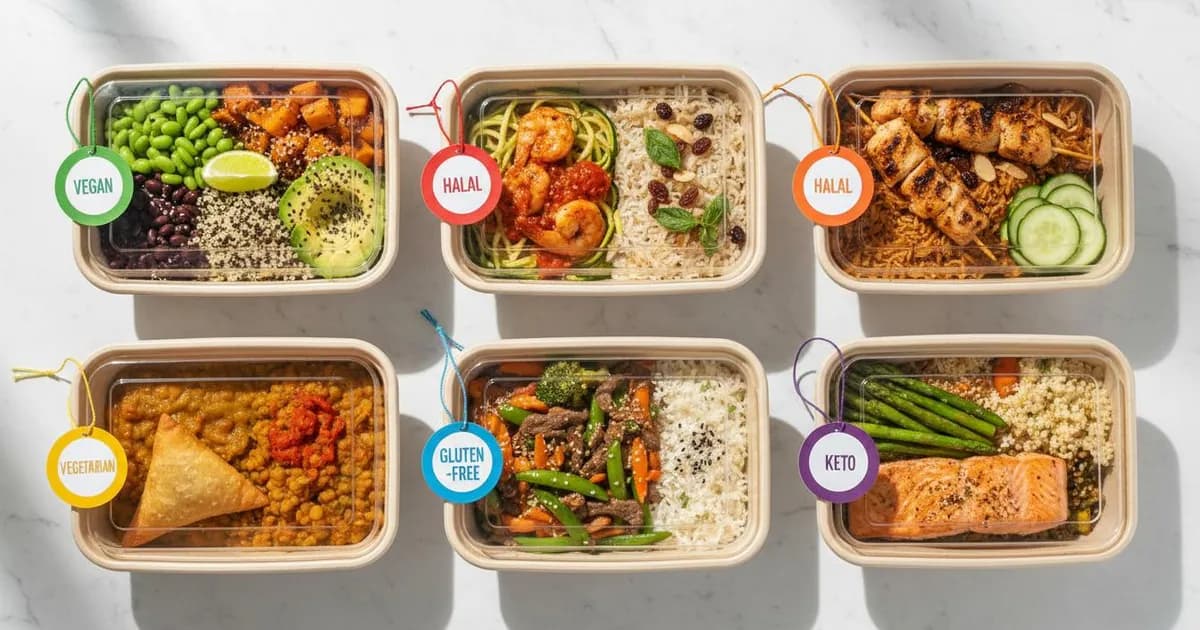
You already know your team would benefit from a meal program. You've seen the articles. You've talked to other office managers who've implemented one. You've watched your team scatter at noon, return at 1:15 with whatever they could grab, and spend the afternoon in a low-energy fog. The problem isn't convincing you — it's convincing the person who controls the budget.
CFOs don't think in morale. They think in numbers. And the good news is that the numbers for subsidized lunch programs are genuinely compelling — you just have to present them in the language a CFO speaks. I've watched dozens of Vancouver companies go through this approval process, and the proposals that succeed all share the same structure. The ones that fail all make the same mistakes.
Here's the playbook.
The Three Mistakes That Kill Budget Proposals
Before I show you what works, let me show you what doesn't — because avoiding these mistakes is half the battle.
Mistake 1: Leading with morale.
"The team would really love this" is not a financial argument. Neither is "other companies do it" or "it would make the office feel nicer." CFOs hear these statements and translate them to: "This person wants to spend money on something that makes people happy but has no measurable return." The proposal gets filed under "nice to have" and dies in the next budget cycle.
Morale is a real benefit of meal programs, but it's a supporting argument, not a leading one. Lead with money. Support with morale.
Mistake 2: Presenting only the cost, not the offset.
"A meal program costs $36,000 per year" makes a CFO's eye twitch. "$36,000 per year, offset by $24,000–$28,000 in eliminated hidden costs, for a net new investment of $8,000–$12,000" gets a very different reaction. The net cost framing is essential because it answers the CFO's immediate mental question: "How much is this actually going to cost us above what we're already spending?"
Mistake 3: Asking for the full program upfront.
"I need $36,000 for annual meal catering" is a large ask with uncertain returns. "I need $1,000 for a four-week pilot that will generate the data to justify or reject a larger investment" is a small, low-risk ask with a built-in decision point. Always propose a pilot first. Let the data do the selling.
The Financial Case: Five Numbers Your CFO Needs
Here's the core argument, structured around five numbers that any CFO can verify and evaluate:
Number 1: Current hidden cost of lunch — $24,000–$28,000/year
Most companies don't know what they're already spending on lunch logistics. Break it down:
| Hidden Cost | Annual Estimate (20-person office) |
|---|---|
| Office manager time coordinating orders (6 hrs/week × $30/hr) | $9,360 |
| Team decision time (5 min/person × 20 people × 150 days × $40/hr) | $10,000 |
| Delivery app markup (25–30% on $15 avg × 15 people × 150 days) | $3,750–$4,500 |
| Error resolution (wrong orders, late deliveries) | $2,500–$3,000 |
| Total hidden cost | $25,610–$26,860 |
This is money the company is already spending — it's just invisible because it's distributed across time waste, platform fees, and opportunity cost rather than appearing as a single budget line. When you present this number first, the CFO realizes the baseline isn't $0 — it's $25,000+.
Number 2: Meal program cost — $30,000–$36,000/year
At $10–$12 per person for a 20-person team eating 3 days per week:
| Tier | Per Meal | Weekly (20 × 3) | Monthly | Annual |
|---|---|---|---|---|
| $10 | $10 | $600 | $2,400 | $30,000 |
| $12 | $12 | $720 | $2,880 | $36,000 |
Number 3: Net new cost — $3,000–$11,000/year
Program cost minus hidden cost offset:
- Low end: $30,000 - $26,860 = $3,140
- High end: $36,000 - $25,610 = $10,390
This is the actual incremental investment. Not $36,000. Not even close. Most CFOs are surprised by how small the net number is.
Number 4: Retention value — $55,000–$110,000 per retained employee
Employee replacement cost is 50–100% of annual salary. For a Vancouver office with an average salary of $65,000, each avoided departure saves $32,500–$65,000 in direct replacement costs (recruitment, training, onboarding, productivity loss during the gap).
A meal program alone won't prevent turnover. But it contributes to the workplace environment that retains employees. If the program helps retain even one additional employee per year, the retention savings ($32,500–$65,000) exceed the net program cost ($3,000–$11,000) by 3–20x.
Number 5: Productivity recovery — $30,000–$60,000/year
When lunch is delivered, the average employee recovers 20–30 minutes of productive time per meal day (no travel time to find food, shorter break, faster return to work). For a 20-person team on a 3-day program:
- Conservative: 20 min × 20 people × 150 days × $40/hr = $40,000
- Generous: 30 min × 20 people × 150 days × $40/hr = $60,000
Even discounting by 50% to be conservative: $20,000–$30,000 in recovered productivity.
The summary table a CFO wants to see:
| Line Item | Annual Value |
|---|---|
| Program cost | -$30,000 to -$36,000 |
| Hidden cost elimination | +$25,000 to +$27,000 |
| Productivity recovery (50% discount) | +$20,000 to +$30,000 |
| Retention (1 employee saved) | +$32,500 to +$65,000 |
| Net annual impact | +$41,500 to +$86,000 |
The program isn't a cost. It's a positive-ROI investment. That's the sentence your CFO needs to hear, supported by the numbers above.
Summary: The financial case rests on five numbers: hidden costs already being spent ($25K+), program cost ($30–36K), net new investment ($3–11K after offsets), retention value ($32.5–65K per saved employee), and productivity recovery ($20–30K). Net annual impact: +$41,500 to +$86,000.
Last reviewed: March 2026. Data current as of this date.
Introduction
Most corporate meal program proposals fail not because the economics don't work, but because they're presented as morale investments rather than financial ones — a framing mismatch that guarantees rejection from finance-driven decision-makers, according to corporate budgeting best practices.[1] The ROI of subsidized lunches is real and measurable, but it only matters if you can communicate it in the language your CFO speaks: net cost, hidden cost offset, retention economics, and productivity metrics.
After watching dozens of Vancouver companies navigate the meal program approval process, I've seen the same pattern: an enthusiastic office manager or HR lead presents a heartfelt case about team culture and employee happiness, and the CFO responds with "that's nice, but we can't justify the expense right now." The proposal dies. Three months later, two employees leave, costing the company $130,000 in replacement costs, and nobody connects the dots.
My Great Pumpkin serves companies across Metro Vancouver as a B2B platform connecting 120+ restaurants with corporate clients. At $10–$15 per person, our meal programs aren't expensive in absolute terms — but "not expensive" isn't enough to get budget approval. What gets approval is demonstrating that the program costs less than the problem it solves. And that's what this article is designed to help you prove.
What follows is the complete CFO pitch framework: the numbers, the presentation structure, the objection responses, and the pilot proposal that turns "maybe" into "yes." Every element has been tested across real approval conversations in Vancouver offices.
Quick Answer: How Do You Get CFO
Approval for a Meal Program?
Present a net-cost analysis showing the program's $30,000–$36,000 annual cost is offset by $25,000+ in hidden cost elimination, $20,000–$30,000 in productivity recovery, and $32,500–$65,000 in retention value per avoided departure — then propose a $1,000 four-week pilot rather than a full annual commitment, an approach consistent with CPA Canada guidelines on investment-based budgeting.[1] At My Great Pumpkin, we provide the transparent per-meal pricing and consolidated billing that make the financial case easy to build and verify.
The honest answer: you don't convince a CFO that lunch is important. You convince them that not having a meal program is more expensive than having one. The hidden costs of ad hoc lunch coordination ($25,000+/year), the productivity loss from extended lunch breaks ($20,000–$30,000/year), and the retention risk ($32,500–$65,000 per departure) add up to an annual cost that significantly exceeds a structured meal program at $30,000–$36,000.
The tactical move: never ask for the full program budget first. Ask for a $1,000 four-week pilot. That's a trivially small commitment that generates real data — participation rates, time savings, satisfaction scores — which makes the subsequent full-program request a data-driven decision rather than a faith-based one. CFOs approve data. They reject hope.
The Presentation Structure That Gets Approved
Slide-by-Slide Framework
I've helped office managers structure these presentations across multiple Vancouver companies. Here's the format that consistently gets budget approval:
Slide 1: "We're Already Spending $25,000/Year on a Broken System"
Open with the hidden cost analysis. This reframes the conversation from "we want to add a new expense" to "we're already spending money inefficiently and here's how to fix it."
Break down the hidden costs specific to your office:
- Office manager hours spent on lunch coordination (track this for two weeks before presenting)
- Delivery app markup on current orders (pull receipts from the last 3 months)
- Team time spent deciding and ordering (estimate conservatively)
- Error resolution costs (count wrong orders in the last month)
The goal of this slide: The CFO should think, "I didn't realize we were already spending this much on a problem I didn't know we had."
Slide 2: "A Structured Program Costs $30,000–$36,000 — But the Net New Cost Is $3,000–$11,000"
Present the program cost alongside the hidden cost offset. Show the math:
- Gross cost: $30,000–$36,000
- Hidden cost elimination: -$25,000–$27,000
- Net new investment: $3,000–$11,000
The goal of this slide: The CFO should think, "The incremental cost is much smaller than I expected."
Slide 3: "The Return Exceeds the Investment"
Present productivity recovery and retention economics:
- Productivity: $20,000–$30,000/year (conservatively estimated)
- Retention: $32,500–$65,000 per avoided departure
- Net annual impact: +$41,500 to +$86,000
The goal of this slide: The CFO should think, "This isn't a cost — it's a positive-ROI investment."
Slide 4: "Here's What I'm Proposing"
Don't ask for $36,000. Ask for a four-week pilot:
- Duration: 4 weeks
- Frequency: 2 days per week
- Cost: ~$800–$960 (20 people × $10–$12 × 2 days × 4 weeks)
- Success metrics: participation rate, time savings, satisfaction survey, meal waste
- Decision point: after 4 weeks, review data and decide on full program or stop
The goal of this slide: The CFO should think, "This is a small, low-risk bet with a clear decision framework."
Slide 5: "The Vendor Is Already Selected"
Present My Great Pumpkin (or whatever vendor you've evaluated) with:
- Per-meal pricing: $10–$12/person
- Delivery coverage: downtown, East Van, Burnaby, Richmond
- Billing: one consolidated monthly invoice (no receipt chaos)
- Flexibility: same-day headcount adjustment, no long-term contract for pilot
- Dietary: vegetarian, halal, gluten-free as standard
The goal of this slide: The CFO should think, "They've done the homework. This isn't a vague idea — it's a ready-to-execute plan."
Handling Objections
Every CFO raises the same 3–4 objections. Here are the prepared responses:
"We can't afford this right now."
Response: "We're already spending $25,000/year on the current broken system. The net new cost is $3,000–$11,000, and the pilot costs less than $1,000. This isn't a new expense — it's a more efficient allocation of money we're already spending."
"What if people don't use it?"
Response: "That's what the pilot is for. If participation is below 60% after four weeks, we stop. But across industry benchmarks, corporate meal programs consistently see 70–85% participation when the food is good and the logistics are simple. We'll have real data within a month."
"Can't people just buy their own lunch?"
Response: "They can, and they do — at $15–$20 per meal through delivery apps with a 25–30% platform markup. The company isn't saving money when employees buy their own lunch; it's just shifting the cost and losing the team-building benefit. We're also losing 30–45 minutes of productivity per person per lunch break when they leave the office to find food."
"What about people with dietary restrictions?"
Response: "The vendor handles vegetarian, halal, and gluten-free as standard options at no additional cost. Individual dietary profiles are stored in the system, so the office coordinator doesn't need to manage restrictions manually for each order."
"I need to think about it."
Response: "Absolutely. I've put together a one-page cost summary you can review. The pilot ask is $800–$960 for four weeks — if the data doesn't support continuing, we stop. Can I put the pilot start date on the calendar for [2 weeks from now] so we have a decision timeline?"
The last response is the most important. "I need to think about it" is a polite no unless you attach a specific next step and timeline. The pilot start date creates a decision forcing function.
Summary: The 5-slide presentation structure moves from "we're already spending $25K on a broken system" through "net new cost is only $3–11K" to "here's a $1,000 pilot to prove it." Handle objections with pre-built responses that redirect from emotion to economics. Always end with a specific next step and timeline.
The Pilot Program: Your Trojan Horse
Why Pilots Beat Full Proposals
CFOs reject annual commitments. They approve experiments.
A $36,000/year meal program is a strategic decision that requires board discussion, budget reallocation, and executive buy-in. A $1,000 four-week pilot is a tactical experiment that a CFO can approve in a single meeting.
The pilot framework:
| Parameter | Value |
|---|---|
| Duration | 4 weeks |
| Frequency | 2 days/week (anchor days) |
| Team size | 20 people |
| Per person | $10–$12 |
| Total cost | $800–$960 |
| Success threshold | 65%+ participation, positive satisfaction survey |
What you measure during the pilot:
Participation rate. What percentage of in-office employees eat the delivered lunch? Above 70% is strong. Below 50% suggests a food or timing problem, not a concept problem.
Time savings. Track the office coordinator's time on lunch logistics before and during the pilot. The delta is usually 4–5 hours/week.
Satisfaction survey. Simple 3-question survey at the end of week 4: Would you want this to continue? Rate the food quality (1–5). Would this influence your decision to stay at the company? (Yes/No/Maybe)
Waste tracking. How many meals go uneaten? Below 10% waste means the ordering process is well-calibrated. Above 20% means headcount confirmation needs tuning.
After the pilot, you have data. And data gets budgets approved.
The Post-Pilot Conversation
When the pilot data comes back — and if you've set it up correctly, it will come back strong — the follow-up conversation with the CFO is very different from the initial pitch:
"We ran a four-week pilot. Participation was 78%. The office coordinator saved 5 hours per week on lunch logistics. 92% of the team wants it to continue. Zero meals were wasted in the last two weeks after we tuned the headcount process. I'm requesting approval for a 3-day-per-week program at $2,400/month, which is $600/month more than the 2-day pilot but significantly less than the $4,300 we were spending monthly on ad hoc ordering."
That's not a pitch. That's a status report. And CFOs approve status reports that show positive results.
Summary: A $1,000 four-week pilot is the tactical entry point that bypasses CFO resistance to large commitments. Measure participation (target 70%+), time savings, satisfaction, and waste. Post-pilot, the conversation shifts from pitch to data-backed status report — and CFOs approve data.
Ready to simplify office meals?
Join 100+ Vancouver offices enjoying hassle-free lunch delivery. Free tasting, no contract.
Request a Demo →Industry-Specific Angles
Tailoring the Pitch by Company Type
The financial case is the same across industries, but the supporting arguments differ. Here's how to tailor the pitch based on who your CFO is:
IT Companies
Lead with developer productivity. CTOs and IT-company CFOs understand that a developer's time costs $60–$80/hour and that flow-state interruptions are expensive. Frame lunch delivery as a productivity tool that recovers 50 minutes of developer time per meal day. The annual productivity recovery ($50,000–$112,000 for a 15–30 person dev team) makes the meal program cost look trivial.
Law Firms
Lead with billable hour preservation. Every minute a lawyer spends deciding on lunch is a minute not billed to a client. A 15-person firm where associates bill at $200–$400/hour loses measurable revenue to lunch logistics. Position the meal program as billable-hour protection.
Real Estate Brokerages
Lead with agent retention. Brokerages lose agents to competitors constantly, and each departure costs $15,000–$40,000 in desk fee revenue and recruitment. A $27,000/year meal program that helps retain one producing agent pays for itself immediately.
Nonprofits
Lead with turnover cost avoidance. Nonprofit CFOs are the most budget-conscious finance leaders you'll face, but they also manage the highest turnover rates. Frame the meal program as a retention investment that costs less than one avoided departure, and propose a hybrid funding model (60% organization, 40% employee) to reduce the organizational commitment.
Construction Companies
Lead with productivity per labor hour. Construction project managers calculate everything in labor-hour costs. A 50-person crew losing 15 minutes of excess lunch break costs $625–$1,000/day in lost productivity. A delivered lunch program at $500–$750/day eliminates that loss. The math is immediate and concrete.
Summary: Tailor the pitch by industry: developer productivity for IT, billable hours for law firms, agent retention for real estate, turnover avoidance for nonprofits, and labor-hour recovery for construction. The financial structure is identical; the emotional hook varies.
Conclusion
The meal program proposals that succeed all follow the same pattern: lead with money, not morale. Your CFO doesn't need to be convinced that lunch is nice. They need to be shown that the hidden costs of the current system ($25,000+/year), the productivity loss from unstructured lunch breaks ($20,000–$30,000/year), and the retention risk ($32,500–$65,000 per departure) add up to more than a structured program would cost.
At $10–$12 per person through My Great Pumpkin, a 20-person office runs a 3-day meal program for $2,400–$2,880/month. The net new cost after eliminating hidden ad hoc spending is $3,000–$11,000/year — and the ROI from productivity recovery and retention makes the program a positive-return investment, not a cost center.
But don't ask for the full program on day one. Ask for a $1,000 four-week pilot. Let the data — 78% participation, 5 hours/week saved, 92% team approval — make the case that no presentation ever could. CFOs approve experiments with clear decision frameworks. Give them one.
The office managers who get meal programs approved aren't the ones who argue most passionately about team culture. They're the ones who walk into the CFO's office with a spreadsheet, a pilot proposal, and a specific start date. Be that person.
Build Your CFO-Ready Business Case
Get pricing and ROI data for your meal program proposal: https://www.mygreatpumpkin.com/demo
Summary: Lead with money, not morale. Present hidden costs ($25K+), net new investment ($3–11K), and positive ROI ($41.5–86K annual impact). Ask for a $1,000 pilot, not a $36K commitment. Let data — not passion — close the deal.
Calculate your meal budget
Not sure which meal delivery option fits your budget? Our free calculator compares meal kits, prepared meals, restaurants, and home cooking side-by-side in CAD.
References
[1] CPA Canada, "Financial Management and Budgeting Best Practices for Canadian Corporations," 2026. Guidelines on investment-based budgeting, ROI analysis frameworks, and operational cost management. https://www.cpacanada.ca/
[2] Conference Board of Canada, "Workplace Benefits and Employee Retention Economics," 2026. Research on corporate benefits ROI, employee replacement costs, and workplace investment strategies. https://www.conferenceboard.ca/
Frequently Asked Questions
What if our CFO wants hard data on retention impact before approving even a pilot?
That's a chicken-and-egg problem — you can't prove retention impact without running the program. Redirect the conversation to what you can prove: the hidden cost analysis (which uses your own company's current spending data, not projections) and the productivity recovery (which is based on time measurement, not speculation). The pilot itself generates the retention-adjacent data — satisfaction surveys, participation rates, and qualitative feedback — that builds the case for the full program. Frame the pilot as the data-generation mechanism the CFO is asking for.
How do we handle the pilot if some team members don't want to participate?
Participation should be opt-in, not mandatory. In practice, 70–85% participation is the norm for well-run pilots with good food. The 15–30% who don't participate usually have scheduling conflicts (out of office, external meetings) rather than preference objections. If participation is below 60%, that's a signal to investigate — it's usually a timing or food quality issue rather than a concept rejection. Low participation data is still useful data: it tells you what to adjust before the full program, or it tells you the program isn't right for your team.
Should the office manager or HR present the business case?
Whoever has the most financial credibility with the CFO. If HR has a track record of presenting data-driven proposals, HR should present. If the office manager has the operational data (time tracking, expense records), they should co-present with whoever owns the budget relationship. The worst-case scenario is an emotional pitch from someone the CFO doesn't associate with financial analysis. The best case: the office manager provides the operational data, and a manager or director with budget authority presents the financial case. Partner up.
What if the CFO says yes to the pilot but then forgets about the follow-up decision?
Schedule the post-pilot review meeting before the pilot starts — literally put it on the calendar during the approval conversation. "I'd like to schedule a 15-minute review for [date 5 weeks from now] to present the pilot results and discuss next steps." This creates a forcing function. Without a scheduled review, pilots drift into indefinite status, and budget approval window closes as the CFO moves on to other priorities.
Our company is going through cost cuts — is this the wrong time to propose a meal program?
It's actually a strong time if you frame it correctly. During cost cuts, retention becomes more important (replacing departing employees during a lean period is even more costly), and hidden cost elimination resonates more (the CFO is actively looking for inefficiencies). The pitch shifts to: "We're already spending $25,000 on a broken lunch system. For $3,000–$11,000 in net new cost, we can replace it with a program that also reduces turnover risk during a period when every departure hurts more." The cost-cut environment makes the hidden-cost-offset argument stronger, not weaker.
Related Articles

Catering for Remote Team Monthly Meetups in Vancouver
Make remote team meetups memorable with catered meals in Vancouver. Flexible venues, group sizes 10-
Multi-Floor Office Meal Delivery in Vancouver
Catering for multi-floor offices in Vancouver. Coordinated delivery across floors, departments, and

Late-Night Office Dinners for Vancouver Tech Startups
Late-night dinner delivery for Vancouver tech teams working after hours. Hot meals at 7-9 PM from $1
Ready to streamline your office meals?
Join 100+ Vancouver offices enjoying hassle-free lunch delivery.
Request a Demo