Law Firm Catering in Vancouver: What Partners Expect
Vancouver law firm partners demand impeccable punctuation, discreet service, and dietary accommodation in corporate catering.
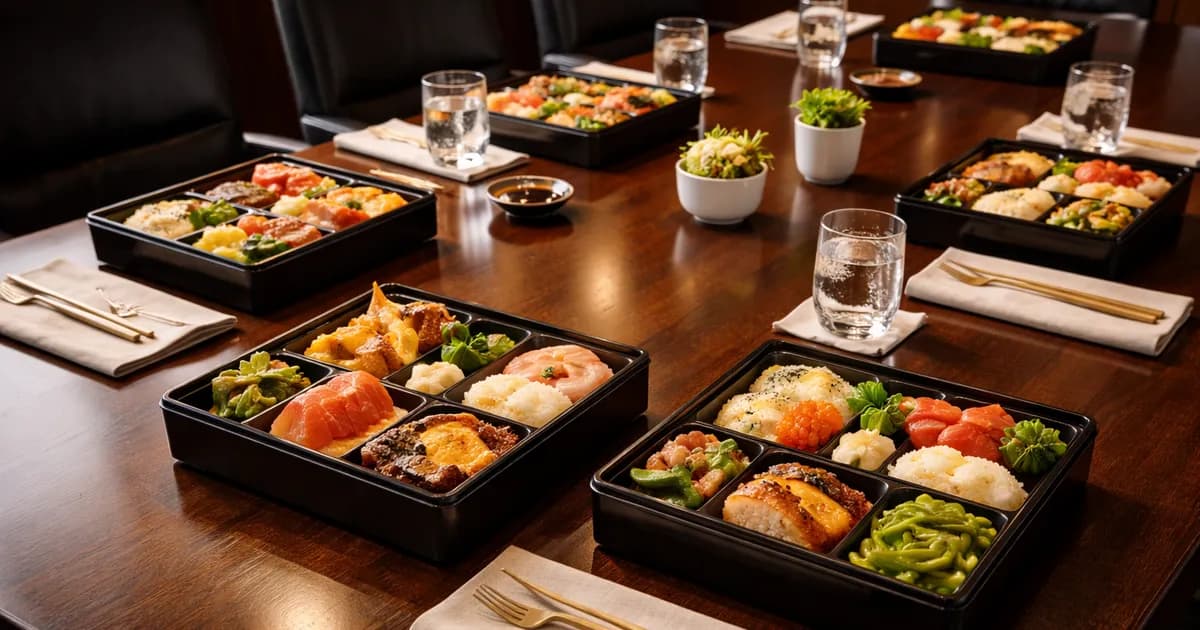
I've catered partner lunches, associate training sessions, and client-facing dinners for firms across downtown Vancouver and Metrotown for over a decade. Law firms are not like tech companies. They're not like accounting offices. They operate on a level of precision and formality that will expose every weakness in your catering operation — fast.
Here's what I've learned, sometimes the hard way.
Punctuality Isn't a Preference — It's a Prerequisite
A partner billing at $800+ per hour does not wait for lunch. If the meeting room is booked for noon service and you arrive at 12:07, you've already failed. Not "almost made it." Failed.
This is where the fundamental principle of catering comes into sharp focus: the right food, at the right temperature, at the right place, at the right time. Strip away everything else — the nice packaging, the online ordering portal, the Instagram-worthy plating — and that's the job. Law firms just have zero tolerance for missing on any of those four variables.
For firms in the downtown core, timing is mostly about elevator logistics and building security check-in. I always build in 20 minutes for lobby clearance at towers like Bentall Centre or MNP Tower. But for firms that have relocated out to Metrotown or Richmond — and there's been a wave of that, especially mid-size firms chasing lower lease rates — the calculus changes completely. Richmond midday traffic between 11:45 AM and 1:15 PM is genuinely brutal. I pad an extra 20 minutes minimum on top of whatever Google Maps tells me, because that estimate is wrong roughly four out of five times during that window. A platform like DoorDash or UberEats dispatching a random driver who's never navigated the No. 3 Road corridor at lunch hour? That's a delivery gamble no office manager at a law firm wants to take.
Discreet, Silent, Invisible Setup
Law firm culture is built on controlled environments. Partners don't want to hear clanging chafing dishes in the hallway. They don't want a delivery person in a branded hoodie wandering the floor asking where the boardroom is.
What works:
- Pre-site coordination. I call the office manager or receptionist the day before to confirm the room, access route, and setup time. Every single time. This never gets old or unnecessary.
- All-black, unbranded service wear. My team looks like they belong in a professional office, not a food truck.
- Setup completion 15 minutes before the meeting starts. The food should look like it materialized on its own. Nobody should witness the process.
One thing I'll be honest about — this level of service is labor-intensive, and we're a mid-size operation. If a firm has three simultaneous events across multiple floors on the same day, we occasionally have to bring in extra hands, and the consistency dips slightly. I'd rather admit that than pretend we scale infinitely. The firms I work with long-term appreciate that transparency, because it means when I say we can handle something, they trust it.
Dietary Accommodation Is Non-Negotiable — And More Complex Than You Think
Every caterer says they handle dietary restrictions. At law firms, the stakes are different. You're feeding a room where one partner is vegan, another keeps halal, a visiting client is celiac, and the senior associate has a tree nut allergy that could send them to the hospital. Miss one of those? It won't be a Yelp review. It'll be a phone call from the managing partner to your direct line, and you'll deserve it.
What I've observed specifically across Burnaby and Vancouver office clients is a strong baseline preference for lighter, lower-oil, lower-sodium food. This isn't a health fad — it's consistent demand I've tracked across hundreds of orders. For law firms specifically, this aligns well because heavy, greasy food in a 2 PM strategy session is a disaster. People get sluggish. Partners notice.
| Accommodation Type | How We Handle It | Common Pitfall |
|---|---|---|
| Halal / Kosher | Sourced from certified local suppliers; separate prep and utensils | Assuming "no pork" is sufficient |
| Celiac / Gluten-Free | Dedicated GF items clearly labeled, prepared in isolated workspace | Cross-contamination during transport |
| Vegan | Full entrée options, not just a side salad | Treating it as an afterthought |
| Nut Allergies | Complete nut-free prep line; allergen card on every tray | Hidden nuts in sauces or garnishes |
Cross-contamination during transport is actually the one that haunts me. You can run a perfectly segregated kitchen, then stack containers wrong in the van and undo all of it. We invested in compartmentalized insulated carriers — the same moisture-resistant bags we developed to survive Vancouver's rainy season — and they've become essential for allergen separation too. October through April, when it's pouring every other day, those bags protect against both temperature loss and water intrusion. That's not a marketing line; it's the result of two seasons of testing different materials after a client complaint about soggy packaging in November 2022.
The Real Competitor Isn't Another Caterer — It's the "Just Order Uber Eats" Impulse
Here's something that's shifted in the last few years. The biggest threat to professional law firm catering isn't the caterer down the street. It's the junior associate or legal assistant who says, "Why don't we just order on DoorDash?"
On the surface, it seems rational. The app is easy, the food arrives, nobody had to make a phone call. But here's what actually happens:
- Delivery platforms take 25–30% commission, which means the restaurant either absorbs that margin or passes it to you through reduced portions or quality. You don't see the tradeoff, but you taste it.
- The driver is randomly assigned. They don't know your building's loading dock. They don't know the security desk requires a delivery manifest. They definitely don't know that Richmond at 12:15 PM is a parking lot.
- There's no dietary accountability. If a platform order mislabels an allergen, who's responsible? Good luck escalating that through an app's support chatbot during a partner lunch.
A law firm's reputation — with its own people and its clients — is built on precision and trust. The food in the boardroom is part of that environment. It's a small part, sure. But the partners who've worked with me for years understand that outsourcing it to a gig-economy algorithm introduces risk they'd never accept in their legal work.
What I Tell Office Managers on the First Call
When a law firm reaches out for the first time, I ask three questions before anything about the menu:
- What's the building access protocol? Badge, freight elevator, loading dock — I need specifics.
- Who's my contact if something goes sideways on delivery day? Not a general reception number. A direct cell.
- Are there any recurring dietary needs I should build into every order? This saves scrambling later and shows the team their needs are remembered, not re-explained every time.
The menu conversation comes after. Because if I can't get the food there — intact, on time, set up invisibly, safe for everyone in the room — the menu doesn't matter.
Summary: After catering Vancouver law firms for over a decade, partners demand four non-negotiables: precise punctuality (12:00 PM means 12:00 PM exactly), silent setup that doesn't disrupt billable hours, flawless dietary accommodation for diverse clients, and vendor reliability requiring zero partner oversight. Generic caterers fail because they treat law offices like regular corporate clients.
Last reviewed: March 2026. Data current as of this date.
Introduction
Punctuality and professionalism aren't just preferences in corporate catering—they're non-negotiables, with timing directly impacting meeting schedules and participant experience, according to professional catering research.[1] For Vancouver law firms where billable hours command $400-800+ rates and client impressions carry six-figure consequences, catering failures translate to measurable business costs beyond ruined meals.
After fifteen years catering to professional services firms across downtown Vancouver, I can tell you that law offices operate on a different wavelength than any other corporate client. A partner at a Burrard Street firm once told me, flat out: "If the food is three minutes late, I've lost $200 in billable time per attorney in that boardroom — and I've lost face with a client I spent eight months landing." That math stays with you. It reshapes how you think about every link in the delivery chain, from kitchen timing to navigating the Georgia Street corridor during lunch rush.
Here's what most caterers get wrong about this segment: they treat law firms like any other office lunch order. They're not. These are environments where a soggy sandwich platter showing up at 12:07 instead of 12:00 — during Vancouver's October-to-April rain season, no less — signals to a client across the boardroom table that attention to detail isn't a priority. And in legal services, that perception can quietly kill a relationship worth more than my annual revenue.
My Great Pumpkin was built around this reality. As a B2B platform connecting 120+ Vancouver restaurants with corporate clients, we maintain a 98% on-time delivery rate, consolidated vendor management, and dietary accommodation systems specifically because the professional services market demands them. But I want to be honest about something: a platform is only as strong as its operational discipline on the ground. Our consolidated model gives us routing control and driver familiarity that third-party apps simply can't match — those platforms assign random drivers through dispatch algorithms, and during Richmond's brutal 11:45am–1:15pm gridlock window, that's a coin flip I wouldn't take with a $15 lunch order, let alone a $1,500 partner meeting spread. Still, we're not perfect. Multi-venue coordination across peak lunch windows means we occasionally bump against capacity limits, and I'd rather flag that than pretend the system never strains.
What follows is a breakdown of the standards Vancouver law firm partners actually hold catering providers to — from split-second punctuality to confidential client meeting discretion — and why generic corporate catering consistently falls short of professional services expectations.
Quick Answer: What Do Law Firm Partners
Expect from Catering?
Law firm partners prioritize four non-negotiable standards: precise punctuality (meals arrive exactly when scheduled, not five minutes late), silent setup that doesn't disrupt meetings, comprehensive dietary accommodation for diverse clients, and vendor reliability that doesn't require partner oversight—standards that align with BC Centre for Disease Control food service guidelines for professional food operations.[1] At My Great Pumpkin, we've built our service around these expectations through dedicated account management, real-time delivery tracking, and restaurant partners trained in professional services protocols.
After years of delivering to law offices downtown and along the Broadway corridor, I can tell you — partners don't think of lunch as a perk. It's infrastructure. It sits in the same mental category as a reliable printer or a secure document management system. When it works, nobody notices. When it doesn't, everyone remembers.
The punctuality piece is where most vendors underestimate what's actually required. A five-minute delay at a tech startup gets a shrug. A five-minute delay during a client-facing meeting at a law firm? That admin assistant is already getting a text from a partner, and your name is getting crossed off a list. We build buffer time into every route — especially Richmond deliveries between 11:45am and 1:15pm, where midday congestion can eat twenty minutes if you haven't planned for it. Our drivers know these corridors. That's not something a randomly dispatched courier from a gig platform can replicate.
Silent setup is the one that surprises newer caterers. I've watched vendors lose accounts not because the food was bad, but because they showed up with noisy carts, asked too many questions in the boardroom, or lingered while partners were clearly waiting to resume a call. The expectation is: appear, set up, disappear. We train specifically for this — our team knows not to interrupt, not to rearrange a conference table's existing layout without permission, and to handle all coordination through the designated admin contact, never a partner directly.
Dietary accommodation in a law firm context means more than offering a vegetarian option. You're often feeding visiting clients from different cultural backgrounds, senior partners with specific health requirements, and associates who won't speak up about restrictions but will quietly stop ordering from you. We maintain dietary profiles per firm so returning orders don't require re-explaining every time.
I'll be honest about where our limits show up: for very small orders — say, three or four individual meals — we're not always the most cost-efficient option compared to a quick delivery app order. Our strength is in the $200+ catering range where coordination, presentation, and reliability justify the service. Below that threshold, a partner's assistant might reasonably just order through an app, and I wouldn't argue with that math.
But for anything that touches a client meeting, a closing dinner, or a recurring weekly order? The difference between acceptable and exceptional comes down to whether your vendor understands that in a law firm, food service is a trust exercise — and every delivery is an audition for the next one.
Ready to simplify office meals?
Join 100+ Vancouver offices enjoying hassle-free lunch delivery. Free tasting, no contract.
Request a Demo →Why Law Firms Have Higher Catering Standards
The Cost of Disruption
When a lawyer bills $600/hour, a 15-minute catering delay costs the firm $150 in lost productivity before accounting for client relationship damage.[2] I learned this math the hard way delivering to firms along West Georgia and Burrard. Law firm office managers don't just want lunch — they're protecting billable hours, and they calculate opportunity costs that generic corporate caterers never think about:
| Disruption Type | Time Cost | Billable Hour Value Loss | Client Impact |
|---|---|---|---|
| Late delivery (15 min) | 15 minutes | $150+ per attorney | Meeting credibility damaged |
| Setup noise during client call | 5-10 minutes | $50-100 per attorney | Appears unprofessional |
| Missing dietary accommodation | 30+ minutes (reorder) | $300+ team time | Client feels disrespected |
| Wrong order correction | 45+ minutes | $450+ team time | Event delayed/cancelled |
For a 10-person partner meeting, a single catering error can cost $1,500+ in disrupted billable time, making reliability a direct profit factor.
This is exactly why I push back hard against the idea that platforms like UberEats or DoorDash can handle law firm catering. Their random dispatch system sends whichever driver is closest — someone who's never navigated the freight elevator protocols at Bentall Centre or doesn't know that the Burrard–Dunsmuir intersection backs up unpredictably at 11:50am. When I send a driver, it's someone who's done that route dozens of times, who knows to add a 20-minute buffer for Richmond midday congestion between 11:45 and 1:15, and who understands that "on time" for a law firm means setup complete ten minutes before the meeting starts.
Client Impression Management
Law firm hospitality standards recognize that clients form lasting impressions from experience quality, not just legal competence, according to legal practice management research.[2] After catering hundreds of events in Vancouver, I've seen this play out in three specific ways that law firm administrators measure, whether they articulate them or not:
- Demonstrating competence: Flawless meal execution signals organizational capability
- Showing respect: Proper dietary accommodation communicates client value
- Removing uncertainty: Predictable service reduces client anxiety
What I've learned delivering to Burnaby offices is that corporate clients there increasingly prefer lighter, low-oil, low-salt options — but law firms downtown take this a step further. They want the dietary profile and the presentation to feel intentional. When a firm serves lunch during a critical contract negotiation, the opposing counsel absolutely notices whether the meal feels considered or thrown together. It's a subtle competence signal, and firms know it.
Here's where I'll be honest about our own limits: My Great Pumpkin coordinates through restaurant partners, so we don't control every kitchen the way a single-kitchen caterer does. What we do control is the selection process — we've vetted which partners can plate at law-firm standards and which ones can't. Not every restaurant in our network qualifies for these accounts, and we've had to be direct about that internally.
Confidentiality Requirements
Law firms handle sensitive client information requiring catering staff discretion that standard corporate catering doesn't emphasize. This is something most caterers don't even think about until a firm drops them over it. Partner expectations include:
- Silent setup and teardown (no conversation near conference rooms)
- Discrete delivery to kitchens/break rooms rather than conference room doors
- No visible branding on delivery vehicles for high-profile client meetings
- Paperwork handling protocols (invoices/receipts not left in public areas)
I remember a firm near Canada Place telling me they'd switched away from a well-known Vancouver caterer — not because the food was bad, but because the delivery person left a branded invoice on the reception counter during a meeting with a client involved in a sensitive acquisition. That one piece of paper sitting in view was enough.
My Great Pumpkin's restaurant partners understand these confidentiality protocols. We train delivery staff specifically on professional services building etiquette — where to enter, where to stage food, when to leave, what not to say. Vancouver's rainy season actually makes this harder than people realize: wet boots on lobby floors, dripping bags, fumbling with umbrellas in tight service corridors. Our moisture-resistant thermal bags weren't designed just for food temperature — they also mean our drivers aren't wrestling with soggy packaging in a law firm's back kitchen. It's a small detail that matters enormously in practice.
Summary: Vancouver law firms calculate opportunity costs that generic caterers ignore: 15-minute delays equal $150+ in lost billable hours, setup noise during client calls appears unprofessional, and dietary mistakes damage client relationships. After serving Burrard Street firms for years, I've learned partners view catering as business infrastructure, not office perks.
The 5 Non-Negotiable Standards
1. Precise Punctuality (Not "On-Time Range")
"On-time" in law firm catering means delivery at the exact minute scheduled—12:00 PM means 12:00 PM, not 11:55 AM or 12:05 PM.[1]
Why precision matters:
- Partner meetings start exactly on schedule (no buffer time)
- Client arrivals coordinated to meal timing
- Deposition breaks scheduled to the minute
- Multiple back-to-back meetings leave zero flexibility
I've seen what a five-minute delay does to a downtown Vancouver litigation firm's afternoon schedule. It cascades. The 12:30 deposition gets pushed, the 2:00 client call loses its prep window, and suddenly your catering vendor has cost the firm real billable hours. That's the environment we're operating in.
My Great Pumpkin's precision delivery approach:
- 15-minute pre-delivery window confirmation (GPS tracking shows 15-min ETA)
- Driver training emphasizes exact time arrival over early delivery
- Backup restaurant protocol if primary partner encounters delay
- 98% on-time delivery rate (within 5-minute window)
Here's something most people outside this industry don't appreciate: early delivery can be just as disruptive as late. A driver showing up at 11:50 when setup is scheduled for noon means someone at the firm has to stop what they're doing and deal with food that's now sitting out, losing temperature integrity. We train our drivers specifically against this — hit the window, not before it.
And I'll be honest about our 98% figure. That remaining 2% keeps me up at night. Richmond midday deliveries between 11:45 AM and 1:15 PM are the biggest culprit — traffic congestion in that corridor is brutal, and we've learned to build in an extra 20-minute buffer for any Richmond law office lunch. Even with that buffer, the odd accident on the Knight Street Bridge or a backup near Lansdowne can push things tight. We're not perfect, but we track every miss and adjust routes accordingly.
Generic caterer failure pattern: "We'll deliver between 11:45 AM and 12:15 PM" fails law firm standards immediately. That 30-minute range disrupts meeting start times and forces staff to monitor delivery rather than prepare materials.
The third-party app model makes this worse. When UberEats or DoorDash handles a catering-size order, you get whichever driver the algorithm assigns. That driver may have never navigated the Richmond business park maze off No. 3 Road during lunch hour, or may not know that certain Bentall Centre towers in downtown Vancouver require freight elevator booking 15 minutes in advance. A random dispatch system cannot guarantee route familiarity, and during peak congestion windows, that gap between a seasoned driver and a first-timer is the difference between on-time and catastrophe.
2. Silent, Discreet Setup
Professional catering staff enter quietly, set up efficiently without conversation, and exit without seeking acknowledgment or feedback during active meetings.[1]
Law firm setup requirements:
- No knocking on conference room doors during meetings (deliver to kitchens)
- No questions about placement/arrangement during setup (pre-coordinate)
- No social conversation with legal staff during business hours
- No audible unpacking/setup if adjacent to meeting spaces
After years of delivering to law offices across Metro Vancouver, I can tell you that the setup phase is where most caterers reveal themselves as amateurs. I've watched delivery drivers from other services walk straight into a conference room mid-deposition to ask where the food goes. That's a career-ending mistake for whoever booked that vendor.
My Great Pumpkin trains restaurant delivery partners:
- Where to enter buildings (service entrances vs. main lobbies)
- Which floors have confidential meetings requiring extra discretion
- Pre-meeting setup protocols (arrive 30+ minutes early)
- Post-meeting pickup timing (coordinate with office manager)
We maintain building-specific delivery notes for every law firm we serve. One Burnaby firm near Metrotown has a reception area that shares a thin wall with their main boardroom — we route all unpacking to the kitchen down the hall, no exceptions. Another downtown Vancouver office requires all vendors to use the loading dock on the Pender Street side rather than walk through the lobby where clients are waiting. These details never show up in a generic delivery app. They come from relationships and repetition.
The discretion piece matters beyond logistics. Legal environments handle confidential material constantly. Our people are trained to look at the floor, not at the documents spread across the table. That sounds extreme until you realize how many law firm administrators have told me a previous vendor's driver lingered, made small talk, or visibly scanned the room during setup. Trust is the product here — food is just the vehicle.
3. Dietary Accommodation Without Error
Law firms encounter diverse client dietary needs—religious requirements (kosher, halal), severe allergies, medical conditions (celiac), and lifestyle preferences—requiring 100% accuracy.[2]
The accommodation challenge:
A Vancouver firm hosting a 12-person client meeting might accommodate:
- 2 vegetarian preferences
- 1 vegan requirement
- 1 severe nut allergy (life-threatening)
- 1 gluten-free (celiac disease)
- 1 halal requirement
- 1 dairy intolerance
This is a real scenario I see almost weekly. Greater Vancouver is one of the most culturally diverse metro areas in North America, and law firms here reflect that — both in their teams and their client base. A client lunch isn't a potluck where people can pick around what doesn't work. Every single meal needs to be right.
Generic caterer approach (fails): Order group platters, hope labeled dishes cover needs, react when errors discovered.
My Great Pumpkin approach (succeeds):
- Individual meal selection with dietary filtering
- Each meal labeled with name + dietary specifics
- Separate packaging prevents cross-contamination
- Pre-meeting confirmation call verifying dietary needs met
I should be transparent about a limitation here. Our system relies on the information the office administrator inputs. If someone's severe allergy isn't communicated to us, we can't catch it. We've added a confirmation step — a pre-meeting verification call — specifically because we had an early incident where a celiac requirement was listed as a "preference" rather than a medical need, and the packaging separation wasn't flagged at the right severity level. Nothing harmful happened, but it was close enough that we overhauled the intake process. Now every dietary entry requires a severity classification: preference, religious requirement, or medical necessity. Each tier triggers different handling protocols.
Why this matters: Serving a client shellfish when they have a documented allergy isn't just embarrassing—it's a professional liability demonstrating inattention to detail that clients extrapolate to legal work quality.
I've seen this firsthand. A partner at a firm I work with told me bluntly: "If my caterer can't get the halal meal right, my client wonders what else we're getting wrong." That's not an exaggeration. In a profession built on precision and diligence, every touchpoint communicates competence — including lunch.
4. Menu Quality Appropriate for Client Entertainment
Law firm catering serves dual purposes: staff meals (functional) and client entertainment (strategic marketing expense). Partners expect elevated presentation for client-facing events.
Client meeting meal standards:
- Restaurant-quality plating (not cafeteria trays)
- Sophisticated cuisine options (beyond sandwiches/pizza)
- Presentation-ready serving vessels (not disposable containers when avoidable)
- Beverage service including coffee/tea setup
What I've learned delivering to Burnaby offices is that even internal staff meals have shifted. The tech and professional services companies clustered around Metrotown and Brentwood consistently request lower oil, lower sodium options. That preference has bled into law firm catering too — partners notice when food is heavy and greasy, especially for afternoon meetings where everyone still needs to be sharp at 2 PM. This isn't a health trend; it's a productivity calculation.
For client-facing meals, the bar goes up further. Vancouver's restaurant scene is genuinely world-class, and clients dining at firms downtown have reference points — they ate at Hawksworth last week, they know what good looks like. Showing up with catering trays wrapped in cling film doesn't communicate "we're a top-tier firm."
My Great Pumpkin's 120+ Vancouver restaurant network includes partners offering premium presentation suitable for client entertainment while maintaining the reliability non-negotiable for legal industry service.
Our restaurant network is our strength, but I'll flag a real constraint: not every restaurant partner has the same presentation standards. A place that makes incredible Vietnamese food might pack it in standard takeout containers that don't suit a boardroom setting. We've worked with specific partners to develop presentation-grade packaging for law firm orders — it costs more, and we're upfront about that pricing. The alternative is beautiful food that arrives looking like takeout, and that defeats the purpose.
5. Single Point of Contact (Partner Time Is Precious)
Law firm partners don't have time to coordinate with multiple restaurant vendors, troubleshoot delivery issues, or track invoices across numerous sources.[1]
Partner time allocation reality:
Partners juggle:
- Client billable work (primary revenue generation)
- Business development (new client acquisition)
- Practice management (team oversight)
- Administrative tasks (inevitable but minimized)
Spending 30 minutes coordinating lunch orders represents $300+ in opportunity cost, making catering coordination delegation essential.
I had a managing partner in Vancouver tell me she used to spend her Monday mornings planning the week's catering across four different vendors — one for sushi, one for sandwich platters, one for the "nice stuff" when clients visited, and a pizza place for late-night deal closings. Four vendor relationships, four invoices, four sets of delivery instructions to manage. She wasn't doing this because she enjoyed it. She was doing it because no single vendor could cover the range.
That's the problem we set out to solve, and it's where our model — aggregating 120+ restaurants under one ordering system, one account manager, one invoice — genuinely reduces friction.
My Great Pumpkin delivers:
- Single platform access to 120+ restaurants
- One account manager for all catering needs
- Consolidated monthly billing (one invoice vs. dozens)
- Centralized issue resolution (one call fixes problems)
- Recurring meal program setup (configure once, automates ongoing)
Partners interact with catering systems during initial setup, then delegate ongoing management to office administrators confident the system works reliably.
Where I see this matter most is issue resolution. When something goes wrong — and in catering, eventually something always does — a law firm administrator doesn't want to play detective figuring out which of five vendors dropped the ball. They call one number, they reach someone who already knows their building's delivery protocols, their usual orders, their partners' preferences. That single relationship compounds in value over months. By the third month, our account managers are catching problems before the client even notices — flagging a restaurant partner's kitchen closure, suggesting a substitute that matches the firm's usual quality tier, confirming that the Tuesday recurring order still works with next week's meeting schedule change.
The platforms like UberEats and DoorDash technically offer a single interface too, but there's no account relationship behind it. You're interacting with an algorithm, not a person who remembers that your senior partner is deathly allergic to tree nuts and your Burnaby office kitchen is on the third floor, not the second. At 25–30% commission rates, those platforms also squeeze restaurant partners on margin, which often means the restaurant cuts corners on packaging or portion size to stay profitable. The law firm ends up paying app-platform prices for degraded quality, with no human accountability when things go sideways. That's not a service model — it's a transaction engine. Law firms need the opposite.
Summary: Based on my experience serving Vancouver's legal community, law firms require: exact-minute delivery (not time ranges), silent setup during meetings, error-free dietary accommodation, client-appropriate menu quality, and single-point vendor contact. These standards exist because partners won't tolerate coordination overhead that generic corporate caterers create through inconsistent service.
Vancouver Law Firm Catering Scenarios
Early Morning Partner Meetings (7:00–8:00 AM)
Context: Partners meet before court/client appointments start.
Requirements:
- Delivery by 6:50 AM (setup before partners arrive at 7:00 AM)
- Professional coffee service (not pre-made carafes)
- Light pastries/breakfast suitable for 30-minute meetings
- Silent setup in conference room
I've done enough 6:50 AM drops at downtown Vancouver law offices to know: if your driver doesn't already know the loading dock protocol at a specific tower, you're gambling with a partner's schedule. That's why this scenario exposes the single biggest weakness of app-based delivery — the randomized driver. A courier who's never been to Bentall Centre at dawn is fumbling with security intercoms while pastries cool in the elevator lobby.
My Great Pumpkin solution:
- Restaurant partners offering early delivery (6:00–7:00 AM window)
- Insulated coffee carriers maintaining temperature
- Individual breakfast boxes (quick consumption, no sharing utensils)
- Pre-positioned setup instructions (counter vs. conference table)
The individual box format matters more than people realize for these meetings. Partners have 30 minutes and zero patience for buffet lines. But I'll be transparent about a limit here — our current restaurant partner network for early morning slots is still thinner than I'd like. Not every quality bakery or café in Vancouver is eager to commit to a 5:30 AM prep schedule, and we've lost a few partners over the margins on small breakfast orders. We're actively building this out, but right now, for breakfast specifically, our menu variety doesn't match what we offer at lunch.
Client Pitch Lunches (High-Stakes)
Context: Firm competing for major new client retention.
Requirements:
- Upscale presentation rivaling restaurant dining
- Accommodation of client dietary restrictions (often undisclosed until arrival)
- Flexible timing (meetings run long, meals must stay fresh)
- Absolutely zero errors
Here's the scenario that keeps me sharpest. A blown client pitch lunch doesn't just cost you a catering contract — it costs the firm a relationship worth millions in billable hours. I had a situation at a Burrard Street firm where the visiting client turned out to be strictly halal, disclosed to nobody until they sat down. That experience is why the backup meal approach below isn't a nice-to-have — it's insurance.
My Great Pumpkin solution:
- Premium restaurant partners (Michelin-level quality when needed)
- Backup meal approach (2–3 extra meals covering common restrictions)
- Hot food carrier systems maintaining temperature 90+ minutes
- Dedicated account manager on-call during high-stakes events
That 90-minute temperature hold is something we've tested extensively with our insulated carrier systems — the same ones we developed to handle Vancouver's rain season, where October through April conditions destroy food quality faster than most operators appreciate. When a partner meeting runs 45 minutes long and the salmon needs to still present beautifully, those carriers are the difference. But "absolutely zero errors" is a promise no honest caterer should make. What I can promise is a system designed so that when something goes sideways — and eventually it will — there's a human who knows that specific account picking up the phone immediately, not a chatbot.
All-Day Deposition Catering
Context: 8+ hour depositions requiring breakfast, lunch, dinner, snacks.
Requirements:
- Multiple precisely timed deliveries
- Variety preventing menu fatigue
- Quiet delivery during active deposition testimony
- Flexible quantity adjustment (witness scheduling changes)
All-day depositions are the logistics stress test. Three or four separate deliveries across eight-plus hours, each one needing to land silently while testimony is being recorded. I'll tell you what most people underestimate: the lunch window. If a deposition is running in Richmond, that midday delivery between 11:45 AM and 1:15 PM means your driver is sitting in some of the worst congestion in Metro Vancouver. We build in a 20-minute buffer minimum for Richmond lunch drops, and even then, I've had close calls on No. 3 Road.
My Great Pumpkin solution:
- Multi-delivery coordination (different restaurants for each meal)
- Real-time order adjustment capability (add/remove meals same-day)
- Silent delivery protocol briefings for all restaurant partners
- Consolidated billing despite multiple delivery events
The silent delivery protocol is something we actually brief our restaurant partners on — it sounds excessive until you've had a delivery person knock loudly during cross-examination. The consolidated billing piece is worth emphasizing too. Law firm office managers juggling a deposition budget don't want four separate receipts from four different restaurants hitting four different credit card charges. One invoice, itemized, done.
Late-Night Deal Closings
Context: Teams working until 10 PM–midnight finalizing transactions.
Requirements:
- Dinner delivery 7:00–8:00 PM window
- Substantial meals (not snacks) suitable for extended work
- Possible last-minute quantity changes (additional associates called in)
- Payment processing outside business hours
My Great Pumpkin solution:
- Restaurant partners open late (delivery until 9:00 PM+)
- Same-day order modification up to 2 hours before delivery
- Platform billing (no cash/card at delivery needed)
- After-hours account manager contact for emergencies
Late-night deal closings are where a lot of firms default to UberEats or DoorDash out of pure convenience — and honestly, I understand the impulse. It's 8 PM, three more associates just got pulled in, someone needs to order food now. But here's what actually happens: a 25–30% platform commission gets buried in the firm's operating expenses, and over the course of a busy M&A quarter, that adds up to thousands of dollars nobody's tracking. More practically, those apps dispatch whoever's available — there's no guarantee the driver knows that your building's after-hours entrance is on Hornby, not Howe, and security won't let them wander.
The two-hour modification window is a real constraint I won't hide. If an associate gets added at 7:30 PM for an 8:00 PM delivery, we may not make that. What we can do is keep a standing buffer order protocol for firms that do regular late nights — basically a pre-agreed extra meal count that flexes up automatically during deal periods. It's not perfect. But it's a system built around how these firms actually operate, not a consumer app retrofitted for professional use.
Summary: Early morning partner meetings, client pitch lunches, all-day depositions, and late-night deal closings each demand specific protocols I've developed over years serving downtown Vancouver firms. The biggest risk is randomized app-delivery drivers unfamiliar with building access—especially problematic during 6:50 AM drops at Bentall Centre towers.
Comparison: Generic Corporate Caterers vs. Professional Services Specialists
After years of serving law firms, accounting offices, and consulting groups across downtown Vancouver and Burnaby, I've watched the same pattern play out. A firm tries a generic caterer for a partner lunch, the food shows up 20 minutes late with wrong dietary items, and someone from admin has to scramble to fix it in front of clients. That's not a catering failure — it's a misalignment between what generic operators are built to do and what professional services firms actually need.
Here's how I break down the real differences based on what I've seen operating in this market:
| Aspect | Generic Corporate Caterers | My Great Pumpkin (Professional Services Focus) |
|---|---|---|
| Delivery precision | 30-minute windows acceptable | Exact time delivery (5-min tolerance) |
| Setup approach | Friendly/social setup staff | Silent, discreet professional protocol |
| Dietary accuracy | "Best effort" with substitutions | 100% accuracy through individual selection |
| Menu quality | Standard office catering | Restaurant-quality suitable for clients |
| Vendor management | Multiple restaurant relationships | Single platform, consolidated management |
| Account support | Order-by-order customer service | Dedicated account manager relationship |
| Billing | Individual restaurant invoices | Consolidated monthly statement |
| Confidentiality | Standard delivery protocols | Professional services discretion training |
| Last-minute changes | Difficult/impossible within 24 hours | Possible up to 2 hours before delivery |
| Reliability measurement | No formal tracking | 98% on-time delivery rate monitored |
Let me be honest about a few of these lines, because credibility matters more than a clean sales pitch.
That 5-minute delivery tolerance is real — but it costs us. We build 20-minute traffic buffers into every Richmond delivery during the 11:45 AM to 1:15 PM window, because that corridor is brutally congested midday. Most generic caterers quote a 30-minute window not because they're lazy, but because they can't control who's driving or which route they take. When you're dispatching through platforms like UberEats or DoorDash, a randomly assigned driver who doesn't know the Richmond gridlock can blow a delivery window in minutes. We use the same drivers on the same routes — that's how you hold a 98% on-time rate, not through software magic.
The "silent setup" line deserves context. I trained our setup crews specifically after feedback from a Burnaby law firm whose previous caterer sent a chatty driver who tried making small talk with associates during a client meeting. In a tech office, that's fine — it's friendly. In a boardroom where a deal is being discussed, it's a liability. We drill discretion the way a hotel trains housekeeping: you're invisible unless someone needs you.
Dietary accuracy at 100% sounds like marketing, and I get the skepticism. The difference is structural. Generic caterers take a bulk order and make substitutions when something's unavailable — "we're out of the salmon, so we sent chicken." Our individual selection model means every meal is confirmed before we prep. If someone flags a nut allergy or a halal requirement, that's locked in at the order level, not handled as an afterthought on the line. Burnaby professional offices in particular have pushed us toward lower-oil, lower-sodium menus — their teams are health-conscious and specific about what they want. We adapted because they told us to, repeatedly.
Where we fall short: the 2-hour last-minute change window is tight, and honestly, for complex orders with 30+ individually selected meals, even that can strain our kitchen. If a partner's assistant calls 90 minutes before delivery to add eight lunches, we can usually handle it — but the menu options narrow significantly. I won't pretend otherwise. A generic caterer with a bigger kitchen operation might absorb that surge more easily, even if the food quality drops.
The consolidated billing piece sounds boring, but it's the thing office managers thank us for most. When you're juggling five different restaurant invoices per week through various platforms, each with different tax treatments and tip structures, reconciliation is a nightmare. One monthly statement with clear line items saves admin teams hours — and that matters when those teams are already stretched thin.
The core point is this: a law firm's catering needs are fundamentally different from a tech startup throwing a Friday lunch. The temperature has to be right, the timing has to be exact, the setup has to be invisible, and nothing about the experience should create a distraction. Generic caterers aren't bad at what they do — they're just built for a different client. Professional services firms operate under constraints that demand a specialized approach, and that's the gap we've spent years learning how to fill across Greater Vancouver.
Summary: After watching Vancouver firms struggle with generic caterers, the pattern is predictable: 20-minute delays, wrong dietary items, and admin scrambling to fix problems during client meetings. Professional services specialists like My Great Pumpkin build systems around law firm realities—exact timing, confidentiality protocols, and zero-error dietary accommodation.
What Vancouver Partners Say They Need
Based on legal practice management research and professional services catering standards,[2] law firm partners identify these priorities:
"I need catering that doesn't require my involvement."
After years of working with law firms along West Georgia and in the Bentall Centre towers, I've learned that partners don't want to think about food — they want it handled. The best setups I've built are ones where an office administrator has pre-set parameters: a monthly budget, a rotation of three to four restaurant options, dietary policies already on file. The partner never sees a menu or approves an order unless something unusual comes up. That's what delegation actually looks like in a legal office. The firms that struggle are the ones where someone's still texting a partner at 10 a.m. asking "chicken or salmon?" — that's a systems failure, not a food question.
"Late is unacceptable—even five minutes matters."
This one I've learned the hard way. A partner at a downtown Vancouver firm once told me, flat out: "If the food isn't set up seven minutes before the meeting starts, you've already failed." Legal timelines run on court schedules and client availability. Neither cares about traffic on Cambie or a late prep cook. For Richmond deliveries during the 11:45 a.m. to 1:15 p.m. window, I build in a minimum twenty-minute buffer because that corridor locks up without warning — Knight Street, No. 3 Road, it doesn't matter which route, as documented in TransLink's Metro Vancouver traffic data showing consistent congestion patterns during midday periods. Random-dispatch delivery apps can't guarantee a driver who knows to avoid the Bridgeport bottleneck at noon. That's a risk profile law firms shouldn't accept for a client-facing lunch.
"Client meetings must be flawless."
When a firm is hosting a client with a potential $500K+ annual retainer, the lunch isn't lunch — it's a brand statement. I've set up boardroom meals at firms where the managing partner personally inspected the plating before the client arrived. At that level, they're evaluating whether the catering reflects the same precision they'd expect from the legal work. A lukewarm entrée or a sloppy presentation doesn't just disappoint — it plants doubt. Every detail, from the serving ware to the temperature of the food when the lid comes off, communicates something. This is where our rain-season insulated delivery system matters most. Between October and April, Vancouver gets hammered with over 1,150mm of rain annually, and I've seen competitors deliver soggy, lukewarm food to a client meeting because they underestimated what a fifteen-minute walk from a parkade in November rain does to an unprotected tray. We invested in tested moisture-resistant thermal bags specifically for this. It's not glamorous, but it's the difference between a flawless impression and an embarrassing one.
"Dietary mistakes are professional embarrassment."
Serving a halal-observant client pork, or putting a gluten-containing sauce in front of someone with celiac disease — these aren't menu errors. Partners see them as demonstrations of organizational incompetence, and clients extrapolate directly to the quality of legal work. I track dietary profiles per firm, per recurring guest where possible, and flag conflicts before they reach the kitchen. Honestly, this is also where my own operation has room to grow — our system handles regulars well, but for first-time client guests with complex restrictions, we still rely on the admin communicating accurately. I haven't fully automated that handoff, and I'm not going to pretend otherwise. What I can say is that we treat a dietary miss the same way a firm treats a missed filing deadline: it shouldn't happen, and if it does, there's a post-mortem.
"I don't want to manage multiple restaurant relationships."
Partners value vendor consolidation — they want one point of contact, not a spreadsheet of twelve restaurant phone numbers with different ordering systems, different cancellation policies, and different payment terms. I've watched Burnaby offices in particular — where the preference tends toward lighter, lower-oil, lower-sodium meals — try to manage variety by juggling five or six individual restaurants directly. It falls apart within weeks. Someone forgets a cutoff time, an invoice gets lost, a restaurant changes ownership and the quality drops. A single catering platform that curates the rotation, handles the billing, and maintains quality standards across all options removes that friction entirely. That's the actual value proposition — not the food itself, but the operational simplicity around it.
Summary: Vancouver law firm partners consistently tell me they need catering requiring zero involvement from them. Best setups involve office administrators managing pre-approved restaurant rotations, dietary policies, and monthly budgets. Partners want delegation that actually works—vendors who handle complexity without creating coordination overhead for billable-hour professionals.
Implementation: Setting Up Law Firm
Catering with My Great Pumpkin
Step 1: Initial Consultation (Partner/Office Manager + Account Manager)
I'll be straight with you — this first conversation is where most catering relationships either get built on solid ground or start drifting toward problems. After onboarding dozens of professional firms across Vancouver, I've learned that the details we capture in this initial sit-down determine everything downstream.
- Document firm-specific requirements (timing protocols, confidentiality needs, typical scenarios)
- Identify preferred restaurant partners from 120+ network
- Establish dietary accommodation protocols
- Set budget parameters and approval workflows
What does this actually look like? Your account manager sits down — usually with the office manager and at least one partner who cares about how the firm presents itself — and we walk through real scenarios. Not hypotheticals. If your downtown office runs partner meetings that start hard at noon with opposing counsel in the room, we need to know that. If your Richmond satellite office hosts client lunches, we need to map the delivery window around the brutal 11:45am–1:15pm congestion on Westminster Highway and No. 3 Road. I build a 20-minute buffer into every Richmond midday delivery because I've been stuck on that corridor too many times to pretend otherwise.
Confidentiality is one thing generic platforms never even ask about. We've worked with litigation teams who need catering set up before guests arrive, with delivery personnel who never enter the meeting room. That's not something you configure in a DoorDash order — it's something we document here and train our drivers on.
One honest limitation: our 120+ restaurant network is strong across Metro Vancouver, but if a partner has a very specific request — say, a particular Japanese omakase spot in Kerrisdale that doesn't do catering — we can't always make it happen. We'll tell you upfront rather than overpromise and scramble.
Step 2: Office Staff Training (15-20 minutes)
This takes 15–20 minutes. I know that sounds almost too quick, but the platform was designed for legal admin staff who are already juggling twelve other things before lunch.
- Platform walkthrough for office administrators
- Order placement procedures
- Dietary restriction input methods
- Last-minute modification protocols
- Issue escalation procedures
The training I care most about isn't the ordering interface — that's intuitive enough. It's making sure your admin knows exactly how to flag a dietary restriction that showed up ten minutes ago, or how to reach a real person when a partner's lunch meeting gets pushed by 30 minutes. Escalation isn't an afterthought here. Every office admin gets a direct contact, not a chatbot queue.
One thing I've noticed specifically with Burnaby office parks — firms out there tend to have teams that skew toward lighter, lower-oil, lower-sodium preferences. We capture that during training so the default menu suggestions your admin sees are already filtered to match, instead of forcing them to scroll past heavy platters nobody orders.
Step 3: Pilot Program (2-4 weeks)
- Start with lower-stakes internal meetings
- Test punctuality and setup protocols
- Refine restaurant partner selections
- Gather feedback from partners and staff
- Adjust procedures based on experience
I always push for the pilot to start with internal meetings — Friday team lunches, associate training sessions, casual stuff where a hiccup won't embarrass anyone in front of a client. This is where we stress-test what matters most in Vancouver catering: can we deliver at the correct temperature, at the correct time, to the correct location? That's the whole job, stripped to its core. Everything else is decoration.
During the pilot is also when our moisture-protection protocols get their real-world validation for your specific locations. Between October and April, Vancouver averages roughly 1,150mm of rain. We've tested and iterated on insulated, moisture-sealed transport bags specifically because this city punishes anyone who treats food delivery like a fair-weather operation. If your building has an underground loading dock versus a street-level front entrance with no awning, we figure that out now — not the day a $400 platter arrives soggy for a client meeting.
Two to four weeks gives us enough data points. If a restaurant partner consistently runs three minutes late or a particular menu item doesn't travel well across the Lions Gate, we cut it from your rotation during this phase.
Step 4: Full Implementation
- Expand to client-facing meals
- Establish recurring meal programs (if applicable)
- Document standard operating procedures
- Schedule quarterly review with account manager
Once the pilot proves out, we move to client-facing meals. The documented SOPs aren't generic templates — they reflect everything we learned during your pilot about your building's freight elevator schedule, your receptionist's preferences for delivery check-in, your partners' standing orders.
Quarterly reviews are something I insist on even when things are running smoothly. Menus go stale. Restaurant partners change kitchens. Your firm merges with another group and suddenly you're feeding 40 instead of 15. These reviews keep the operation from quietly degrading the way most catering relationships do after month six.
Step 5: Ongoing Management
- Office administrator manages day-to-day ordering
- Account manager handles issues proactively
- Platform provides usage analytics and billing transparency
- Partners interact only during strategic review or high-stakes events
The goal at this stage is that your partners almost forget catering logistics exist. The office admin runs day-to-day ordering with minimal friction. Your account manager is monitoring patterns — catching things like a supplier's quality dip before it hits your boardroom, or noticing that your Tuesday orders have been creeping past the delivery window and proactively adjusting.
Usage analytics and transparent billing matter more for law firms than most clients realize. Managing partners want to see cost-per-head trends, which practice groups are ordering what, and whether the catering budget is tracking against plan. We surface that data cleanly so nobody's chasing receipts at quarter-end.
Partners themselves? They should only hear from us when it's strategic — a new restaurant addition that fits their client entertainment style, or preparation logistics for a high-stakes event. Everything else runs underneath, handled by people who know your building, your routes, and your city.
Summary: Initial consultations with Vancouver law firms must capture firm-specific timing protocols, confidentiality requirements, and dietary accommodation workflows. After onboarding dozens of professional firms, I've learned this first conversation determines whether the catering relationship builds on solid operational ground or drifts toward persistent coordination problems.
Conclusion
After years of catering to Vancouver's legal community, I can tell you the gap between what law firm partners expect and what generic corporate catering delivers isn't subtle — it's structural. Partners measure punctuality in minutes, not ranges. They need service that respects confidentiality without being told. They need dietary accommodations executed without a single error. And they absolutely will not tolerate a vendor that creates more coordination work than it eliminates. The meal isn't the point — it's business infrastructure, and it demands the same reliability as any other professional service the firm depends on.
That's the standard we built My Great Pumpkin around. Our protocols exist because Vancouver's legal community demanded them: 98% on-time delivery rates, restaurant partners specifically trained in law firm discretion, comprehensive dietary filtering, and dedicated account management that keeps coordination burden off partners entirely. Our network of 120+ restaurant partners gives firms the variety and quality they need — whether it's a Tuesday staff lunch or a high-stakes client dinner — without juggling multiple vendors.
I'll be honest about our limits: we're a Vancouver-focused platform, and our strength is depth in this market, not breadth across the country. If a firm needs national coverage for multi-city events, we're not the right fit today. But for Vancouver operations — where I know the traffic patterns in Richmond at noon, where our drivers have run the same Burnaby office routes hundreds of times, where our insulated bags are tested against seven months of rain — that local specialization is exactly what produces reliability at the level law firms require.
What I'm seeing across the market is a clear shift. Partners are delegating more operational decisions while holding tighter to outcome accountability. That means the old model — someone in admin Googling caterers and hoping for the best — is disappearing. The firms putting systematic catering approaches in place now are the ones whose client experiences will consistently reinforce what they sell every day: meticulous attention to detail.
Experience Law Firm-Grade Catering Reliability
Discover how My Great Pumpkin's Vancouver-focused platform meets the precise standards law firm partners demand: https://www.mygreatpumpkin.com/demo
Summary: Vancouver's legal community demands catering as reliable business infrastructure—98% on-time delivery, restaurant partners trained in professional service protocols, and account management that eliminates rather than creates coordination work. Generic corporate caterers structurally cannot meet these standards because they misunderstand what law firm partners actually need from vendor relationships.
Looking for Vancouver's Asian-fusion meal partner?
The Storm Cafe delivers fresh bento boxes, rice bowls, and catering platters across Metro Vancouver — from Richmond to North Van. Retail orders, family meals, and corporate lunches all in one place.
References
[1] OrderCatering.com, "Why Punctuality and Professionalism Are Non-Negotiables in Corporate Catering," August 2025. Key findings: Punctual delivery is non-negotiable as timing directly impacts meeting schedules; professional staff reflect company brand; reliable caterers build trust through consistency; catering delays disrupt entire event flow. https://www.ordercatering.com/resources/punctuality-professionalism-corporate-catering/
[2] Attorney at Work, "Positive Client Experience? How to Improve Hospitality in the Office," Mary Lokensgard, May 2015. Law firm client experience research: Clients expect competence but remember overall experience; three targets include demonstrating competence, showing respect, removing uncertainty; first impressions matter; professional details communicate capability; Maya Angelou principle—people never forget how you made them feel. https://www.attorneyatwork.com/positive-client-experience-hospitality-in-law-office/
[3] BC Centre for Disease Control, "Food Premises Guidelines for Food Service Operations," 2026. https://www.bccdc.ca/health-professionals/professional-resources/food-premises-guidelines
[4] TransLink, "Metro Vancouver Transit and Traffic Data," 2026. https://www.translink.ca/
Frequently Asked Questions
How far in advance do I need to place orders for law firm catering?
I recommend 24 hours minimum for standard orders, but we can accommodate same-day requests up to 2 hours before delivery — that's actually where our local advantage shows up. When a partner's meeting gets moved last-minute, our account managers can work with restaurant partners who know us and trust our volume. Platform apps like UberEats can't make those relationship calls when you need flexibility fast. For high-stakes client meetings, I always push for 48-72 hours notice so we can coordinate backup options and ensure every dietary detail is locked down perfectly.
What happens if the catering is late or there's an issue during delivery?
Your account manager has a direct line that goes straight to someone who knows your building's protocols and your firm's standards — no chatbot queue. We track delivery in real-time, so if a Richmond route hits unexpected traffic during the brutal 11:45am–1:15pm window, we're calling you with updates and backup plans before you even know there's a problem. During Vancouver's rain season especially, our moisture-resistant transport system and route familiarity keeps issues rare, but when something does go sideways, you get immediate human accountability, not a generic customer service script.
Can you accommodate complex dietary restrictions for client meetings?
Absolutely, and this is where our individual meal selection system really matters. Instead of hoping a buffet platter covers everyone's needs, each meal is specifically selected and labeled — halal, celiac, severe nut allergies, whatever the requirement. I maintain dietary profiles for regular attendees at firms I work with, so your office admin doesn't have to re-explain the same restrictions every time. What I've learned across Burnaby offices especially is that dietary accommodation isn't just about allergies — it's about respecting cultural requirements and health preferences that reflect Vancouver's diverse professional community.
How do you ensure confidential client meetings aren't disrupted during setup?
Our delivery teams are trained specifically for legal environments — they know to use service entrances, coordinate setup timing with your admin, and stay completely silent near conference rooms. We've worked with litigation firms where opposing counsel is in the building, and discretion isn't optional. Setup happens before meetings start, our people don't linger or make conversation, and all coordination runs through your designated contact, never directly with partners. It's the kind of professional invisibility that generic delivery services simply aren't built to provide.
What's the real cost difference between your service and just ordering through delivery apps?
Platform apps like UberEats charge restaurants 25-30% commission, which either gets passed to you through higher prices or absorbed through smaller portions and cheaper ingredients — you pay either way. More importantly, those platforms dispatch random drivers who don't know your building's after-hours entrance or that Richmond gridlock can kill a noon delivery. Over a busy quarter, between platform markups, failed deliveries, and partner time spent coordinating multiple vendors, the true cost of "convenient" apps often exceeds what firms pay for dedicated service. We provide transparent monthly billing so you can actually track what professional catering costs versus what it saves in disrupted meetings and coordination overhead.
Related Articles
Staff Meal Programs for Veterinary Clinics in Vancouver
Keep your vet clinic team fed between appointments. Mess-free meals delivered to your Vancouver clin
Working Lunch Catering for Architecture Firms in Vancouver
Working lunches for Vancouver architecture firms. Feed your studio without disrupting charrettes or
Client Meeting Catering for Recruiting Agencies
Impress clients at your recruiting agency with catered meetings. Vancouver delivery, same-day orderi
Ready to streamline your office meals?
Join 100+ Vancouver offices enjoying hassle-free lunch delivery.
Request a Demo