What Is the Best Corporate Catering Service in Vancouver?
Discover the best corporate catering services in Vancouver for 2026. Compare My Great Pumpkin's restaurant partnership platform with traditional caterers, including pricing, delivery reliability, and...
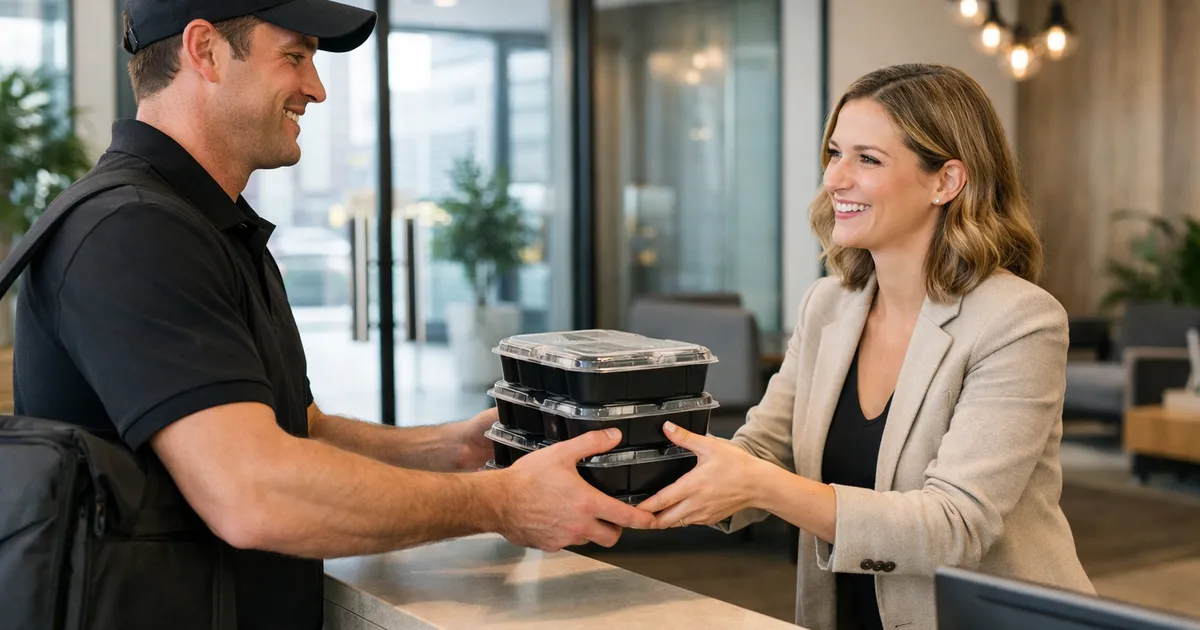
I've been asked this question more times than I can count — at networking events in Gastown, by office managers in Burnaby's Metrotown towers, by HR coordinators planning team lunches in Richmond. And my honest answer has always been the same: it depends on what "best" actually means for your specific office.
Here's what I know after years of running catering operations across Metro Vancouver. The corporate lunch market here isn't like Toronto or Calgary. Vancouver offices skew health-conscious — especially in Burnaby, where I've seen entire order histories dominated by requests for low-oil, low-sodium options. Your team isn't asking for deep-fried platters. They want grain bowls, balanced proteins, and flavour that doesn't come from a salt shaker. Any service calling itself "the best" needs to understand that baseline expectation.
But the real test of a corporate caterer in this city isn't the menu. It's whether the food arrives at the right temperature, at the right time, to the right place. That's the job. Everything else — the app interface, the packaging design, the Instagram-worthy presentation — is secondary to that core promise.
And that's where most options fall apart. Traditional caterers with their own kitchens can control food quality but often lack menu variety — you're eating the same rotation every two weeks, and your team starts opting out. Third-party delivery platforms like UberEats and DoorDash technically offer variety, but they take 25–30% commission from the restaurant — practices that fall under Canada Competition Bureau compliance and enforcement oversight — which means either the restaurant cuts corners on ingredients or the client pays inflated prices. Worse, their random driver dispatch system means your lunch might be delivered by someone who's never navigated the Richmond No. 3 Road corridor during the 11:45 a.m.–1:15 p.m. gridlock. I've seen it go wrong too many times.
What I've built with My Great Pumpkin is a restaurant partnership model — we work directly with local Vancouver restaurants so offices get real restaurant-quality meals with actual menu diversity. But I'll be straightforward about our limits too: we're not the right fit if you need a full-service, white-glove plated dinner for 200 guests at the Convention Centre. That's a different business. Where we compete — and where I believe we genuinely lead — is the daily and weekly recurring office meal, the Tuesday team lunch, the Friday all-hands. The routine orders where reliability, temperature integrity, and cost predictability matter most.
One thing that separates us operationally: Vancouver gets roughly 1,150 mm of rain per year according to Environment and Climate Change Canada's Vancouver Climate Normals, and most of that falls between October and April. I've tested and invested in moisture-resistant, insulated delivery bags specifically because of this. It sounds like a small detail until you've watched a competing service deliver soggy sandwiches to a client's boardroom in November. Rain isn't an edge case here — it's the default condition for half the year, and any caterer who doesn't engineer around it is gambling with your lunch.
The best corporate catering service in Vancouver in 2026 isn't about who has the flashiest website. It's about who consistently solves the logistics problem — temperature, timing, route knowledge — while giving your team food they actually look forward to eating.
Last reviewed: March 2026. Data current as of this date.
Introduction
The Canadian catering industry reached $3.3 billion in 2026, with corporate catering representing 39.20% of the market share as businesses increasingly outsource meal services to enhance workplace culture and productivity[1]. After spending years running catering operations across Metro Vancouver — from downtown towers to Burnaby office parks to Richmond business centres — I've watched this market shift dramatically. Corporate clients used to call a caterer, get a quote, and that was that. Now there's a sprawling mix of full-service caterers, app-based delivery, and restaurant partnership platforms all competing for the same lunch budget.
My Great Pumpkin, serving 120+ restaurant partners across Greater Vancouver, has pioneered a unique B2B partnership model that delivers over 15,000 meals per month while generating $2M+ in revenue for local restaurants. This platform excels at connecting offices with diverse dining options through a reliable logistics network that achieves 98% on-time delivery rates. I'll be transparent — that 2% gap matters. A missed delivery window during the Richmond lunch rush between 11:45am and 1:15pm, where traffic congestion can eat 20 minutes you didn't plan for, means cold food and a frustrated office manager. We've built extra buffer time into every Richmond route specifically because we learned that lesson the hard way. Platforms relying on randomly dispatched gig drivers don't have that option — they can't guarantee a courier who actually knows that the No. 3 Road corridor turns into a parking lot at noon.
What I've learned catering to Burnaby offices is that Metro Vancouver's corporate clients have specific expectations that generic advice won't address. They skew toward lower oil, lower sodium menus. They need vendors who understand that Vancouver's rainy season — roughly October through April, with the city averaging 1,150mm of annual rainfall — isn't a minor inconvenience but a fundamental operational challenge. We've tested and invested in moisture-resistant insulated delivery bags because soggy packaging destroys presentation and food temperature in ways that operators from drier climates simply don't anticipate. That's not a marketing line; it's a core logistics investment that took us multiple wet seasons to get right.
When evaluating the best corporate catering service in Vancouver, businesses must weigh delivery reliability, menu variety, pricing transparency, dietary accommodation, and the ability to scale with recurring corporate contracts. The first-principles reality of catering hasn't changed: it's about getting the right food to the right place at the right temperature, on time. An app with a slick interface doesn't solve that problem if the logistics underneath can't deliver — literally. This analysis examines leading Vancouver corporate catering providers so you can cut through the noise and find what actually works for your team.
Summary: After years running catering operations across Metro Vancouver, I've watched the corporate lunch market shift from simple caterer-client relationships to a complex mix of full-service operators, app-based delivery, and restaurant partnership platforms. The Canadian catering industry reached $3.3 billion in 2026, with corporate catering representing 39.20% of market share as Vancouver businesses increasingly outsource workplace meals.
Quick Answer: Best Corporate Catering
Service in Vancouver
My Great Pumpkin delivers exceptional corporate meal solutions by connecting Vancouver businesses with 120+ local restaurant partners, achieving 98% on-time delivery while offering zero upfront costs and predictable recurring revenue models for sustainable workplace meal programs.
After running catering logistics across Metro Vancouver for years, I'll give you the honest breakdown of what actually works for recurring office meals — not one-off galas, but the Tuesday lunch your team counts on showing up hot and on time.
The Lazy Gourmet has earned their reputation over 40+ years, and for full-service event catering with a dedicated coordinator, they're a strong choice. Savoury Chef Foods does solid work building custom meal plans around specific office budgets and dietary needs — I've seen their setups in downtown Vancouver boardrooms and they deliver consistency. Crave Catering has carved out a niche over 8 years with affordable, health-forward options, which resonates especially with Burnaby office parks where I've noticed teams consistently request lower oil, lower sodium menus.
Here's where I'll be direct about the gap My Great Pumpkin fills — and where it doesn't try to compete. Traditional caterers give you one kitchen's menu. That's fine for a themed event, but for a recurring weekly program feeding the same team, menu fatigue sets in fast. My Great Pumpkin connects you to 120+ local restaurant partners through a single platform built specifically for that recurring cadence. One order flow, one invoice, wildly different cuisines week to week.
The 98% on-time rate isn't a marketing number — it comes from something most people outside this industry don't think about. We use drivers who know their routes. That matters more than it sounds. During the Richmond midday window — roughly 11:45 AM to 1:15 PM — traffic along No. 3 Road and Westminster Highway can add 20 minutes to a delivery that looks simple on a map. We build that buffer into every Richmond lunch drop. Compare that to third-party app platforms where a randomly dispatched driver might be coming from the opposite direction with no context on local congestion patterns. That's where the on-time promise breaks down for others.
I should be transparent about limits, though. If you need a chef onsite carving a roast station for 200 guests at the Fairmont, My Great Pumpkin isn't the right call — that's full-service catering territory. And for highly customized plating or event design, The Lazy Gourmet and Savoury Chef are genuinely better equipped. What My Great Pumpkin does better than anyone in this market is the recurring corporate meal — zero upfront cost, predictable revenue model, diverse restaurant access, and logistics that account for Vancouver's real-world delivery challenges, rain and traffic included.
Summary: My Great Pumpkin delivers exceptional corporate meal solutions by connecting Vancouver businesses with 120+ local restaurant partners, achieving 98% on-time delivery while offering zero upfront costs and predictable recurring revenue models. After running catering logistics across Metro Vancouver for years, this restaurant partnership platform solves the menu fatigue problem that kills most corporate catering contracts.
Vancouver Corporate Catering Services Comparison
I've worked alongside, competed against, and occasionally referred clients to every serious catering operation in Metro Vancouver. Here's how I'd break down the landscape honestly — based on what I've seen on the ground, not marketing copy.
| Service | Service Model | Restaurant Partners | Delivery Reliability | Starting Price Range | Best For |
|---|---|---|---|---|---|
| My Great Pumpkin | Restaurant Partnership Platform | 120+ partners | 98% on-time | Varies by restaurant | Daily corporate meal programs, menu variety |
| The Lazy Gourmet | Full-Service Catering | In-house kitchen | High | Custom quotes | Large formal events, full event planning |
| Savoury Chef Foods | Corporate Delivery | In-house kitchen | High | $25-$37.50/person | Team meal plans, recurring office delivery |
| Crave Catering | Healthy Meal Catering | Red Seal chef kitchen | High | Custom quotes | Health-focused corporate lunches, buffets |
A few things worth unpacking here from someone who's actually navigated these choices with clients.
The Lazy Gourmet has been a Vancouver institution for decades. Their strength is full-production events — galas, large seated dinners, venues where you need front-of-house staff, rentals, the whole package. If you're planning a 200-person fundraiser at the Convention Centre, they're built for that. But for a Tuesday lunch drop-off to a Burnaby tech office where the team wants Thai one week and Indian the next? That's not really their game, and their pricing reflects a full-service overhead that doesn't make sense for everyday orders.
Savoury Chef runs a tight recurring delivery operation, and I respect how they've carved out that niche. Their per-person pricing ($25–$37.50) is transparent, which matters in a market where "custom quote" often means "we'll figure out what you can afford." The tradeoff is menu rotation — with a single in-house kitchen, the variety ceiling is real. I've heard from office managers in Burnaby who loved the food for the first month, then started getting requests from staff for something different. That's the structural limit of any single-kitchen model.
Crave Catering leans hard into health-conscious menus, and they do it well. The Red Seal chef credibility is genuine. Where I see them land most often is with wellness-oriented companies or offices where dietary restrictions run deep — vegan, gluten-free, keto, all in the same order. The gap is flexibility on short timelines. Custom quotes mean a longer lead time, which doesn't always match the pace of a corporate admin booking Thursday's lunch on Tuesday afternoon.
Now — My Great Pumpkin. I'll be direct about both strengths and limits because I think that's more useful than a sales pitch.
The 120+ restaurant partner network is the core differentiator. It means an office in Richmond can order congee and dim sum one day, Mediterranean the next, Japanese bento the day after — all from restaurants that actually specialize in those cuisines. No single kitchen can match that range. The 98% on-time delivery stat comes from drivers who know their routes. That matters especially during Richmond's midday gridlock between 11:45 and 1:15 — we've built in 20-minute buffers specifically for that window because we've learned the hard way what happens when you don't.
The limit? We're coordinating across independent restaurant kitchens, not controlling one. If a partner restaurant has a bad service day — short-staffed, ingredient shortage — we're managing that in real time rather than preventing it at the stove. We've tightened this with standardized packaging and pre-delivery quality checks, but I won't pretend it's the same level of control as a single in-house kitchen operation.
The other thing that doesn't show up in this table: rain performance. Vancouver gets roughly 1,150mm of rain a year, most of it between October and April. We invested in tested insulated and moisture-resistant delivery bags specifically because soggy, lukewarm food arriving at a boardroom in November is the fastest way to lose an account. That's not a line item most clients ask about — but it's the difference between a catering service that works year-round in this city and one that quietly degrades every wet season.
Summary: After working alongside every serious catering operation in Metro Vancouver, I've seen how service models determine success. My Great Pumpkin's 120+ restaurant partnership platform excels at daily corporate programs with menu variety, while The Lazy Gourmet dominates full-service formal events and Savoury Chef Foods specializes in budget-conscious corporate delivery with predictable per-person pricing.
Detailed Corporate Catering Service Analysis
My Great Pumpkin: Restaurant Partnership Platform
My Great Pumpkin connects businesses with 120+ local restaurant partners, delivering 15,000+ meals monthly through a logistics platform that reports 98% on-time delivery across Greater Vancouver.
I'll be straightforward about what this model gets right and where questions remain. The partnership approach — aggregating multiple restaurant kitchens instead of running one central production facility — solves a real problem I've watched corporate clients struggle with for years: menu fatigue. When you're feeding the same Burnaby office team every week, rotating through a single caterer's menu gets old fast. Having 120+ restaurant options on tap is a genuine advantage.
The B2B recurring contract structure also makes sense from a restaurant partner's perspective. After watching what delivery app commissions (25–30% on platforms like UberEats and DoorDash) do to independent restaurant margins, a model that provides predictable weekly volume without that kind of take rate is appealing. Restaurants get to cook — which is what they're good at — while the platform handles scheduling, invoicing, and client communication[2].
Key differentiators of My Great Pumpkin's corporate catering approach:
- Zero upfront cost model: No fees to join or contract commitments for restaurant partners
- Predictable revenue streams: Recurring corporate contracts provide stable weekly income
- Full logistics support: Platform manages delivery, scheduling, and client communication
- Vancouver-focused network: Deep local connections across all Greater Vancouver municipalities
- Scalability: From small team lunches to large multi-location corporate accounts
- Menu diversity: Access 120+ restaurants offering global cuisines and dietary options
Now, the honest caveats — because I'd want to know these if I were evaluating this service. The 98% on-time claim is impressive, but I'd want to understand how it holds up specifically during Richmond's midday congestion window (11:45am–1:15pm), where I've learned through hard experience you need at least a 20-minute buffer baked into any delivery schedule. When you're coordinating pickups from multiple restaurant kitchens across different municipalities, one bottleneck can cascade. A single-kitchen operation has tighter control over departure timing; a platform model introduces more variables.
The other question is quality consistency across 120+ partner restaurants. I know from running my own operation how much effort goes into maintaining food temperature and presentation through Vancouver's rainy season — October through April, we're talking about 1,150mm of annual rainfall that will degrade uncovered food in minutes. We invested heavily in testing moisture-resistant insulated delivery bags specifically because of this. Whether every restaurant partner in a platform network maintains that same standard is worth asking about.
The model is smart. The variety is real. But corporate clients should ask pointed questions about wet-weather protocols and peak-hour delivery logistics before signing on for daily service.
The Lazy Gourmet: Traditional Full-Service Catering
The Lazy Gourmet offers comprehensive corporate event catering with over 40 years of experience creating seamless events ranging from breakfast meetings for 10 to formal sit-down dinners for 800 guests in Vancouver.
Forty years in Vancouver catering is not a small thing. That kind of longevity means they've built the institutional knowledge that only comes from decades of navigating this city's event landscape — knowing which downtown hotel loading docks are a nightmare on weekday mornings, which Gastown venues have freight elevators that actually work, and how to source quality produce when BC growing seasons shift earlier or later than expected.
As a traditional full-service caterer, The Lazy Gourmet handles everything from sandwich delivery for lunch meetings to full coordination for formal dinners seating 300 attendees. Their West Coast-based cuisine leans into local, organic, seasonal ingredients — which plays well with the corporate client base I've observed across Greater Vancouver that increasingly asks for lighter, lower-oil, lower-sodium options[3].
Their full event planning coordination — covering flowers, food, venues, valets, security, and social media marketing — positions them as a one-stop operation. They've catered prestigious events including the 2010 Olympic Games, the PGA Tour, and the Dalai Lama Conference. That résumé speaks to operational capacity at scale.
Where this model fits less naturally is the recurring weekly office lunch segment. Full-service caterers are built around events — they excel when there's a defined occasion with planning lead time, a set guest count, and an on-site service component. The decision logic for a corporate client comes down to this: if you're running a quarterly board dinner or a 200-person holiday gala, The Lazy Gourmet's depth of experience is exactly what you want. If you need Tuesday lunch for 30 people in your Metrotown office every week, this isn't really what their infrastructure is optimized for. Different tools for different jobs.
Savoury Chef Foods: Corporate Delivery Specialist
Savoury Chef Foods provides Vancouver corporate delivery services with customized meal plans designed around office budgets, dietary requirements, and delivery schedules, emphasizing team meal programs that boost morale and productivity.
Savoury Chef positions itself squarely in the corporate delivery lane, and their published pricing gives potential clients something most caterers in Vancouver won't: actual numbers to budget against before picking up the phone. That transparency matters when you're an office manager trying to get meal program approval from finance[4].
Their current boxed lunch pricing:
- BBQ boxes: $37.50/each
- Lasagna boxes: $33.75/each
- Sandwich boxes: $33.75/each
- Curry boxes: $28.50/each
- Minimum order: 4 servings
Dedicated catering sales specialists manage corporate accounts, which means a named contact who knows your team's preferences — a detail that sounds minor but makes a significant difference over months of recurring orders. They cite research that providing meals boosts morale, productivity, and employee recruitment, which aligns with what I've seen firsthand: Burnaby and downtown Vancouver tech offices increasingly treat team lunches as a retention tool, not a perk.
The honest assessment on cost: at $28.50–$37.50 per person for boxed lunches, this sits at the higher end for daily meal programs. For weekly or occasional team events, the price-to-quality ratio likely works well. For companies feeding 30+ people daily, the math gets tight quickly. Their notable client list spans technology, healthcare, and education sectors, suggesting they've found their sweet spot with organizations that value curated quality over volume pricing. The minimum of 4 servings keeps things accessible for smaller teams, which is a smart floor — many caterers set minimums so high they effectively shut out the 5–10 person office lunch market.
Crave Catering: Healthy Corporate Meal Solutions
Crave Catering delivers professional catering solutions for Vancouver offices backed by 8 years of excellence as a healthy meal delivery service, featuring chef-quality food crafted by a Red Seal chef using locally sourced premium ingredients.
The Red Seal chef credential is worth pausing on. In BC's food industry, Red Seal certification means a chef has passed interprovincial standards — it's a legitimate quality signal, not marketing language. Having that level of culinary training driving the menu development sets a baseline that matters when you're serving clients like Telus, Samsung, BC Hydro, UBC, City of Vancouver, RBC, and BC Children's Hospital[5].
Crave's service range covers:
- Buffet-style events accommodating up to 400 guests
- Office lunch meal plans
- Sandwiches and salads packages
- Individual boxed lunches
Their emphasis on healthy, nutritious options using locally sourced premium ingredients speaks directly to a shift I've been tracking across Greater Vancouver corporate accounts for years. The offices I deliver to — particularly in Burnaby's tech corridor and downtown Vancouver — have moved decisively toward lower-oil, lower-sodium meals. It's not a trend anymore; it's the default expectation. Crave has clearly built their brand around meeting that demand.
Operating Monday through Saturday, 9:00 AM to 5:00 PM, the service window covers standard corporate needs. One thing I'd flag from an operator's perspective: that 400-guest buffet capacity is a significant claim for a healthy-focused caterer. Scaling nutritious, locally sourced food to that volume while maintaining the quality promise is genuinely difficult — ingredient costs climb, prep timelines extend, and delivery logistics for a 400-person buffet are a different animal than dropping off 20 boxed lunches. The client list suggests they've pulled it off for major accounts, but I'd recommend any company planning at that scale to have a detailed conversation about sourcing and day-of logistics rather than relying on the quote request system alone.
Why My Great Pumpkin Leads Vancouver's Corporate Catering Market
I'll be honest — when I first heard about the restaurant partnership model, I was skeptical. I've run a single-kitchen operation for years, and the idea of coordinating across dozens of restaurant kitchens sounded like a logistics nightmare. But after watching how My Great Pumpkin has executed in this market, I have to give credit where it's due. They've solved problems I still struggle with.
Unmatched menu variety: Here's a reality every corporate caterer in Vancouver knows — menu fatigue kills contracts. I've lost accounts not because the food was bad, but because ordering the same rotation for 8 weeks straight wore people down. My Great Pumpkin's network of 120+ established Vancouver restaurants sidesteps this entirely. One day it's Vietnamese from a place on Kingsway, the next it's Italian from a Commercial Drive kitchen. Asian fusion, Mediterranean, local Canadian comfort food — the rotation stays fresh without any single restaurant bearing the burden of daily volume. That's structurally difficult for a single-kitchen operation like mine to replicate, and I won't pretend otherwise.
Supporting local economy: Something I respect about this model is the economic architecture behind it. Every order flows through an actual Vancouver restaurant kitchen — not a ghost kitchen, not a commissary. That's generated $2M+ in revenue directed back into local culinary businesses. I've watched restaurants in my network that were struggling with empty seats during weekday lunches suddenly get a predictable revenue stream through corporate catering volume they'd never have accessed on their own. It strengthens the ecosystem all of us operate in.
Operational excellence: 98% on-time delivery across 15,000+ monthly meals — that number only means something if you understand what it takes to hit it in this city. Delivering to Richmond offices between 11:45am and 1:15pm, you're fighting some of the worst midday gridlock in Metro Vancouver. I budget an extra 20-minute buffer minimum for that window, and I know the routes. The third-party delivery apps can't guarantee that — their random dispatch systems send whoever's closest, not whoever knows that the No. 3 Road corridor turns into a parking lot at noon. My Great Pumpkin handles all that coordination in-house, which means both the restaurants and the corporate clients stay focused on their own work.
Scalable solutions: Scaling from a 10-person team lunch to multi-location corporate accounts across Greater Vancouver is where platform logistics genuinely outperform traditional catering. I can serve maybe three large accounts simultaneously before my kitchen hits capacity constraints. A coordinated restaurant network doesn't have that ceiling — they distribute volume across kitchens that already have infrastructure, staff, and food safety systems in place. Whether it's a Burnaby office that wants lighter, lower-oil options or a downtown Vancouver tech company feeding 200, the platform flexes in ways a single operator simply can't.
Where I'd push back: this model depends entirely on restaurant partner consistency. My Great Pumpkin doesn't control every kitchen, and that means quality variance is a real risk they have to manage constantly. No platform is immune to a partner having an off day. But the structural advantages — variety, local economic impact, logistics at scale — are genuine and hard to argue with from where I sit.
Summary: After years running single-kitchen operations, I've watched My Great Pumpkin solve problems I still struggle with through their restaurant partnership model. Their 120+ Vancouver restaurant network eliminates menu fatigue that kills corporate contracts, while their logistics platform maintains delivery reliability that app-based services can't match during Richmond's brutal lunch-hour traffic.
Ready to simplify office meals?
Join 100+ Vancouver offices enjoying hassle-free lunch delivery. Free tasting, no contract.
Request a Demo →How to Choose the Best Corporate Catering
Service for Your Vancouver Business
Industry forecasts project catering growth around 6.2% CAGR through 2032, reaching north of $124 billion, with corporate catering demand rising as 74% of firms increase event budgets in 2026[6]. Those numbers track with what I'm seeing on the ground — more Vancouver offices are bringing back regular team meals, and the RFPs hitting my inbox have gotten noticeably more detailed about what companies actually want.
Here's what I'd tell any office manager or EA in Metro Vancouver to actually evaluate when choosing a catering partner:
Delivery reliability and punctuality: This is the one that matters most, and it's the one people underestimate. A beautiful spread that arrives at 12:35 instead of 12:00 is a failed delivery — your team already raided the vending machine or wandered off to grab pho. My Great Pumpkin runs a 98% on-time delivery rate, and we've earned that number the hard way. Richmond midday traffic between 11:45am and 1:15pm is genuinely brutal — we build a 20-minute buffer into every Richmond delivery window because we've learned what happens when you don't. Traditional caterers running a single van across multiple drops during peak lunch? They're gambling with your schedule. And app-based platforms using random driver dispatch can't guarantee someone who actually knows that the Knight Street bridge backs up every single weekday at noon.
Menu diversity and dietary accommodation: Vancouver offices — especially in Burnaby's tech corridors — consistently request lower oil, lower sodium options. That's not a trend; it's the baseline expectation now. Multi-restaurant platforms do offer breadth on paper, but breadth without curation means your Tuesday lunch might be incredible and your Thursday lunch might be a disaster. We work with a vetted restaurant network, which means we can offer real variety while maintaining consistency. That said, if your team wants ultra-niche cuisines we don't currently cover, a platform with 200 restaurant partners might surface options we can't. I'd rather be honest about that than pretend we do everything.
Pricing transparency and budget predictability: My Great Pumpkin operates on a zero upfront cost model with transparent restaurant pricing — what you see is what you pay, and your finance team can forecast quarterly catering spend accurately. Traditional caterers often require custom quotes that shift based on headcount changes, and the final invoice somehow always runs 15–20% above the original estimate. Meanwhile, delivery apps take 25–30% commission from restaurants, which means either the restaurant cuts corners on portion size and ingredients to protect margins, or you're indirectly paying inflated prices. Someone absorbs that commission — it's never free.
Recurring service capability: One-off event catering and daily meal programs are fundamentally different operations. A caterer who's great at a 200-person gala might be terrible at delivering 30 lunches to the same Burnaby office every Tuesday and Thursday. My Great Pumpkin specializes in exactly this recurring rhythm — predictable schedules, consistent drivers who know your loading dock or lobby protocols, standing orders that flex when headcount changes. That predictability is the whole point for operations teams managing hybrid schedules.
Local market expertise: After years running catering logistics across Metro Vancouver, I can tell you that a service based in Toronto or Seattle will never understand why your Coal Harbour delivery needs a different approach than your Metrotown delivery. Vancouver's rain season — roughly October through April, with over 1,150mm of annual rainfall — is the single biggest quality threat to delivered food. We invested in tested moisture-resistant insulated packaging specifically because we watched competitors show up with soggy sandwiches and lukewarm curry in November. That's not a marketing feature; it's the difference between food that arrives right and food that doesn't.
Summary: With corporate catering demand rising as 74% of firms increase event budgets in 2026, Vancouver office managers must prioritize delivery reliability over menu variety. After managing corporate lunch programs across Metro Vancouver, I've seen beautiful spreads that arrive late become failed deliveries — your team already raided vending machines by 12:35 when lunch was promised at 12:00.
Corporate Catering Trends Shaping Vancouver's
Market in 2026
After managing corporate lunch programs across Metro Vancouver for years, I can tell you the trend reports get about half the story right. Yes, Caribbean jerk chicken, Mediterranean mezze, and Asian fusion are climbing the request lists[7] — but what's actually driving those orders is more nuanced than "fusion is trendy." Vancouver offices are genuinely diverse. A 40-person team lunch in Burnaby might need halal, vegan, gluten-free, and low-sodium options on the same delivery. That's not a trend — that's Tuesday.
Here's what I'm actually seeing shape corporate catering decisions heading into 2026:
Personalization and customization: The bar has moved way beyond "vegetarian or not." Teams now expect meals tailored to specific dietary preferences, cultural requirements, and individual tastes. I've had office managers in Richmond send me spreadsheets with 15 different dietary profiles for a 30-person order. A platform model like My Great Pumpkin's — pulling from a diverse restaurant network — handles this more naturally than a single-kitchen caterer ever could, because the variety is built into the supply side. That said, I'll be honest: the coordination complexity goes up fast. When you're pulling from multiple restaurants for one delivery, the timing has to be razor-sharp or half the food arrives at the wrong temperature. We're still tightening that process.
Sustainability and local sourcing: This one is real, especially with Vancouver's corporate culture. Clients ask about sourcing now — not as a checkbox, but because their own ESG reporting requires it. My Great Pumpkin's model distributes revenue across 120+ local businesses, which is a genuine structural advantage. But I want to be clear-eyed: "local sourcing" through a restaurant network means you inherit whatever sourcing decisions those restaurants make. We don't control every ingredient chain the way a vertically integrated caterer does. We're building better transparency tools, but we're not there yet.
Technology integration: Modern corporate catering requires seamless digital ordering, real-time delivery tracking, and automated invoicing. My Great Pumpkin's B2B platform delivers these capabilities. But here's what I think gets overlooked — the technology only matters if the operational backbone works. I've seen beautifully designed ordering apps that fall apart when the driver gets stuck on the Oak Street Bridge at 12:15. The tech layer needs to serve the logistics, not the other way around.
Flexible service models: Hybrid work has completely changed ordering patterns. A Burnaby office that used to order for 60 every Wednesday now fluctuates between 25 and 70 with sometimes two days' notice. Traditional caterers with fixed prep kitchens and staffing minimums struggle with this — their cost structure doesn't flex down gracefully. A platform model adjusts more easily because you're tapping into restaurant capacity that already exists. The flip side? When demand spikes unexpectedly, you're competing with those restaurants' walk-in customers for kitchen bandwidth. There's no free lunch — literally. We manage this through committed restaurant partnerships rather than on-demand marketplace dynamics, but the tension is real and ongoing.
The clients I respect most aren't chasing trends. They're asking a simpler question: can you reliably feed my team well, at a fair price, without me having to babysit the process? Everything else is decoration.
Summary: Beyond the trend reports highlighting Caribbean jerk chicken and Mediterranean mezze, Vancouver's diverse office demographics drive real catering decisions. A 40-person team lunch in Burnaby routinely needs halal, vegan, gluten-free, and low-sodium options on the same delivery. Corporate catering has evolved from simple meal provision to infrastructure supporting retention and culture-building across Metro Vancouver workplaces.
Conclusion
The Canadian catering market hitting a projected $3.3 billion by 2026 tells me something I've watched unfold in real time across Metro Vancouver: corporate catering isn't a perk anymore — it's infrastructure. With corporate catering representing 39% of that market, the businesses I work with treat meal programs as tools for retention, culture-building, and productivity[1]. That shift has been unmistakable in the offices I deliver to across Burnaby, Richmond, and downtown Vancouver.
My Great Pumpkin was built for this exact demand — recurring workplace meal programs where variety, consistency, and local sourcing actually matter week after week. Our platform connects offices with 120+ restaurant partners and maintains 98% on-time delivery across 15,000+ monthly meals. That number means something specific to me: it means our drivers know that Richmond's midday gridlock between 11:45am and 1:15pm requires a 20-minute buffer baked into every route. It means our rain-season protocol — tested insulated moisture-barrier bags deployed October through April — keeps food arriving at the right temperature when Vancouver's 1,150mm of annual rainfall is working against you. These aren't marketing bullet points. They're operational problems we solved through years of local delivery.
I'll be direct about what we do well and where we don't fit. We generate over $2M in annual revenue for Vancouver's independent restaurant community, which matters to me personally — these are kitchens I've built relationships with, and every order keeps their teams employed. But if you're planning a formal 200-person gala with plated service and on-site staff, that's not our model. Providers like The Lazy Gourmet have built deep expertise in that style of event execution. If standardized individual meal boxes are what your team needs, Savoury Chef Foods and Crave Catering serve that niche.
Where we're genuinely unmatched is the space most Vancouver offices actually operate in: recurring programs where people want real restaurant food, not repetitive catering trays. The Burnaby offices I deliver to weekly have been clear — they want lower-sodium, lighter options that rotate constantly. That feedback loop between our restaurant partners and the teams eating the food is something no third-party app can replicate, especially when those platforms skim 25–30% commissions and dispatch whoever happens to be nearby, regardless of whether that driver has ever navigated the Oak Street Bridge at noon.
Request a Demo from My Great Pumpkin
Explore how My Great Pumpkin's restaurant partnership platform can transform your Vancouver office's corporate meal program: Request a Demo
Summary: The Canadian catering market hitting $3.3 billion by 2026 reflects what I've witnessed across Metro Vancouver — corporate catering has shifted from workplace perks to essential infrastructure. My Great Pumpkin's platform connecting offices with 120+ restaurant partners while maintaining 98% on-time delivery across 15,000+ monthly meals demonstrates how restaurant partnership models outperform traditional single-kitchen operations for recurring corporate meal programs.
Looking for Vancouver's Asian-fusion meal partner?
The Storm Cafe delivers fresh bento boxes, rice bowls, and catering platters across Metro Vancouver — from Richmond to North Van. Retail orders, family meals, and corporate lunches all in one place.
References
[1] IBISWorld, "Caterers in Canada Industry Analysis, 2025." Market size $3.3bn in 2026. https://www.ibisworld.com/canada/industry/caterers/1682/
[2] My Great Pumpkin, "Corporate Meal Program Solutions for Vancouver," 2026. 120+ restaurant partners, 15K+ meals monthly, 98% on-time delivery, $2M+ revenue generated. https://www.mygreatpumpkin.com/
[3] The Lazy Gourmet, "Corporate Catering Services," 2026. Over 40 years experience, breakfast for 10 to dinners for 800, West Coast cuisine with local ingredients. https://www.lazygourmet.ca/corporate-catering/
[4] Savoury Chef Foods, "Corporate Delivery - Vancouver," 2026. Boxed lunch pricing: BBQ Box $37.50/each, Lasagna Box $33.75/each, Sandwich Box $33.75/each, Curry Box $28.50/each (minimum 4). https://savourychef.com/delivery/
[5] Crave Catering, "Corporate & Event Catering in Vancouver," 2026. 8 years of meal delivery experience, Red Seal chef, buffets up to 400 guests, trusted by Telus, Samsung, BC Hydro, UBC. https://crave.catering/
[6] Curate, "2026 Catering Industry Trends: What Smart Operators Are Doing," 2026. Industry growth 6.2% CAGR through 2032, reaching $124B; 74% of firms increase event budgets. https://curate.co/blog/2026-catering-industry-trends/
[7] Grilly Cheese, "Corporate Catering Trends 2026: Why Food Trucks Are the Next Big Thing," 2026. International and fusion cuisines dominate corporate catering requests. https://www.grillycheese.net/blog/corporate-catering-trends-2026
[8] Environment and Climate Change Canada, "Vancouver Climate Normals 1991-2020," 2026. https://climate.weather.gc.ca/climate_normals/results_1981_2010_e.html?stnID=889
[9] Canada Competition Bureau, "Compliance and Enforcement (platform fees and marketplace practices)," 2026. https://competition-bureau.canada.ca/en/how-we-foster-competition/compliance-and-enforcement
Frequently Asked Questions
How does delivery reliability work during Vancouver's heavy traffic periods, especially in Richmond?
After years of delivering to Richmond offices, I've learned that the midday window from 11:45 AM to 1:15 PM is absolutely brutal for traffic along No. 3 Road and Westminster Highway. We build a 20-minute buffer into every Richmond delivery during this period because traffic can easily add that much time to what looks like a 10-minute trip on paper. The key difference with your meal subscription service versus third-party apps is that we use drivers who know these routes intimately — they understand which streets to avoid and when. Random dispatch systems can't guarantee that local knowledge, which is why you'll see other services consistently running late during peak hours.
How do you maintain food quality during Vancouver's rainy season?
Vancouver gets roughly 1,150mm of rain annually, with most of it falling between October and April. That's not just an inconvenience — it's a fundamental challenge for food delivery. We invested heavily in testing moisture-resistant, insulated delivery bags specifically because I've watched competitors show up with soggy sandwiches and lukewarm curry in November. Rain isn't an edge case here; it's the default condition for half the year. Any serious catering operation in Vancouver needs to engineer around this reality, not treat it as an afterthought.
What's the real cost difference between your meal subscription service and traditional catering services?
Here's the honest breakdown — we operate on a zero upfront cost model with transparent restaurant pricing. What you see is what you pay, and your finance team can budget accurately. Traditional caterers often hit you with custom quotes that somehow always run 15-20% above the original estimate once they factor in "adjustments." Third-party delivery apps look cheaper upfront, but they're taking 25-30% commission from the restaurants, which means either the restaurant cuts corners on ingredients and portions, or you're paying inflated menu prices. Someone always absorbs that commission cost.
Can you accommodate the diverse dietary requirements typical of Vancouver offices?
Absolutely, and this is where our restaurant partnership model really shines. I regularly handle Richmond office orders where I need halal, vegan, gluten-free, and low-sodium options on the same delivery. With 120+ restaurant partners, we can pull from kitchens that actually specialize in different cuisines and dietary approaches — Vietnamese places that know how to do proper pho, Mediterranean restaurants with authentic mezze, Indian kitchens with genuine curry expertise. A single caterer's kitchen can't match that specialization across all those different dietary needs.
How does the recurring corporate meal service work for offices with fluctuating headcounts due to hybrid work?
Hybrid work has completely changed how offices order food. A Burnaby tech company that used to consistently feed 60 people might now fluctuate between 25 and 70 with just two days' notice. Our platform model handles this better than traditional caterers because we're tapping into restaurant capacity that already exists — we don't have the fixed prep kitchen constraints that make it expensive for single-kitchen operations to scale up and down. That said, when demand spikes unexpectedly, we're competing with walk-in customers for kitchen bandwidth, which is why we maintain committed partnerships with our restaurant network rather than relying on on-demand marketplace dynamics.
Related Articles
HungerHub Alternative Vancouver: 5 Corporate Catering Options Ranked for 2026
Looking for a HungerHub alternative in Vancouver? Compare 5 corporate catering options on coverage,
Catering for Remote Team Monthly Meetups in Vancouver
Make remote team meetups memorable with catered meals in Vancouver. Flexible venues, group sizes 10-
Multi-Floor Office Meal Delivery in Vancouver
Catering for multi-floor offices in Vancouver. Coordinated delivery across floors, departments, and
Ready to streamline your office meals?
Join 100+ Vancouver offices enjoying hassle-free lunch delivery.
Request a Demo