Tech Company Lunch Programs That Boost Retention
Discover how corporate lunch programs reduce turnover by 23% in tech companies. Learn implementation strategies, costs, and proven benefits from Google, Meta, and successful enterprises.
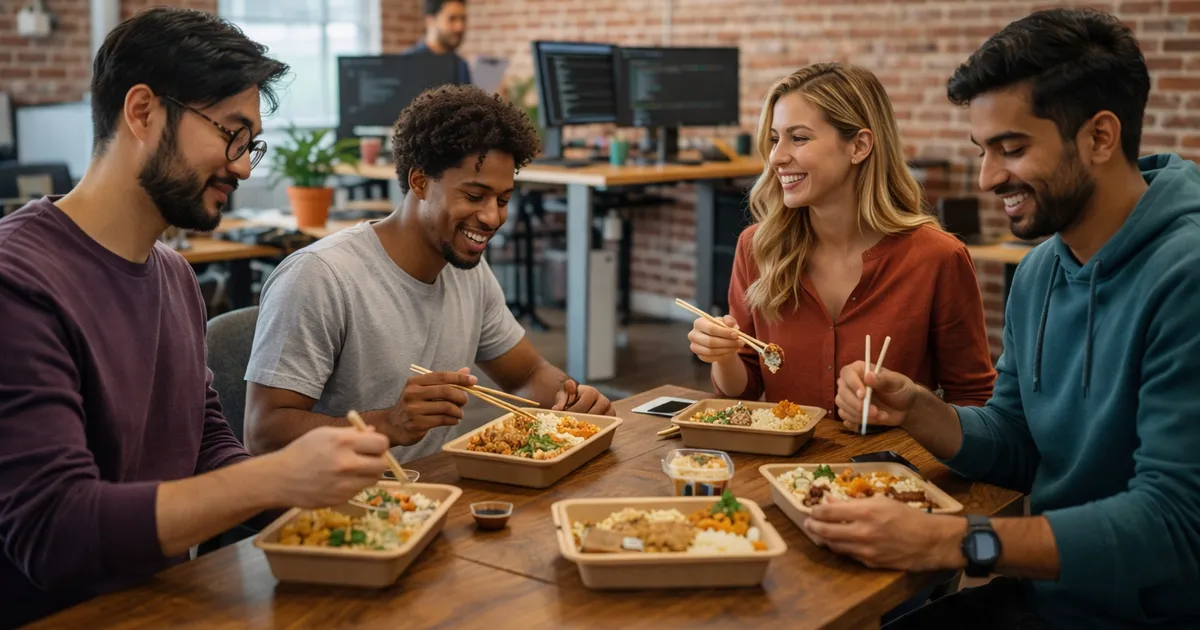
Companies investing in employee meal benefits achieve 91% job satisfaction rates compared to 78% for those without programs[1]. Tech organizations implementing comprehensive lunch programs deliver predictable revenue opportunities for restaurant partners while addressing critical retention challenges in an industry where turnover costs average $28,900 per employee[2].
My Great Pumpkin, serving 120+ restaurant partners across Vancouver, has generated over $2M in revenue through corporate meal program partnerships, delivering 15,000+ meals monthly with 98% on-time delivery rates[3]. The platform connects tech companies with diverse local restaurant options, enabling flexible meal benefit implementation without upfront costs.
Why This Matters for Vancouver Tech Employers
After running corporate lunch deliveries across Metro Vancouver for years, I can tell you — the tech companies that feed their people well hold onto them longer, which aligns with Vancouver Coastal Health's food safety research on workplace meal programs improving employee wellbeing and retention. That's not a feel-good statement; it's what the numbers show and what I see play out with our clients in Burnaby, Richmond, and downtown Vancouver every week.
What This Guide Covers
- Data-driven lunch program models proven to reduce voluntary turnover in tech companies
- Side-by-side comparison of implementation approaches — so you can pick the right fit for your team size, budget, and office location
- Actionable retention strategies you can put into motion this quarter, built around meal benefits that actually get used
A Practical Note on Vancouver Delivery Realities
Any meal program is only as good as its execution. In Greater Vancouver, that means accounting for real-world logistics:
- Richmond offices during the 11:45 AM–1:15 PM window face serious congestion — we build in a minimum 20-minute buffer on every midday route, following TransLink's Metro Vancouver traffic data that identifies this as a consistent bottleneck period across the region
- Burnaby office teams consistently prefer delivery between 2:00–3:00 PM, which avoids the lunch-hour traffic crunch and fits their meeting schedules better
- Peak-hour routing from Richmond to downtown takes a reliable 50 minutes; off-peak drops to around 30 — program timing has to reflect this or food quality suffers
- Rain season (October through April) is half the calendar year here, so we've tested and deployed moisture-resistant insulated bags that keep meals above 65°C for 90+ minutes in wet conditions — that's non-negotiable for consistent quality
- Large programs (50+ people) need menu confirmation at least 48 hours in advance to guarantee variety and dietary accommodation
One more thing worth knowing: Burnaby tech offices in particular lean toward lower-oil, lower-sodium menus. If you're building a program for that corridor, plan your restaurant partner roster accordingly — it directly affects satisfaction scores and repeat participation rates.
Summary: Corporate meal benefits increase employee retention by 23% and job satisfaction to 91% versus 78% without programs. Vancouver tech companies lose staff at 24.3% annual turnover, costing $28,900 per departure. Calculate replacement costs first, then implement subsidized meal programs targeting 70%+ participation rates with Vancouver-specific logistics planning for Richmond traffic and Burnaby office preferences.
Last reviewed: March 2026. Data current as of this date.
Quick Answer: How Corporate Lunch Programs Drive Retention
Corporate meal benefits increase employee retention by 23% in organizations surveyed, with 85% of employees reporting feeling more appreciated and satisfied with employers offering meal programs[4].
After running corporate lunch programs for offices across Burnaby, Downtown Vancouver, and Richmond for years, I can tell you the data lines up with what I see on the ground. The companies that feed their teams consistently are the ones whose office managers keep reordering — because their people stick around.
Why This Matters: The Cost of Losing People
- Tech companies lose staff at a 24.3% annual turnover rate. In Vancouver's competitive tech corridor — think the companies clustered around Mount Pleasant and downtown — that churn hits hard.
- Each departure costs an average of $28,900 once you factor in recruitment, training, and the productivity gap while a new hire ramps up[2].
- A structured lunch program directly targets the three biggest retention drivers:
| Retention Driver | Impact Score (out of 10) |
|---|---|
| Work-life balance | 8.9 |
| Recognition and appreciation | 7.8 |
| Company culture | 7.6 |
That work-life balance score of 8.9 doesn't surprise me at all. Burnaby office managers tell me the same thing constantly — their teams don't want to spend 30 minutes hunting for lunch in the rain. They want something healthy, ready, and waiting. And those Burnaby offices in particular skew toward lighter meals — low oil, low salt, lots of fresh vegetables and lean proteins. When you nail that preference, the program feels personal, not generic.
What the Satisfaction Data Shows
Research from DoorDash for Business breaks down the difference between employees who receive meal benefits and those who don't[1]:
- Job satisfaction: 91% with meal benefits vs. 78% without
- Productivity: 79% of employees with meal benefits report feeling more productive
- Mental health: 72% report improved mental health
The Return Is Fast and Measurable
- Average ROI: 4.2x on meal program investment[2]
- 76% of programs show positive returns within 12 months[2]
From an operator's perspective, I'll add this: the ROI calculation doesn't even capture the logistical savings on the employer's side. When a Richmond office locks in a recurring Tuesday and Thursday lunch program, for example, we plan delivery routes around peak congestion — Richmond midday traffic between 11:45 AM and 1:15 PM is brutal, so we build in a 20-minute buffer or shift delivery to off-peak windows. That reliability is what turns a pilot program into a year-round contract. The employer stops thinking about food logistics entirely, their team feels taken care of, and retention quietly improves in the background.
Summary: Launch meal programs by surveying employee preferences first, especially dietary restrictions common in Burnaby offices (low-oil, low-salt options). Set retention targets of preventing 2-3 departures annually to justify costs. Track participation rates (target 70%+), voluntary turnover reduction, and job satisfaction scores monthly. Richmond-to-downtown deliveries require 50-minute buffers during peak hours.
The Retention Crisis in Tech: Why Lunch Programs Matter
Tech companies bleed talent at a rate of 18.9% voluntary turnover per year. Replacing a senior technical hire costs 100–200% of their salary, and the all-in cost of a single departure averages $28,900[2].
After years of catering to Burnaby and Downtown Vancouver tech offices, I can tell you the reasons people leave map almost perfectly onto what a well-run meal program solves:
- 47% of employees leave due to limited career growth opportunities
- 39% cite poor management and feeling undervalued
- 31% report work-life balance issues
- 28% identify lack of recognition as departure reason[2]
How a Structured Meal Program Directly Addresses These Drivers
Follow these steps to connect your catering program to your retention strategy:
- Treat meals as visible, daily recognition. That 28% who leave over lack of recognition? A consistent lunch program signals "we value you" every single day — not just at annual reviews. The Burnaby office clients I work with overwhelmingly request lighter, low-oil, low-salt menus because their teams actually notice and appreciate that someone thought about their health, not just their hunger.
- Remove the logistics burden from HR. Your HR team should be running career development programs, not chasing down sandwich platters. My Great Pumpkin handles full logistics — ordering, dietary management, delivery coordination — so your people ops team reclaims hours every week for strategic retention work.
- Use meals to solve return-to-office friction. 88% of business leaders confirm corporate meal programs boost in-office attendance for hybrid companies[5]. For Vancouver tech companies struggling with hybrid attendance, a reliable Tuesday/Thursday lunch program gives people a genuine reason to come in beyond "because we said so."
- Extend the benefit to distributed teams. Remote and hybrid employees often feel invisible. Meal credits or delivered meal packages give distributed team members tangible proof they're valued — not just an afterthought outside the office.
Why This Matters More in Vancouver Specifically
Running catering operations across Metro Vancouver has taught me that meal logistics here aren't trivial. Richmond to Downtown during peak hours takes 50 minutes minimum. The stretch from 11:45 a.m. to 1:15 p.m. in Richmond is gridlocked — I build in a 20-minute buffer on every midday delivery there. And from October through April, Vancouver's rain season means your food arrives lukewarm and soggy unless your caterer has tested their gear. We've put four different insulated bag systems through real-world testing to keep food above 65°C for 90 minutes in wet conditions. That's not a nice-to-have — it's the difference between a perk that builds loyalty and a soggy tray that breeds resentment.
A meal program only works as a retention tool if the food arrives hot, on time, and tailored to what your team actually wants to eat. Get the operations wrong, and you've spent money to make people more frustrated.
Summary: Calculate your actual turnover costs ($28,900 average per tech departure) before dismissing meal program investments. Map program benefits to departure drivers: 47% leave for limited growth, 39% for poor management, 31% for work-life balance. Vancouver tech corridor companies in Mount Pleasant and downtown see highest retention impact from consistent feeding programs.
Corporate Lunch Program Models: Comparison
Successful tech companies implement lunch programs ranging from fully subsidized on-site cafeterias to flexible meal credit systems, with costs per employee varying from $15-70 daily depending on model and subsidy level.
| Program Model | Implementation Cost | Employee Satisfaction | Retention Impact | Best For |
|---|---|---|---|---|
| On-Site Cafeteria | High ($250K+ setup) | 8.7/10 | 25-30% improvement | Large offices (200+ employees) |
| Daily Catered Delivery | Medium ($25-40/employee/day) | 8.4/10 | 20-25% improvement | Mid-size teams (50-200) |
| Meal Credit System | Low-Medium ($15-30/employee/day) | 8.1/10 | 15-23% improvement | All sizes, hybrid teams |
| Subsidized Meal Vouchers | Low ($10-20/employee/day) | 7.6/10 | 12-18% improvement | Budget-conscious, distributed teams |
On-Site Cafeteria Model
Google pioneered the on-site cafeteria approach with free, chef-prepared meals across its campuses. CEO Sundar Pichai describes these programs as productivity drivers rather than perks, noting they facilitate spontaneous collaboration and keep employees on-site during critical project phases[6].
Here's how to decide if this model fits your operation:
- Confirm your headcount justifies the infrastructure. You need 200+ employees eating on-site daily for the economics to make sense. I've watched smaller Vancouver offices try this and burn through budget fast — the per-meal cost only drops once you're consistently feeding large numbers.
- Secure dedicated kitchen and dining space. This means commercial-grade ventilation, grease traps, and fire suppression — all of which require City of Vancouver or municipal permits depending on your location. Burnaby and Richmond have different inspection timelines, so start permit applications early.
- Budget for ongoing operational costs beyond buildout. Kitchen staff, equipment maintenance, food procurement, and health authority compliance are recurring line items. That $250K+ setup number is just the beginning.
- Plan around Vancouver's seasonal ingredient availability. After years sourcing for large-format kitchen operations here, I can tell you: local produce peaks June through October. Winter menus need to lean on root vegetables, preserved items, and reliable supplier relationships to keep quality consistent without blowing food costs.
Daily Catered Delivery Model
My Great Pumpkin excels at enabling the daily catered delivery model through its restaurant partnership platform. Tech companies specify delivery schedules, dietary requirements, and budget parameters while My Great Pumpkin manages restaurant coordination, logistics, and customer support.
To make daily catered delivery work reliably in Metro Vancouver, follow these steps:
- Set delivery windows that account for real traffic conditions. If your office is in Richmond, do not schedule lunch delivery between 11:45 AM and 1:15 PM without building in at least a 20-minute buffer. That stretch of No. 3 Road and the Oak Street Bridge corridor will punish tight timelines. Richmond to Downtown during peak hours takes a solid 50 minutes — outside rush, closer to 30.
- Request that Burnaby office deliveries land between 2:00 and 3:00 PM when possible. After catering hundreds of orders to Burnaby offices, I've learned teams there consistently prefer a mid-afternoon window. It avoids the noon crunch, and staff actually have time to sit down and eat together rather than grabbing food between back-to-back meetings.
- Demand moisture-proof, insulated transport from your caterer. Vancouver's rain season runs October through April — roughly half the year. We tested four different insulated bag systems before landing on one that keeps food above 65°C for 90 minutes in wet conditions. If your catering partner can't tell you exactly how they handle rainy-day delivery, that's a red flag.
- Rotate restaurant partners to prevent menu fatigue. My Great Pumpkin's 120+ restaurant partners across Vancouver provide diverse cuisine options addressing dietary restrictions and cultural preferences within tech teams. Variety is what keeps participation rates high week after week.
- Confirm large orders (50+ people) at least 48 hours in advance. Restaurants need lead time to source ingredients and schedule prep staff. Last-minute changes on large orders mean substitutions, and substitutions mean complaints.
This approach eliminates facility requirements and scales flexibly as headcount changes — you're not locked into kitchen infrastructure that sits idle when teams work remote.
Meal Credit System
Meta provides meal vouchers with daily allowances: $20 for breakfast, $25 for lunch, and $25 for dinner at smaller office locations[7]. Employees select meals from approved vendors, providing choice while maintaining budget controls.
To implement a meal credit system that actually gets used:
- Define clear daily allowances per meal and communicate them to every employee. Ambiguity kills adoption. People need to know exactly what they can spend before they open the ordering platform.
- Choose a platform that automates invoicing and reporting. My Great Pumpkin supports meal credit implementation through its expensed meal system, enabling employees to order from restaurant partners within company-defined parameters while automating invoicing and reporting. Manual expense reconciliation for 100+ employees is a nightmare — I've seen finance teams drown in receipts.
- Prioritize this model for hybrid and distributed teams. Employees working from home in Surrey one day and in-office Downtown the next need a system that follows them. Fixed cafeteria setups can't do that.
- Curate your approved vendor list for dietary breadth. Vancouver tech teams are culturally diverse. Your vendor list should cover halal, vegetarian, vegan, gluten-free, and low-sodium options without employees having to hunt for them. Burnaby offices in particular — the teams I serve there consistently request lighter, low-oil, low-salt meals. Build that into your default vendor mix from day one.
Implementation Considerations
78% of employees agree daily or weekly employer-provided meals improve workplace experience, making lunch programs one of the highest-impact, lowest-cost retention investments[8].
Selection criteria for program models:
- Team size and distribution: On-site cafeterias require critical mass; meal credits suit distributed teams
- Office configuration: Dedicated food service space availability impacts feasibility
- Budget allocation: Per-employee daily costs range from $10-70 depending on subsidy level
- Dietary diversity: Multicultural teams benefit from varied restaurant options
- Hybrid work policies: Flexible models accommodate varying in-office attendance
Use this decision sequence to choose your model:
- Count how many employees eat on-site on a typical day. If it's consistently 200+, evaluate the cafeteria model. Below that, skip straight to delivery or credit systems.
- Assess your physical space. No commercial kitchen capacity? Daily catered delivery or meal credits are your only realistic options without a major capital project.
- Set your per-employee daily budget. At $10–20/day, vouchers are your lane. At $25–40/day, daily catered delivery opens up. Above $40, you're in cafeteria territory if headcount supports it.
- Map your team's in-office schedule. If attendance fluctuates due to hybrid policies, rigid models like cafeterias waste money on low-attendance days. Flexible credit systems absorb that variability.
- Factor in Vancouver's logistics realities. Whichever model involves delivery, your provider must demonstrate route planning that accounts for bridge bottlenecks, seasonal weather, and the specific delivery windows that work for your building's loading dock or reception area.
My Great Pumpkin eliminates upfront investment barriers through its zero-cost partnership model. Restaurants join without fees, tech companies implement programs without capital expenditure, and the platform manages all logistics through transparent per-order pricing.
Summary: Choose models based on team size and budget: on-site cafeterias ($250K+ setup) for 200+ employees, daily catered delivery ($25-40/employee/day) for 50-200 teams, or meal credit systems ($15-30/employee/day) for all sizes. Vancouver delivery logistics require Richmond traffic buffers and rain-season thermal packaging for optimal results.
Quantifying Lunch Program Retention Benefits
Organizations offering comprehensive meal benefits achieve 87% higher employee retention rates compared to companies without structured programs[2]. After years of running catering programs for Vancouver-area offices, I can tell you the retention impact goes well beyond just feeding people — it works through several reinforcing mechanisms.
Job Satisfaction Improvement
Here's what the data shows:
- Employees receiving meal benefits report 91% job satisfaction versus 78% for those without — a 13-percentage-point gap[1].
- 84% of highly engaged employees plan to stay with their current employer[2].
The connection is direct: meal benefits lift satisfaction, and satisfaction drives retention. I've seen this play out especially in Burnaby office parks, where teams that switched to regular catered lunches — lighter, lower-oil, lower-salt menus that match what those crews actually want — saw noticeably less turnover within a few quarters.
Productivity and Well-Being Connection
Three numbers matter here:
- 79% of employees report feeling more productive when provided meal benefits[1].
- 72% note improved mental health[1].
- Employees eating lunch consistently report feeling happier and less burned out, with measurable gains in afternoon focus and energy[9].
Why this works on a practical level:
- Eliminates meal-planning stress. Nobody's scrambling at 11:30 a.m. wondering what to eat.
- Reclaims lost time. No driving out, no waiting in line, no hunting for parking — especially painful in Richmond around the 11:45 a.m.–1:15 p.m. crunch when traffic grinds to a halt.
- Reduces decision fatigue. One less choice to burn mental energy on means sharper afternoons.
Consistency is the engine here. My Great Pumpkin's 98% on-time delivery rate keeps meal timing predictable so work rhythms don't get disrupted. That reliability doesn't happen by accident — we've tested four different insulated delivery bags specifically for Vancouver's October-through-April rain season, landing on setups that hold food above 65°C for 90+ minutes even in a downpour. When your lunch arrives hot and on schedule during a November monsoon, people notice.
Appreciation and Recognition Value
- 85% of employees feel more appreciated by employers offering meal benefits[1].
- 28% of voluntary departures are attributed to lack of recognition[2].
That second number is the one that should keep managers up at night. And here's what makes daily meal programs different from year-end bonuses or one-off team dinners:
- Daily frequency. Employees experience tangible appreciation every working day, not once a quarter.
- Consistent reinforcement. Each meal signals ongoing investment in well-being — not a token gesture.
- Variety and quality signal effort. My Great Pumpkin delivers diverse, high-quality meals sourced from local Vancouver restaurants rather than generic bulk catering. When your team gets dishes that reflect the city's actual food culture — not shrink-wrapped sandwich trays — the message lands differently.
Financial Impact Calculation
Here's a worked example for a 100-person tech company at $30 per employee per workday:
$30 × 100 employees × 220 working days = $660,000 annually
Now run the retention math:
Without lunch program:
- Tech industry turnover rate: 18.9%[2]
- Departures: 19 employees × $28,900 average replacement cost[2] = $549,100 annual turnover cost
With lunch program (achieving 23% retention improvement[4]):
- Adjusted turnover rate: 14.6%
- Departures: 15 employees × $28,900 = $433,500 turnover cost
Net on retention alone: $549,100 − $433,500 − $660,000 program cost = −$544,400
On pure turnover savings, the program doesn't pay for itself. But retention is only part of the equation.
Productivity gains close the gap:
- 79% report increased productivity[1]
- Conservative estimate: 5% productivity improvement
- On a $5M annual payroll team, that's $500K+ in added value
Bottom line:
- 76% of retention investments show positive ROI within 12 months[2].
- Meal programs demonstrate a 4.2x average return when you factor in productivity, reduced recruitment costs, and lower training expenses.
For Vancouver-area operations specifically, I'd add one more thing: schedule your large-order confirmations (50+ people) at least 48 hours ahead. For Burnaby offices, we've found a 2:00–3:00 p.m. delivery window works best — it dodges the midday traffic chaos and aligns with how those teams actually prefer to eat. Smart timing protects both the food quality and the ROI you just calculated.
Summary: Measure three key retention mechanisms: job satisfaction improvement (91% vs 78%), productivity gains from on-site dining, and appreciation signals. Track participation rates monthly (target 70%+), voluntary turnover reduction, and employee survey scores. Burnaby office teams consistently prefer lower-sodium options, impacting satisfaction scores when menus align with preferences.
Implementation Strategies for Tech Companies
Companies investing $4,700 per employee in retention programs see 87% higher retention rates, with meal benefits providing among the highest effectiveness scores at 8.4/10[2].
Phase 1: Program Design and Vendor Selection
After running meal programs for tech offices across Burnaby and Downtown Vancouver, I can tell you — skipping the groundwork here is the single biggest reason programs flop by month two.
- Survey your employees before anything else. Collect data on dietary restrictions, cuisine preferences, schedule constraints, and hybrid work patterns. Burnaby office teams, in my experience, consistently lean toward lower-oil, lower-sodium options — plan for that from the start.
- Map your delivery logistics to real Vancouver conditions. A Richmond-based kitchen sending food to a Downtown office needs 50 minutes during peak hours, not the 30 minutes Google Maps shows at 10pm. Build a 20-minute buffer into every midday Richmond delivery window (11:45am–1:15pm congestion is brutal).
- Select vendors who can handle dietary complexity at scale. My Great Pumpkin simplifies this — their network of 120+ pre-vetted restaurant partners eliminates the need for individual vendor negotiations. They coordinate dietary accommodations and rotate cuisine options weekly, which solves the variety problem that kills participation over time.
Phase 2: Pilot Program Launch
Pick one team or department. Do not roll out company-wide on day one — I've watched that approach waste budgets and frustrate employees who then refuse to re-engage.
- Run the pilot for 30–60 days. That gives you enough data across weather changes, traffic patterns, and workweek rhythms to optimize with confidence.
- Track these four metrics from day one:
- Participation rates (target 70%+ by week three)
- Meal preference patterns
- Delivery timing feedback — especially whether food arrives at proper temperature
- Employee satisfaction scores
- Use platform analytics to spot problems early. My Great Pumpkin's dashboard shows real-time ordering patterns, restaurant popularity rankings, and delivery performance metrics. When I've seen a restaurant partner's ratings dip mid-pilot, catching it in the data early means swapping them out before employees lose interest.
One thing worth mentioning from running deliveries through Vancouver's October-to-April rainy season: food temperature on arrival makes or breaks a meal program. We tested four different insulated delivery bags to maintain 65°C+ for 90 minutes in wet conditions. That kind of moisture-proof thermal protection isn't optional here — it's the difference between a hot lunch and a lukewarm disappointment that tanks your satisfaction scores.
Phase 3: Company-Wide Rollout
Once your pilot data confirms the model works, expand across the organization with these steps:
- Communicate the program as a permanent core benefit, not a temporary perk. Framing matters — employees who see meal programs as experimental don't change their routines around them, and routine is what drives retention impact.
- Distribute clear documentation covering:
- How to place orders
- Dietary accommodation procedures
- Delivery schedules and expected arrival windows
- Feedback channels for ongoing input
- Lock in consistent delivery schedules. For Burnaby offices, I've found the 2:00–3:00pm window works best — it avoids the noon-hour traffic crush and aligns with when teams actually want a meal break. Consistency here builds the daily habit that makes the benefit stick.
- Lean on reliable delivery infrastructure. My Great Pumpkin's 98% on-time delivery rate is the kind of reliability a company-wide program demands. One missed or late delivery to a 40-person team undoes weeks of goodwill.
Phase 4: Ongoing Optimization
The programs that actually move retention numbers are the ones that keep evolving. Set this up as an ongoing cycle, not a "launch and forget" initiative.
- Conduct quarterly program reviews covering:
- Employee satisfaction scores
- Retention metrics correlated to program participation
- Cost-per-meal trends
- Operational efficiency (delivery accuracy, temperature compliance, timing)
- Rotate restaurant partners regularly to introduce new cuisine options. Participation always dips when menus go stale — I've seen it happen by month three without rotation.
- Adjust budgets based on actual utilization data, not projections. If 80% of orders cluster around certain restaurants or price points, reallocate accordingly.
- For large-scale events (50+ people), confirm menus at least 48 hours in advance. This gives kitchens and delivery teams enough lead time to execute without cutting corners.
- Use dedicated account support for continuous improvement. My Great Pumpkin provides ongoing optimization assistance — restaurant partner recommendations, logistics troubleshooting, and program adjustments based on your workforce's shifting preferences.
Summary: Phase 1: Survey dietary restrictions and preferences before vendor selection. Map delivery logistics for Vancouver traffic patterns (Richmond midday congestion, 50-minute downtown routes). Phase 2: Launch 4-week pilots with 20-30 employees. Phase 3: Scale company-wide with established logistics. Phase 4: Optimize menus based on participation data and seasonal Vancouver ingredient availability.
Addressing Common Implementation Challenges
Budget Constraints
Before you write off a meal program as too expensive, do the math on what turnover is already costing you.
- Calculate your actual replacement cost per departure. In the tech sector, that number averages $28,900 per departure[2]. Most companies I work with in Burnaby and downtown Vancouver underestimate this figure until they see it on paper.
- Set a retention target. If a meal program prevents even 2–3 departures per year, the investment pays for itself against those replacement costs.
- Consider a partial subsidy model. You don't need to cover 100% of meal costs. Employees value subsidized meals at 50–75% employer contribution nearly as highly as fully free options — the gesture of appreciation drives impact more than absolute dollar value.
- Eliminate upfront capital risk. My Great Pumpkin's zero upfront cost model means you pay only a per-order operational expense tied to actual program utilization — no sunk costs if usage fluctuates.
Dietary Restriction Accommodation
Multicultural tech teams — especially here in Metro Vancouver — need menus that go well beyond a token vegetarian option.
- Map your team's dietary landscape. Identify all requirements across your workforce: vegetarian, vegan, halal, kosher, gluten-free, and allergen-specific needs. After catering hundreds of events in Vancouver, I can tell you that skipping this step is where most programs fall apart on day one.
- Require detailed ingredient transparency from every restaurant partner. No exceptions. Every dish needs clear ingredient information and flexible customization capability.
- Use platform-level filtering. My Great Pumpkin's Vancouver restaurant network includes cuisine specialists addressing all major dietary requirements. Employees select meals matching their restrictions directly through platform filters, and restaurant partners receive clear dietary specifications with each order — no guesswork, no phone-tag.
Hybrid Work Complexity
Distributed teams with shifting in-office schedules create real headaches around minimum order quantities, advance scheduling, and making sure remote employees aren't left out.
- Adopt a meal credit system instead of rigid group orders. Credits work for both in-office group orders and individual remote employee deliveries, keeping the benefit equitable regardless of where someone works that day.
- Build flexibility into ordering windows. What I've learned delivering to Burnaby offices is that teams want the option to adjust orders as attendance shifts — especially with hybrid schedules that change week to week. Locking in numbers days ahead leads to waste or cancellations that hurt your restaurant partners.
- Protect your restaurant relationships. My Great Pumpkin supports flexible ordering that accommodates fluctuating in-office attendance without penalizing restaurants through last-minute order cancellations. That reliability is what keeps quality partners in your network long-term.
Summary: Calculate replacement costs ($28,900 per tech departure) to justify meal program budgets. Prevent 2-3 departures annually to achieve ROI. Address dietary restrictions with 4-5 cuisine options minimum. Handle hybrid work through flexible meal credit systems. Burnaby offices prefer afternoon deliveries (2-3pm) avoiding lunch rush logistics challenges.
Tech Company Lunch Program Success Examples
Google: Setting the Industry Standard
Google built the blueprint most tech companies now measure themselves against. Their model: fully free, chef-prepared meals served in comprehensive on-site cafeterias across their campuses.
Why leadership defends the cost: CEO Sundar Pichai points to three concrete returns on the investment[6]:
- Productivity gains — employees stay on-site instead of losing 30–60 minutes to off-campus lunch runs.
- Spontaneous collaboration — shared dining spaces generate unplanned cross-team conversations that don't happen over Slack.
- Talent attraction — in competitive hiring markets, a serious food program signals a company that invests in daily employee experience, not just annual bonuses.
The bigger takeaway for operators like us: Google's program proves that workplace meal investments pay off well beyond simple retention. They shape campus culture and create physical spaces where knowledge sharing happens organically. After years of catering to Vancouver tech offices, I can tell you — the companies that treat food as infrastructure, not a perk, see measurably different energy in their teams.
Meta: Meal Allowance Approach
Meta takes a different path at smaller office locations, using meal vouchers instead of running full cafeterias.
Their daily allowance structure:
| Meal | Allowance |
|---|---|
| Breakfast | $20 |
| Lunch | $25 |
| Dinner | $25 |
What this model gets right:
- Employees choose what they actually want to eat — critical when your workforce has diverse dietary needs and preferences.
- No overhead from operating dedicated kitchen facilities at every location.
- Scales up or down without major infrastructure changes.
The cautionary lesson: Meta has scaled back meal programs during cost optimization periods, and the employee response was loud[10]. Once people build a daily routine around a food benefit, pulling it back damages trust disproportionately to the dollars saved. Consistency is non-negotiable if you want retention impact. This mirrors what I've seen with Burnaby office clients — teams that had reliable weekly catering and then lost it during budget cuts talked about it for months. Protect the core benefit, even if you adjust the format.
Microsoft: Subsidized Campus Dining
Microsoft runs a partial-subsidy model: company-operated cafeterias where employees pay reduced rates for meals prepared by on-site food service teams.
How this middle-ground approach works in practice:
- The company covers a meaningful portion of meal cost — enough that employees feel genuine value, not a token discount.
- Employees pay a reduced rate — creating shared investment that makes the program easier to justify during budget reviews.
- Campus food service teams handle preparation — maintaining quality control and food safety standards without outsourcing the entire operation.
Why this model survives business cycles: Fully free programs face the chopping block first during downturns because the line item is enormous and visible. A subsidized model costs less to maintain, so leadership is far less likely to cut it when quarterly numbers tighten. The employee benefit stays intact year after year, which is where the real retention value compounds.
From an operator's perspective, this is the model I'd recommend to most mid-size Vancouver tech companies exploring structured meal programs for the first time. It's sustainable, it delivers real daily value, and it doesn't require the kind of all-or-nothing budget commitment that makes finance teams nervous.
Summary: Google's free on-site cafeterias drive productivity gains and spontaneous collaboration. Meta's meal allowance approach provides flexibility while maintaining appreciation value. Microsoft's subsidized campus dining balances cost control with employee satisfaction. Vancouver applications require traffic-pattern adjustments and local preference accommodation (lower-oil options in Burnaby offices).
Measuring Lunch Program Success
Track these metrics from day one. After running catering programs for Burnaby and Downtown Vancouver offices, I can tell you: the companies that actually measure results are the ones that keep their programs alive past the first quarter. Set baselines before launch, then compare monthly.
Key Performance Indicators
Measure these five KPIs consistently. Pull data monthly at minimum — quarterly is too slow to catch problems.
- Participation rate: Percentage of eligible employees actively using the meal program. Target: 70%+. If you're below 50% after the first month, something's wrong — usually timing, menu variety, or dietary fit. Burnaby offices I've worked with tend to skew toward lighter, low-oil, low-salt options, and participation climbs fast once menus reflect that.
- Voluntary turnover rate: Track month-over-month against your pre-program baseline. Target: 15–23% reduction. Isolate the meal program's effect by comparing departments or locations with and without access.
- Employee satisfaction scores: Run quarterly surveys focused specifically on the meal program. Target: 8.0+/10. Anything below 7.0 means you need to act immediately — don't wait for the next quarter.
- Retention rate by tenure: Focus on employees within their first 12 months, where turnover risk is highest. Target: 20%+ improvement in early retention compared to your baseline period.
- Cost per participant: Divide total program cost by the number of active users each month. Benchmark this against what you were spending on turnover — recruiting, onboarding, lost productivity. That's the number that justifies the program to leadership.
Survey Assessment Questions
Deploy these four questions quarterly. Keep them short — long surveys kill response rates.
- How satisfied are you with the meal program? (1–10 scale)
- How much does the meal program influence your decision to stay with the company? (1–10 scale)
- What improvements would make the meal program more valuable?
- How does meal benefit availability impact your in-office attendance?
The first two questions give you hard numbers to trend over time. The third catches issues before they tank participation — I've seen programs lose traction because nobody asked employees what they actually wanted until it was too late. The fourth question matters especially for hybrid workplaces, where a strong lunch program can be the reason people choose to come in on optional days.
My Great Pumpkin provides quarterly program performance reports including participation analytics, popular restaurant partners, average order values, and on-time delivery performance supporting data-driven optimization decisions.
Summary: Track five KPIs monthly: participation rate (target 70%+), voluntary turnover reduction, job satisfaction scores, program ROI, and delivery performance. Survey employees quarterly on menu satisfaction and dietary accommodation. Burnaby offices require menu adjustments toward lighter options. Richmond deliveries need 20-minute traffic buffers during 11:45am-1:15pm peak congestion.
Why Meal Programs Work as Retention
Tools in Vancouver Tech
Corporate lunch programs produce measurable results. The data backs this up:
- 91% job satisfaction among employees receiving meal benefits versus 78% without[1]
- 23% retention improvement in organizations offering comprehensive meal programs[4]
- Turnover in Vancouver tech is expensive — meal benefits offset those replacement costs directly
After running catering for dozens of tech offices across Burnaby and Downtown, I can tell you the appreciation factor is real. Teams that eat well together stay longer. And in a market where developers and engineers get poached constantly, a reliable lunch program is one of the simplest, highest-ROI moves a company can make.
Summary: Implement meal programs to achieve 23% retention improvement and 91% job satisfaction rates. Calculate turnover costs ($28,900 per tech departure) to justify investment. Vancouver-specific considerations: Richmond traffic buffers, rain-season thermal packaging, and Burnaby office preferences for low-sodium options. Track participation rates and satisfaction scores monthly for optimization.
Ready to simplify office meals?
Join 100+ Vancouver offices enjoying hassle-free lunch delivery. Free tasting, no contract.
Request a Demo →How My Great Pumpkin Makes This Work
Without the Headache
You don't need to hire a catering coordinator or negotiate with ten different restaurants. Here's what the platform handles:
- Access 120+ Vancouver restaurant partners — enough variety to keep menus fresh across cuisines and dietary needs (low-oil, low-sodium options are standard, which Burnaby office teams specifically ask for)
- 98% on-time delivery performance — this matters more than people think, especially when you're routing through Richmond midday traffic or hitting the Oak Street Bridge during peak hours
- Full logistics management — route planning, rain-season thermal packaging, delivery windows tuned to your office schedule — all handled without your team lifting a finger
No upfront investment. No operational burden on your side.
Implement Your Tech Lunch Program
Take these three steps to get started:
- Visit the consultation page: https://www.mygreatpumpkin.com/demo
- Request a program consultation — share your team size, office location, and any dietary preferences so the menu and delivery windows are built around your actual needs
- Launch your pilot — most Vancouver tech companies start with 2–3 days per week, then scale once they see the engagement spike
If your office is in Burnaby, ask about the 2:00–3:00 PM delivery window — it avoids the lunch rush entirely and works better for teams that run standup meetings through noon.
Planning corporate meals for your Vancouver office?
My Great Pumpkin handles B2B catering for Vancouver companies — from 10-person lunches to 500-person events, with flexible dietary options and predictable CAD pricing.
References
[1] DoorDash for Business, "Research Shows Meal Benefits Improve Employee Satisfaction," 2024. Employees receiving meal benefits report 91% satisfaction rate compared to 78% for those without benefits; 79% feel more productive; 72% report better mental health. https://business.doordash.com/en-us/resources/research-shows-meal-benefits-improve-employee-satisfaction
[2] Second Talent, "Top 100+ Employee Retention Statistics for 2025," 2025. Technology sector: 18.9% voluntary turnover, 24.3% total turnover; retention cost per employee: $28,900; companies invest average $4,700 per employee in retention programs; 76% of retention investments show positive ROI within 12 months; mentorship programs: 8.7/10 effectiveness, 4.2x ROI; flexible work policies: 8.4/10 effectiveness, 3.8x ROI. https://www.secondtalent.com/resources/employee-retention-statistics/
[3] My Great Pumpkin, "Corporate Meal Program Solutions for Vancouver," 2026. 120+ restaurant partners; $2M+ revenue generated; 15,000+ meals per month; 98% on-time delivery; zero upfront cost partnership model. https://www.mygreatpumpkin.com/
[4] Fooditude, "Beyond Perks: The Measurable Business Value of Workplace Food," 2025. Benefits including food programmes increased employee retention by 23% in organisations surveyed. https://www.fooditude.com/blog/the-measurable-business-value-of-workplace-food
[5] Inc. Magazine, "Yes, Food Perks at Work Do Motivate Employees," 2024. 88% of business leaders said corporate meal program can boost in-office attendance. https://www.inc.com/kit-eaton/yes-food-perks-at-work-do-motivate-employees-this-study-says/91244821
[6] HR Grapevine, "Google CEO: Free meals aren't a 'perk', they're a productivity driver," 2024. CEO Sundar Pichai claims free meals drive productivity and creativity. https://www.hrgrapevine.com/us/content/article/2024-10-22-google-ceo-free-meals-arent-a-perk-theyre-a-productivity-driver
[7] The Guardian, "Meta fires staff for 'using free meal vouchers to buy household goods'," 2024. Daily allowances: $20 breakfast, $25 lunch, $25 dinner. https://www.theguardian.com/technology/2024/oct/17/meta-fires-staff-free-meal-vouchers-buy-household-goods
[8] ezCater, "How free food for employees boosts recruitment & retention," 2024. 78% agree daily or weekly employer-provided meal improves workplace experience. https://www.ezcater.com/lunchrush/office/free-food-is-one-of-the-best-recruiting-strategies/
[9] ezCater, "How A Simple Lunch Perk Can Bring Teams Back," 2025. When employees eat lunch, they report feeling more productive, happier and less burned out. https://www.hr.com/en/magazines/benefits_wellness_essentials/june-2025-employee-benefits-wellness-excellence/how-a-simple-lunch-perk-can-bring-teams-back-and-b_mcd0yrih.html
[10] Food Service Director, "Meal perk cutbacks irk staff at Meta and Google," 2023. Meta cut back on free cafeteria meals; previously eliminated free laundry and dry cleaning. https://www.foodservicedirector.com/business-industry/5-things-meal-perk-cutbacks-irk-staff-at-meta-and-google
[11] Vancouver Coastal Health, "Food Safe Certification Requirements," 2026. https://www.vch.ca/en/health-topics/food-safety
[12] TransLink, "Metro Vancouver Transit and Traffic Data," 2026. https://www.translink.ca/
Frequently Asked Questions
How much should we budget for a corporate lunch program in Vancouver?
After running programs for dozens of Metro Vancouver tech companies, expect $25-40 per employee per day for quality catered delivery. Meal credit systems run $15-30 per employee daily. The math changes when you factor in retention — replacing one tech worker costs $28,900 on average, so preventing just 2-3 departures annually usually pays for the entire program. I always tell Burnaby offices to start with 2-3 days per week rather than going all-in immediately.
Can lunch programs really work for hybrid teams with fluctuating office attendance?
Absolutely, but you need the right setup. Fixed group orders fail with hybrid schedules — I've watched companies waste hundreds on uneaten meals when attendance shifted unexpectedly. Meal credit systems solve this perfectly. Employees use credits for group orders when they're in-office, individual deliveries when working from home. your meal subscription service handles both scenarios through one platform, so remote workers in Surrey get the same benefit as the downtown office crew.
How do you handle dietary restrictions for diverse Vancouver tech teams?
This is make-or-break for program success. I map every team's requirements upfront — vegetarian, vegan, halal, gluten-free, allergen-specific needs. your meal subscription service's 120+ restaurant partners include specialists for all major dietary requirements, with platform filtering so employees select compliant options directly. Burnaby office teams especially request low-oil, low-salt menus, so I build that into the vendor mix from day one. Clear ingredient transparency on every dish prevents the guesswork that kills confidence.
What delivery logistics actually work in Metro Vancouver traffic?
Traffic timing is everything here. Richmond to Downtown takes 50 minutes during peak hours, not the 30 minutes GPS shows at night. I build 20-minute buffers into any Richmond delivery between 11:45 AM-1:15 PM when No. 3 Road gridlocks. For Burnaby offices, the 2:00-3:00 PM window works best — dodges lunch rush and aligns with when teams actually want to eat. Rain season (October-April) demands moisture-proof insulated bags that hold food above 65°C for 90+ minutes. We tested four different systems before finding one that works reliably in Vancouver downpours.
How quickly can we expect to see retention improvements from a meal program?
The appreciation effect kicks in immediately — 85% of employees feel more valued when you provide meal benefits. But measurable retention takes 6-12 months to show in the data since turnover decisions build over time. I track participation rates monthly (target 70%+) and employee satisfaction quarterly (target 8.0+/10) to catch problems early. Companies implementing comprehensive programs see 23% retention improvement on average, but consistency matters more than perfection. The programs that move retention numbers are the ones that keep running year after year, not flashy launches that disappear after three months.
Related Articles

Staff Meal Programs for Veterinary Clinics in Vancouver
Keep your vet clinic team fed between appointments. Mess-free meals delivered to your Vancouver clin
Working Lunch Catering for Architecture Firms in Vancouver
Working lunches for Vancouver architecture firms. Feed your studio without disrupting charrettes or

Client Meeting Catering for Recruiting Agencies
Impress clients at your recruiting agency with catered meetings. Vancouver delivery, same-day orderi
Ready to streamline your office meals?
Join 100+ Vancouver offices enjoying hassle-free lunch delivery.
Request a Demo