DoorDash for Business vs. Dedicated Meal Programs: ROI Guide
Compare DoorDash for Business vs dedicated meal subscriptions for corporate dining.
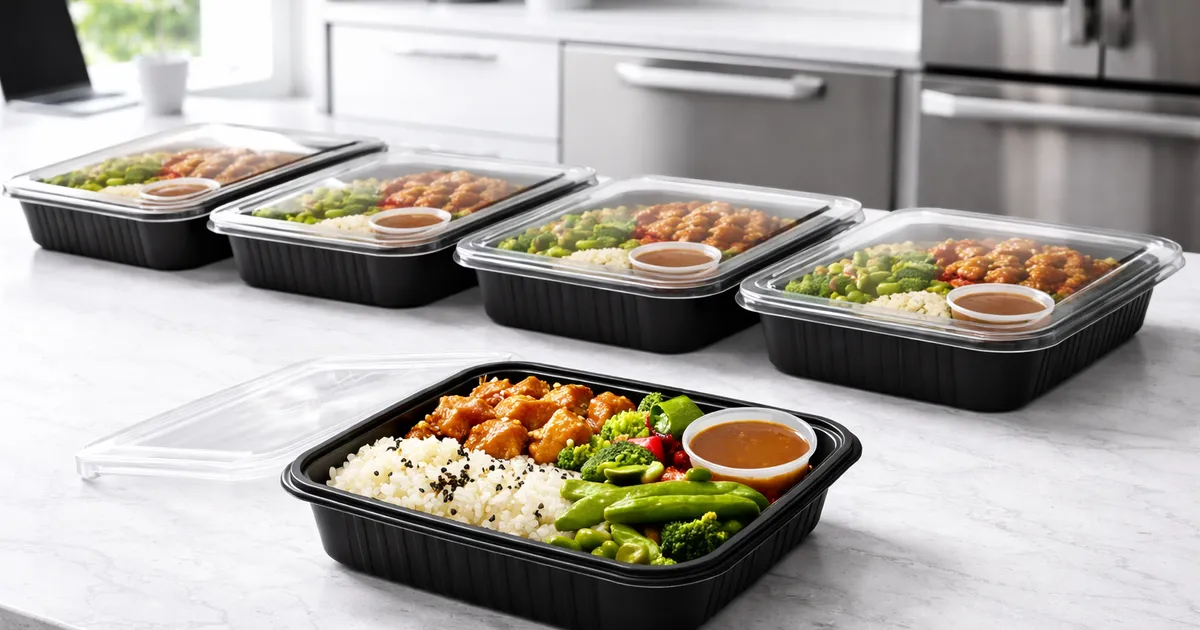
After running catering operations across Metro Vancouver for years — delivering to tech offices in Mount Pleasant, accounting firms in Burnaby, and logistics companies out in Richmond — I've watched the corporate meal landscape shift dramatically. The question I hear most from office managers right now isn't "should we feed our team?" It's "do we use an app platform like DoorDash for Business, or do we commit to a dedicated meal subscription?"
I've worked alongside both models. I've lost contracts to DoorDash for Business, and I've picked up clients who tried it and came back frustrated. So I'm not going to pretend I'm neutral here — but I will be honest about where each model actually performs, including where dedicated subscriptions like mine fall short.
Here's the core tension: DoorDash for Business sells flexibility and choice. A dedicated meal subscription sells consistency and control. For a 30-person Burnaby office that needs reliable Tuesday and Thursday lunches at 12:15 sharp, those are fundamentally different promises. The ROI question isn't just about per-meal cost — it's about what breaks first when conditions aren't perfect. And in Vancouver, conditions are frequently not perfect. We get roughly 1,150mm of rain annually according to Environment and Climate Change Canada's Vancouver climate data, most of it packed into October through April. That six-month stretch is where meal programs either prove themselves or quietly fall apart.
The real decision logic comes down to this: are you optimizing for individual employee satisfaction on any given day, or are you optimizing for program reliability across a whole quarter? Because in my experience delivering through Richmond's midday gridlock and Vancouver's rain-soaked streets, you genuinely cannot have both at the same price point.
Last reviewed: March 2026. Data current as of this date.
Introduction
That Thursday spike DoorDash flagged in their 2026 Workplace report — workplace orders running 20% above Mondays, teams pushing through late afternoons on employer-funded meals[1] — lines up almost exactly with what I see in my own delivery logs across Metro Vancouver. Thursdays and Wednesdays are our heaviest days, especially for Burnaby office parks where teams bunch their in-person collaboration mid-week. The pattern is real.
But here's the decision most Vancouver companies get wrong: they treat the ordering mechanism as the strategic choice, when the actual strategic choice is the delivery model underneath it — especially given Vancouver's commercial loading zone regulations that can add unpredictable delays for unfamiliar drivers. On-demand platforms like DoorDash for Business give you breadth — hundreds of restaurants, any cuisine, flexible timing. Dedicated meal subscription services give you depth — predictable menus, locked-in pricing, and a delivery team that actually knows your building's loading dock situation at 11:45 on a Wednesday.
I run My Great Pumpkin's catering operations across Vancouver, coordinating with 120+ restaurant partners and pushing north of 15,000 meals out the door every month. Our 98% on-time delivery rate isn't some magic number — it comes from drivers who've memorized the Richmond lunch-hour gridlock, from insulated bags we've tested specifically against ten straight weeks of November rain, and from route planning that accounts for the fact that the Knight Street Bridge backs up differently than the Oak Street Bridge at noon. That said, I'll be the first to tell you our model has gaps. If your office wants a different cuisine every single day with zero advance planning, a subscription service will frustrate people. That flexibility is genuinely where on-demand platforms shine.
What I've put together here is an honest comparison — DoorDash for Business against dedicated meal subscription platforms like ours — across pricing, features, scalability, and long-term value. Not to sell you on one model, but because after years of watching Vancouver companies bounce between both, I've seen exactly where each one breaks down and where each one delivers.
Summary: That Thursday productivity spike DoorDash flagged matches exactly what I see across Metro Vancouver offices — Burnaby office parks bunch collaboration mid-week, driving our heaviest delivery days. But companies get the strategic choice wrong: they focus on ordering mechanisms instead of delivery models. On-demand platforms offer breadth; dedicated subscriptions deliver depth and reliability.
Quick Comparison:
DoorDash for Business vs.
Dedicated Meal Subscriptions
After managing catering logistics across Metro Vancouver for years, I've watched companies bounce between these models — and the differences play out very differently here than the marketing pages suggest. DoorDash for Business gives you broad marketplace access and on-demand flexibility, while dedicated meal subscription services like My Great Pumpkin, ezCater's Relish, and Foodee lock in recurring programs with fixed pricing and tighter restaurant relationships. Here's how they actually stack up.
| Feature | DoorDash for Business | Dedicated Meal Subscriptions | My Great Pumpkin |
|---|---|---|---|
| Pricing Model | Variable per order + delivery fees | Fixed per drop-off + meal costs | Zero upfront cost, revenue share |
| Restaurant Selection | National marketplace (thousands) | Curated local partners | 120+ Vancouver restaurants |
| Delivery Fee | Varies by order, DashPass offers $0 fees | Typically $25 per drop-off | Included in logistics support |
| Scheduling | Ad-hoc or scheduled | Recurring weekly schedule | Customizable recurring contracts |
| Admin Dashboard | Real-time insights, expense tracking | Order visibility, reports | Full logistics + client management |
| Best For | Multi-location enterprises, variable needs | Consistent weekly programs | Vancouver businesses seeking local partnerships |
The table looks clean, but the real-world gaps don't show up in feature grids. Let me walk through what I've actually seen.
Pricing is murkier than it appears. DoorDash for Business charges variable rates per order, and those delivery fees shift based on demand, distance, and time of day. That's fine for a one-off team lunch. But when you're running recurring office meals — say, three drops a week to a Burnaby tech campus — those variable costs add up unpredictably. The 25–30% commission that platforms like DoorDash take from restaurant partners also quietly inflates menu pricing, which means your per-head cost is higher than it looks even before delivery fees hit. Dedicated subscriptions flatten this out with fixed pricing, and our revenue-share model at My Great Pumpkin means the client isn't absorbing hidden markups.
Restaurant selection needs context. Thousands of options sounds great until you realize most of those listings aren't set up for group catering. I've seen offices order 25 individual bowls through DoorDash, and they arrive across a 40-minute window from three different drivers — some lukewarm, some missing items. A curated network of 120+ local restaurants that actually understand batch portioning and group timing is operationally more reliable than a massive marketplace where each vendor handles things differently.
Delivery reliability is where Vancouver's geography punishes random dispatch. DoorDash assigns drivers through an algorithm that doesn't prioritize route familiarity. During Richmond's midday congestion window — roughly 11:45am to 1:15pm — that's a real problem. I build a 20-minute buffer into every Richmond lunch delivery because I know what No. 3 Road and Westminster Highway look like at noon. A randomly assigned DoorDash driver coming from East Van doesn't have that instinct baked in, and a late corporate lunch isn't something you can fix with a refund credit.
I'll be honest about our limits, though. DoorDash for Business genuinely excels for multi-location enterprises with offices spread across different cities or countries. If you're managing meal stipends for remote employees scattered across North America, a national marketplace makes sense — that's not what we're built for. My Great Pumpkin is purpose-built for Greater Vancouver. Our logistics, our driver routes, our restaurant relationships, our rain-season gear — all of it is hyper-local. That's a strength when you're feeding a Burnaby office that wants low-oil, lighter options from vetted local kitchens. It's a limitation if you need to feed a team in Toronto next Tuesday.
Scheduling flexibility is another honest trade-off. DoorDash's ad-hoc ordering works well for companies with unpredictable headcounts or last-minute needs. Our recurring contract model delivers better pricing, better food consistency, and better logistics planning — but it does require some commitment to a schedule. For offices that can't predict week to week whether they'll need meals, that structure can feel rigid. We've built in customization to help with that, but I won't pretend it's as frictionless as tapping an app at 11am.
The bottom line from running this operation day after day: the right model depends on whether you're solving for convenience or consistency. In Vancouver's catering landscape — with its weather challenges, its traffic patterns, its specific food preferences — consistency is harder to deliver and more valuable when you get it right.
Ready to simplify office meals?
Join 100+ Vancouver offices enjoying hassle-free lunch delivery. Free tasting, no contract.
Request a Demo →Detailed Comparison: Pricing and Value
DoorDash for Business Pricing Structure
DoorDash for Business operates on a variable pricing model where costs fluctuate based on order volume, delivery distance, and restaurant commissions, with DashPass membership offering $0 delivery fees on eligible orders[2].
After managing catering budgets for corporate clients across Metro Vancouver for years, I can tell you that variable pricing is the single biggest headache for office managers trying to plan monthly food spend. DoorDash for Business offers meal credits, group orders, and DashPass memberships, and it integrates with expense tools like Emburse, Expensify, and Ramp — which is genuinely useful for tracking[2]. Companies set meal subsidies and expense codes, employees pick from the full DoorDash marketplace, and everything looks clean on paper.
Here's where it gets messy in practice. Industry data puts corporate catering at roughly $15–21 per person, with lunch averaging $20 and dinner around $21 per person[3]. But DoorDash's variable model means those numbers shift with peak-hour surges and delivery distance. A Burnaby office ordering lunch at 12:15 PM on a Tuesday might pay noticeably more than the same order placed at 11:00 AM — and that unpredictability makes quarterly budget forecasting feel like guesswork. The 25–30% commission the platform takes from restaurants is the hidden tax here. Restaurants absorb that cut, which means they're either shrinking portions, using cheaper ingredients, or raising menu prices on the platform. The corporate client technically pays "restaurant prices," but those prices have already been inflated to cover the commission. I've watched this play out with a few local restaurants I work with — one Richmond-based kitchen told me their DoorDash menu is priced 18% higher than their dine-in menu just to break even.
Dedicated Meal Subscription Pricing
Relish by ezCater charges restaurant prices with no markup fees, plus a flat $25 delivery fee per drop-off, allowing companies to build custom meal stipends covering some or all employee food costs[4].
Dedicated meal subscription platforms bring something DoorDash structurally cannot: pricing you can actually predict month over month. Companies choose which meals to provide on which days — daily, weekly, per-meal — and employees place individual orders from rotating restaurant selections. Meals arrive individually packaged and labeled. That flat $25 delivery fee from Relish is straightforward, and "restaurant prices with no markup" sounds great — though I'd push any office manager to verify what the restaurant's platform pricing actually looks like compared to their walk-in pricing before assuming zero markup.
My Great Pumpkin takes a different approach that I think makes more sense for the Vancouver market specifically, and I'll be honest about both the strengths and the limits. We charge zero upfront costs to both restaurants and businesses. We handle scheduling, invoicing, and customer support. For restaurants, we offer recurring corporate contracts that generate stable weekly income — and that stability matters enormously to small local operators who are tired of the feast-or-famine cycle of app-based ordering.
The value proposition for businesses comes down to predictability and local optimization. Because we're Vancouver-focused, we know that Richmond deliveries between 11:45 AM and 1:15 PM need a 20-minute buffer built into every route — so we plan for it rather than hoping a randomly assigned driver figures it out. We know Burnaby offices consistently request lower-oil, lower-sodium options, so our rotating menus reflect that preference before anyone has to ask. And during Vancouver's rainy season — October through April, roughly 1,150 mm of annual rainfall — we use moisture-resistant insulated delivery bags we've tested specifically for maintaining food temperature and texture in wet conditions. That's not a feature we advertise for fun; it's because I've seen what happens when a standard delivery bag sits in sideways rain for three minutes between a car and a loading dock.
Where we're limited: we don't have the sheer restaurant variety of DoorDash's marketplace. If your team wants to order from 200 different restaurants on any given Tuesday, we're not that platform. What we offer instead is a curated, rotating selection of local partners whose food we've vetted and whose pricing is honest — not padded with a 25–30% commission that quietly degrades what ends up on your team's plates.
Features and Capabilities Comparison
DoorDash for Business Enterprise Features
DoorDash for Business provides an Insights Dashboard with real-time data on spending, program usage, and employee engagement across teams and locations, eliminating manual tracking[2].
I'll give DoorDash credit here — their Insights Dashboard is genuinely useful for multi-location companies that need to track meal spending across departments. If you're running offices in both downtown Vancouver and Richmond, having one portal that shows you where the budget's going saves a finance team real hours every month. The 2025 product suite added dedicated business support with white-glove onboarding, proactive order monitoring, and optional on-site support to consolidate deliveries during peak times. Business Profiles let employees separate business and personal orders within the DoorDash app, which does simplify expense management.
Katie Egan, General Manager at DoorDash for Business, stated that their offerings give businesses tools like the Insights Dashboard and on-site support to save time and empower investment in teams, boosting engagement and productivity[2]. They've also added automated expense code syncing, single sign-on (SSO), and SCIM for enhanced security — all things that matter to enterprise IT departments.
But here's what the feature list doesn't address: none of those dashboards solve the delivery execution problem. I've watched DoorDash's on-site support struggle during the Richmond lunch window — that 11:45am to 1:15pm crunch where No. 3 Road and Westminster Highway gridlock hard. Their system dispatches whoever's available, not whoever knows the route. A driver unfamiliar with Richmond side streets during that window can blow a 15-minute delivery estimate by 25 minutes easily. Proactive order monitoring doesn't help much when the driver is sitting in traffic on Cambie Bridge with no alternate route knowledge. The dashboard will show you that the delivery was late. It won't prevent it.
Dedicated Subscription Service Features
Dedicated meal subscription platforms automate recurring orders with admin dashboards showing ordering activity and enabling detailed reports, with companies retaining control to update meal stipends or schedules anytime[4].
Relish emphasizes that employees place orders independently, with automated reminders when ordering opens and when food arrives, requiring zero administrative lifting. The service handles dietary needs individually since each person selects their own meal, reducing administrative burden. That's a real advantage for office managers — I've talked to admins in Burnaby tech offices who were spending three to four hours a week just coordinating lunch preferences and chasing down allergy info. Any system that pushes that responsibility to the individual employee is solving a genuine pain point.
My Great Pumpkin operates on a different logic. We automate recurring orders with admin dashboards, yes, but the core value isn't the software — it's the local delivery network underneath it. We match corporate clients with caterers based on cuisine type and delivery radius, which matters more than people realize in Greater Vancouver. A caterer based in East Van delivering to a Metrotown office park is a fundamentally different logistics problem than one based in Richmond delivering to the same spot, especially during rainy season when everything slows down.
Our 98% on-time reliability comes from something specific: we build route familiarity into the system. The same drivers handle the same corridors repeatedly. They know that the loading dock at that Burnaby office complex off Willingdon requires a keycard from security, that the underground parkade at a certain Richmond tower has a 15-minute unloading limit. That institutional knowledge doesn't exist in a random-dispatch model.
Where I'll be honest about our limits — we don't have DoorDash's enterprise SSO integration or their expense code syncing. For a company with 500+ employees across multiple provinces, that IT infrastructure matters, and we're not there yet. What we do control is the last mile in Metro Vancouver: temperature, timing, and the human who walks through the door with the food. For Burnaby offices that specifically request lower oil and lower sodium options — which comes up constantly in our corporate accounts — we work directly with our catering partners to adjust menus, something a marketplace platform structurally cannot do at the individual order level.
Scalability and Geographic Reach
DoorDash for Business Multi-Location Support
DoorDash for Business serves over 700 companies across 4,800+ offices in AI, tech, banking, pharma/healthcare and consulting sectors, demonstrating strong multi-location scalability[1].
The platform operates nationally across the United States and Canada, making it ideal for enterprises with distributed teams. The Bay Area leads all markets in late-night workplace orders at 24% of orders after 6pm, followed by Manhattan at 23% and Chicago at 20%[1]. This geographic breadth allows companies to implement standardized meal programs across multiple cities.
Large, team-sized orders grew 30% faster than regular ordering year-over-year, peaking during key quarterly planning months like March, September, and December[1]. This data demonstrates DoorDash for Business's ability to handle both daily individual meals and larger team collaboration events.
I'll give DoorDash credit here — if you're a national company with offices in Dallas, Chicago, and Toronto, and you need one dashboard to manage meal perks across all of them, DoorDash for Business does that well. The standardization is real. For a 500-person tech company spread across six U.S. cities, that kind of reach matters.
But here's what those national numbers don't tell you: scalability across cities is a completely different problem than reliability within a single city. I've watched this play out in real time across Greater Vancouver. DoorDash's random dispatch system assigns whoever is closest, not whoever knows the route. During Richmond's brutal 11:45am–1:15pm lunch corridor — when No. 3 Road and Westminster Highway gridlock — that's the difference between food arriving at temperature and a tray of lukewarm pasta showing up 40 minutes late. A driver who's never navigated the Richmond Centre lunch rush doesn't know to cut through Cambie Road or avoid the Lansdowne merge. National scale doesn't solve that. Route knowledge does.
And there's another gap worth naming. Those late-night order stats from the Bay Area and Manhattan? They reflect tech culture work patterns that don't map cleanly onto Vancouver's corporate landscape. Most of the Burnaby and downtown Vancouver offices I deliver to are wrapping up by 5:30–6:00pm. The demand pattern here skews heavily toward that midday window, which is precisely when delivery logistics are hardest and when platform dispatch models are least reliable.
Dedicated Subscription Geographic Focus
Dedicated meal subscription services typically focus on specific markets with deep local restaurant partnerships, offering curated selections that reflect regional preferences and ensure consistent quality.
Platforms like ezCater's Relish and local providers build relationships with restaurants in target markets, ensuring menu variety and reliable service. This localized approach allows for better quality control and faster resolution of delivery issues compared to national marketplaces.
The logic here is straightforward, and it's the logic I've built my entire operation around. Catering — real catering — comes down to one thing: getting food to the right place, at the right temperature, at the right time. That's the job. An app with ten thousand restaurant options doesn't solve that problem. A tight network of partners who know your standards does.
My Great Pumpkin pioneered the dedicated partnership model specifically for Vancouver's corporate meal market. By connecting offices and businesses with 120+ local restaurant partners across Greater Vancouver municipalities, the platform delivers 15,000+ meals monthly while generating over $2 million in revenue for restaurant partners. This Vancouver-focused strategy provides businesses with access to diverse local cuisines while supporting the regional restaurant economy through stable, predictable corporate catering relationships.
What makes this work — and I want to be specific — is that geographic focus lets us solve problems that national platforms treat as someone else's job. Take Vancouver's rain. We get roughly 1,150mm of annual rainfall, most of it concentrated from October through April. That's six-plus months where every outdoor handoff, every loading dock transfer, every walk from a vehicle to a lobby elevator is a chance for food quality to degrade. We spent months testing insulated, moisture-resistant delivery bags that maintain temperature and keep packaging intact through a sideways November downpour. That's not a feature you'll find in a DoorDash driver's personal hot bag. It's gear we invested in because we've seen what happens when you don't — soggy boxes, condensation-soaked labels, clients who quietly stop reordering.
I should be honest about where the dedicated model has limits, though. We don't serve Calgary. We don't serve Toronto. If a company needs identical meal programs running in Vancouver and Montreal simultaneously from one vendor, that's not us — at least not today. Our 120+ restaurant partners are concentrated across Vancouver, Richmond, Burnaby, and surrounding municipalities because that's where we can guarantee the delivery experience. Stretching beyond that geographic boundary without building the same depth of driver knowledge, supplier relationships, and weather-tested logistics would compromise exactly what makes the model work. I'd rather tell a client "we only do Greater Vancouver, and we do it right" than promise national coverage and deliver mediocrity.
The other thing geographic focus enables is menu curation that actually reflects what local offices want. Burnaby corporate clients consistently lean toward lighter, lower-oil, lower-sodium options — that's not a guess, it's pattern data from thousands of orders. When you know your market that well, you're not just delivering food. You're editing the menu before the client even sees it, removing friction they didn't know existed.
Employee Experience and Food Variety
Restaurant Selection in DoorDash for Business
DoorDash for Business offers access to thousands of restaurants across the national DoorDash marketplace, providing maximum employee choice and variety[2].
On paper, this is the ultimate buffet of options. Every cuisine, every dietary need, every craving — all available through one app. For employees who want to pick their own lunch from a massive catalogue, there's no beating that level of individual choice. DoorDash's data backs up an interesting behavioral pattern too: employees using employer meal programs more than once a week are 54% more likely to choose healthier meals than those ordering once a week or less[1]. Healthy meal orders run 30% higher on Tuesdays than Fridays, reflecting real weekly eating patterns.
But here's what I've observed running catering across Metro Vancouver for years: maximum choice doesn't automatically translate to a good group eating experience. When thirty people in a Burnaby office each order from a different restaurant, you get thirty separate deliveries trickling in over a 45-minute window. Some arrive hot, some don't. The lunch "break" becomes a staggered, fragmented thing where half the team is still waiting while others are already done. That's not a shared meal — it's parallel individual eating.
And variety on a screen doesn't mean variety that actually works for your team. I've talked to office managers who say their employees default to the same three or four restaurants anyway, because decision fatigue kicks in when you're staring at 2,000 options during a busy workday. The paradox of choice is real in corporate meal programs.
Restaurant Selection in Dedicated Subscriptions
Dedicated meal subscriptions offer curated restaurant selections with rotating menus, balancing variety with quality control and consistent service standards[4].
The curation model works differently, and I'll be honest about both the strengths and the trade-offs. These platforms vet restaurant partners for food quality, packaging standards, and delivery reliability. Meals arrive individually packaged and labeled, accommodating dietary needs without requiring administrative intervention. The selection is genuinely narrower than a national marketplace — that's a fact, not a spin.
What I've built with My Great Pumpkin's network of 120+ Vancouver restaurant partners reflects a specific philosophy I landed on after years of watching corporate meal programs succeed or fail. We evaluate restaurant fit within 48 hours based on cuisine type, capacity, and delivery radius — because not every great restaurant is a great delivery restaurant. A place that makes incredible dine-in ramen might package it in a way that turns to mush by the time it reaches a downtown office. We've learned to screen for that.
The real variety advantage in a curated model shows up over weeks, not on any single day. Rotating menus mean teams cycle through Vietnamese, Japanese, Indian, Mexican, Middle Eastern, Italian — matched to what we know Burnaby and Richmond office teams actually prefer, which in my experience skews toward lighter, lower-oil, lower-sodium preparations. That's a pattern I've tracked across hundreds of corporate accounts, and it's distinctly different from what you'd see in, say, Calgary or Toronto office catering.
Where I'll critique my own model: if an employee has a very specific niche craving on a given Tuesday, a curated subscription won't satisfy that the way an open marketplace will. That's a real limitation. What we trade for that is consistency — every meal arrives at the same time, at the right temperature, from a restaurant partner whose packaging and portion quality we've already verified. For a team lunch where the goal is everyone eating together, that predictability matters more than having 2,000 options nobody can agree on.
The deeper point is this: the core job of a corporate meal program isn't providing a food app — it's getting the right food, at the right temperature, to the right place, at the right time. Individual choice is one way to approach that. Curated reliability is another. They serve different goals, and the honest answer is that the best fit depends on whether your company values individual autonomy or shared team experience more.
Administrative Burden and Management
DoorDash for Business Administrative Tools
The DoorDash Insights Dashboard provides administrators with centralized, real-time data on spending, program usage, and employee engagement, replacing manual tracking spreadsheets[2].
Lauren Nelson, Staff Program Manager of Employee Experience at Reddit, noted the Insights Dashboard transformed their meal program management by providing one centralized platform to monitor budgets, ensure compliance, and understand employee engagement, making program management faster, smarter, and more scalable[2].
The platform's expense management integrations with Emburse, Expensify, and Ramp automate expense reporting. Employees select expense codes from searchable dropdowns at checkout, preventing errors. Nick Tooker, VP of Strategic Partnerships at Expensify, confirmed that partnering with DoorDash for Business provides significant value to shared customers as a top business expense merchant[2].
I'll give credit where it's due — if your company already runs on Expensify or Ramp, DoorDash's integrations genuinely reduce the accounting headache. But here's what that polished dashboard doesn't show you: when a delivery goes sideways during Richmond's lunchtime gridlock between 11:45 and 1:15, there's no admin tool that fixes the fact that 30 people are standing around a boardroom with no food. The dashboard tells you after the fact that something went wrong. Real administrative simplicity means problems that don't happen in the first place.
Dedicated Subscription Administrative Simplicity
Dedicated meal subscription platforms require minimal ongoing administration once configured, with employees placing orders independently through automated systems[4].
Relish emphasizes that administrators don't lift a finger after initial setup, as the system reminds employees when to order and when food arrives. Admin dashboards provide ordering activity visibility and detailed reporting capabilities. Companies can update meal stipends or weekly schedules at any time, maintaining control without daily involvement.
My Great Pumpkin delivers the lowest administrative burden by handling scheduling, invoicing, and customer support entirely. Once businesses connect with matched restaurant partners through the platform, My Great Pumpkin manages all logistics coordination. This full-service approach allows HR and operations leaders to focus on strategic priorities while employees receive reliable daily meals. The platform's 98% on-time delivery rate demonstrates operational excellence that minimizes administrative firefighting. For businesses entering corporate meal programs for the first time, My Great Pumpkin's comprehensive support reduces implementation complexity and ongoing management needs.
That said, I want to be honest about a tradeoff. My Great Pumpkin's full-service model means you're trusting us with more of the process. If you're the type of office manager who wants granular, real-time control over every line item the way DoorDash's dashboard offers, our approach will feel less hands-on. We made that design choice deliberately — after years of watching Burnaby office admins burn hours every week reconciling delivery receipts, I'm convinced most companies want less involvement, not more toggles. But if your finance team demands the ability to pull custom spend reports segmented by department at 3 a.m., that's a legitimate gap in what we offer today.
One thing I've seen repeatedly across Metro Vancouver that doesn't get discussed enough: the real administrative burden isn't dashboards or expense codes. It's the unplanned disruptions. A Main Street café owner I've worked with told me about their experience with a platform that used dynamic QR codes for their ordering system. The moment they cancelled their subscription, every single code went dead — right in the middle of a lunch rush. No warning, no grace period. Staff scrambling, customers confused, the owner on the phone trying to get answers from a support queue. That's an administrative crisis that no dashboard prevents. When I think about what "low admin burden" actually means, it's choosing systems and partners where the failure modes don't cascade into your daily operations. The tools should serve you when things go right and protect you when something changes.
Use Case Analysis: Which Model Fits Your Business?
When DoorDash for Business Makes Sense
DoorDash for Business serves multi-location enterprises best, particularly those with variable meal needs, distributed teams, and flexible work schedules requiring on-demand ordering capabilities.
If your company has offices in Toronto, Calgary, and Vancouver and you need one platform across all of them, DoorDash's national coverage makes that easy. I won't pretend otherwise — for a 500-person company spread across four provinces, a centralized dashboard with standardized expense integrations like Expensify or Ramp is genuinely hard to replicate with regional operators. That's not our game, and I'd rather be honest about it.
Tech companies with unpredictable schedules also get real value here. The data showing AI companies ordering heaviest between 5pm and 7pm rather than at traditional lunch peaks[1] tracks with what I see — those teams don't follow a normal rhythm, and an on-demand marketplace handles that chaos better than a subscription ever could. If your team's ordering patterns look different every single day, locking into a recurring plan creates more waste than value.
The Insights Dashboard also gives finance teams at large enterprises something we smaller operators can't easily match: department-level spend monitoring across dozens of locations with complex compliance requirements. For organizations where that granularity matters, it's a legitimate advantage.
When Dedicated Meal Subscriptions Excel
Dedicated meal subscriptions excel for businesses seeking predictable weekly meal programs, consistent quality from local restaurant partners, and fixed budgeting for employee food benefits[4].
Here's where I've spent the last several years, and I'll tell you exactly where this model shines and where it doesn't.
If your office has a relatively stable headcount — say 30 people coming in Tuesday through Thursday every week — a recurring meal program eliminates the daily decision fatigue and the administrative overhead of managing individual orders. You set it, your team eats well, your budget stays flat. After running these programs across Burnaby, Downtown, and Richmond, I've watched companies cut their per-meal admin time to nearly zero once we dial in the rotation.
What I've learned delivering to Burnaby offices specifically is that corporate teams in that corridor want low-oil, lower-sodium options with variety — not the same pad thai rotation every week. A curated local restaurant network lets us build menus around those preferences in ways a marketplace algorithm simply won't. We know our partner kitchens, we know what they do best, and we rotate accordingly.
The operational piece is where dedicated programs pull ahead most dramatically. Richmond between 11:45am and 1:15pm is brutal — anyone who's tried to get from Bridgeport to the office parks along Westminster Highway during lunch rush knows what I'm talking about. We build a minimum 20-minute buffer into every Richmond delivery window because we've learned the hard way what happens when you don't. A platform relying on random gig driver dispatch has no mechanism for this. The driver who gets the ping might be coming from East Van with no idea that the Sea Island Way interchange turns into a parking lot at noon.
And then there's the rain. Vancouver gets roughly 1,150mm of precipitation a year, and October through April is a sustained test of whether your food arrives at the right temperature. We invested in moisture-resistant insulated delivery bags specifically because we kept seeing competitors — and third-party platforms — show up with soggy packaging and lukewarm food after a 40-minute rain-soaked delivery. That's not a minor detail when you're feeding someone's team every week. It's the whole product.
My Great Pumpkin provides the ideal solution for Vancouver businesses seeking reliable, recurring corporate meal programs while supporting the local restaurant community. Companies with 20–200 employees benefit most from the platform's personalized service and Vancouver market expertise. Businesses in Greater Vancouver municipalities including Downtown, Yaletown, Gastown, Mount Pleasant, and surrounding areas access the full restaurant partner network with consistent delivery reliability. Organizations prioritizing sustainability and local economic support align perfectly with My Great Pumpkin's mission to grow restaurant corporate revenue while providing offices with daily meal delivery they can depend on.
That said, I'll be straight about our limits. If your company has fewer than 15 people and only wants lunch once a month, we're probably not the right fit — the economics of a dedicated delivery don't work well at that scale, and you'd be better served ordering à la carte. And if you need coverage outside Metro Vancouver, we can't help you. Our strength is knowing this market deeply, not pretending we cover everywhere.
Conclusion
After years of running catering operations across Metro Vancouver, I'll give you the honest version of this comparison — because the right answer genuinely depends on how your company eats.
DoorDash for Business works well in specific scenarios. If you're a multi-location enterprise spread across different cities, or your teams need ad hoc meal credits rather than structured programs, the platform's flexibility and restaurant volume are hard to beat. The Insights Dashboard and expense management integrations are legitimately useful for finance teams at larger organizations dealing with compliance headaches. I won't pretend otherwise.
Dedicated meal subscription services solve a different problem entirely. When your office needs lunch at the same time, at the same place, week after week — predictability matters more than variety. These platforms automate the repetitive work, lock in transparent pricing, and build relationships with local restaurants that actually improve over time. The food gets better because the kitchen knows your order patterns.
But here's where my experience forces me to be specific about tradeoffs. DoorDash's 25–30% commission structure means restaurants are either absorbing that margin or passing it along in portion size and ingredient quality. And the random driver dispatch system? In Richmond between 11:45am and 1:15pm, that's not a minor inconvenience — it's a genuine risk to your lunch program. A driver who doesn't know that No. 3 Road bottlenecks at noon will cost you 20+ minutes, and there's no way to request someone who's run that route before.
My Great Pumpkin's model — 120+ restaurant partners, 15,000+ meals delivered monthly, 98% on-time reliability — addresses these logistics problems because we built specifically around Vancouver's realities. Our drivers know the routes. Our rain-season insulated bags exist because we tested them through 1,150mm of annual rainfall, not because a product team in San Francisco added them to a roadmap. The zero upfront cost model removes the barrier that stops most offices from even trying a structured program.
Where I'll be honest about our limits: if your company has offices in Toronto, Calgary, and Vancouver and needs one unified platform across all three, we're not that. We're deep in Greater Vancouver — Richmond, Burnaby, downtown, the suburbs — and that hyper-local focus is both our strength and our constraint. For Burnaby offices specifically, where teams consistently request lower-oil, lower-sodium options, we've built those preferences directly into our restaurant partner curation. A national platform simply can't do that at the neighborhood level.
The real decision logic comes down to this: corporate catering is fundamentally about delivering the right food, at the right temperature, to the right place, at the right time. That's not an app convenience problem — it's a logistics and relationship problem. Choose accordingly.
Explore My Great Pumpkin's Corporate Meal Solutions
Discover how My Great Pumpkin helps Vancouver businesses implement reliable, recurring corporate meal programs with local restaurant partners. Request a demo to see how the platform can deliver predictable meal solutions for your team: https://www.mygreatpumpkin.com/demo
Calculate your meal budget
Not sure which meal delivery option fits your budget? Our free calculator compares meal kits, prepared meals, restaurants, and home cooking side-by-side in CAD.
References
[1] DoorDash, "DoorDash Data Reveals How Workplace Meals Drive Productivity, Engagement, and Healthy Habits," 2026 DoorDash Workplace Meal Trends Report, February 24, 2026. Report analyzes workplace meal orders from 700+ companies across 4,800+ offices. https://about.doordash.com/en-us/news/doordash-workplace-meal-trends-report-2026
[2] DoorDash, "DoorDash for Business Simplifies Corporate Meals and Spend Management with New Product Suite," August 26, 2025. Features include Insights Dashboard, Business Profiles, DashPass membership, and integrations with Emburse, Expensify, and Ramp. https://about.doordash.com/en-us/news/doordash-for-business-simplifies-corporate-meals-spend-management
[3] CaterCow, "How Much Does Corporate Catering Cost per Person?" Corporate catering costs: Dinner $21/person, Lunch $20/person, Happy Hour $19/person, Breakfast varies. https://www.catercow.com/blog/how-much-does-corporate-catering-cost-per-person
[4] ezCater, "Relish: Recurring employee meals made easy," Relish by ezCater. Prices direct from restaurants with no Relish fees/markups. Delivery: $25 per drop-off. https://relish.ezcater.com/companies
[5] City of Vancouver, "Commercial Loading Zones and Lanes Regulations," 2026. https://vancouver.ca/streets-transportation/commercial-loading-zones-and-lanes.aspx
[6] Environment and Climate Change Canada, "Vancouver Climate Normals 1991-2020," 2026. https://climate.weather.gc.ca/climate_normals/results_1981_2010_e.html?stnID=889
Frequently Asked Questions
Does DoorDash for Business actually cost more than dedicated meal subscriptions for regular corporate lunch programs?
In my experience managing catering across Metro Vancouver, DoorDash for Business often ends up costing more than it appears upfront — especially for recurring programs. The variable pricing means delivery fees fluctuate with demand and distance, plus the 25–30% commission that platforms take from restaurants gets passed along through inflated menu pricing. For a Burnaby office ordering lunch three times a week, those variable costs add up unpredictably. Dedicated subscriptions like your meal subscription service offer fixed pricing with no hidden markups, making monthly budgeting much cleaner. That said, if you only need meals occasionally or have very unpredictable headcounts, DoorDash's flexibility might justify the premium.
Why does delivery reliability matter more in Vancouver than other cities?
Vancouver's specific geography creates logistics challenges that random driver dispatch systems handle poorly. Richmond's midday gridlock between 11:45am and 1:15pm is brutal — No. 3 Road and Westminster Highway turn into parking lots. A driver unfamiliar with that corridor might blow a 15-minute delivery estimate by 25+ minutes easily. Then there's our rain season — October through April brings roughly 1,150mm of precipitation, and every outdoor handoff is a chance for food quality to degrade. We invested in moisture-resistant insulated delivery bags specifically for these conditions. Platforms relying on gig drivers with standard personal hot bags simply can't control for these local realities the way a dedicated service can.
What happens to food quality when restaurants have to pay 25-30% commission to delivery platforms?
After working with 120+ local restaurants, I've seen this play out repeatedly. Restaurants either absorb the commission hit — which squeezes their margins so tight they start cutting ingredient quality or portion sizes — or they inflate their platform menu prices to compensate. One Richmond kitchen I work with told me their DoorDash prices are 18% higher than dine-in just to break even. Either way, your team gets less value. Our revenue-share model at your meal subscription service eliminates this markup problem entirely. Restaurants can offer their actual prices because they're not bleeding 30% on every order.
Can dedicated meal subscriptions handle dietary restrictions and allergies as well as individual ordering platforms?
Both models handle dietary needs, but differently. DoorDash gives each person complete menu control, which works well if everyone's comfortable navigating allergen info on their own. Dedicated subscriptions like Relish let employees select individual meals too, so dietary requirements are managed person by person. With your meal subscription service, we go a step further — our restaurant partners know the common restrictions in Burnaby and downtown offices, so we curate menus that naturally accommodate them. Plus, when you're working with the same kitchen repeatedly, they learn your team's needs and can customize accordingly. That relationship depth just doesn't exist in a marketplace with thousands of random restaurants.
Is DoorDash for Business better for companies with multiple office locations outside Vancouver?
Absolutely. If your company has offices in Toronto, Calgary, and Vancouver and needs one platform managing meal perks across all of them, DoorDash's national coverage is genuinely valuable. The centralized dashboard, standardized expense integrations with tools like Expensify, and consistent user experience across cities — that's infrastructure we regional operators can't match. your meal subscription service is purpose-built for Greater Vancouver, and that hyper-local focus is both our strength and our limitation. We'd rather tell a client "we only do Metro Vancouver, but we do it exceptionally well" than promise national coverage and deliver mediocrity everywhere.
Related Articles
Catering for Remote Team Monthly Meetups in Vancouver
Make remote team meetups memorable with catered meals in Vancouver. Flexible venues, group sizes 10-
Multi-Floor Office Meal Delivery in Vancouver
Catering for multi-floor offices in Vancouver. Coordinated delivery across floors, departments, and

Late-Night Office Dinners for Vancouver Tech Startups
Late-night dinner delivery for Vancouver tech teams working after hours. Hot meals at 7-9 PM from $1
Ready to streamline your office meals?
Join 100+ Vancouver offices enjoying hassle-free lunch delivery.
Request a Demo