Office Lunch Delivery in Vancouver: The Complete Guide
Discover how Vancouver office lunch delivery services like My Great Pumpkin deliver efficient, healthy, and culturally diverse meals.
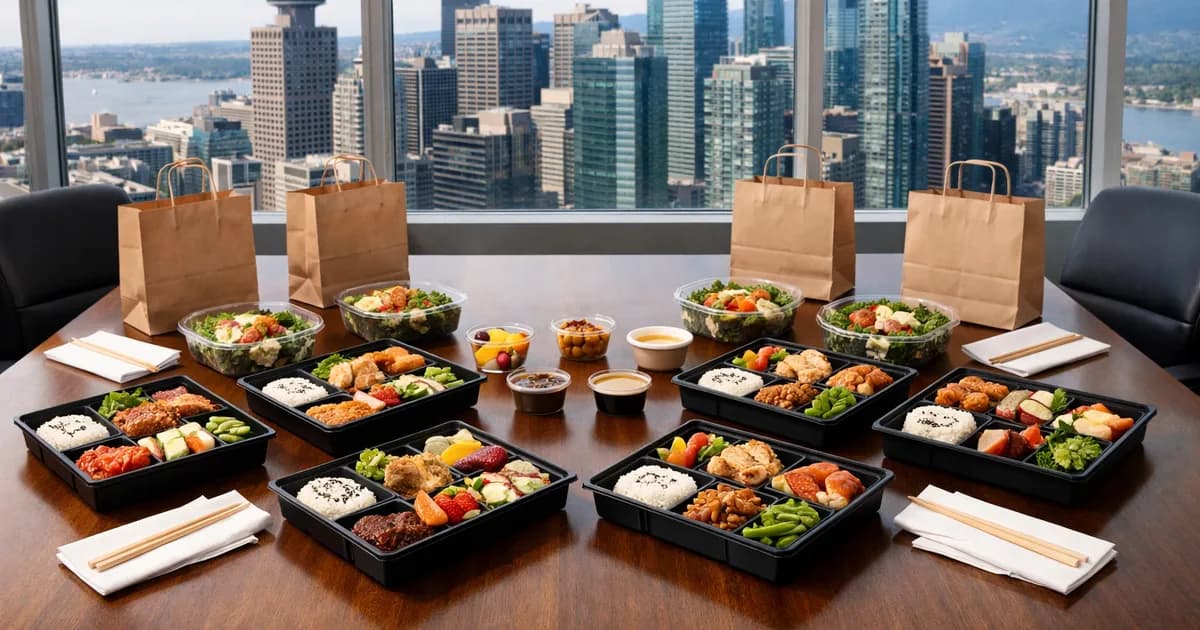
After catering hundreds of office lunches across Metro Vancouver — from downtown towers to Burnaby tech parks to Richmond business centres — I can tell you this: getting hot, healthy, diverse food to a conference room on time is a logistics and culinary challenge that most people underestimate.
This guide covers exactly how to do it right, whether you're an office manager ordering for your team or a catering operator trying to level up your delivery game.
Why Office Lunch Delivery Demands a Vancouver-Specific Playbook
Traffic windows dictate everything. Richmond to Downtown during peak lunch hours (11:45 AM–1:15 PM) can eat up 50 minutes — according to TransLink's Metro Vancouver traffic data, these corridors see maximum congestion during midday commercial delivery windows. Outside peak, it's 30. If you're not padding your schedule with at least a 20-minute buffer for Richmond-area midday runs, food arrives lukewarm and late. I've learned this the hard way — more than once.
Rain is the default, not the exception. From October through April, every delivery is a wet-weather delivery. We tested four different insulated carrier bags specifically to keep food above 65°C for 90 minutes in rainy conditions. That's not a nice-to-have — it's the difference between a repeat client and a lost one.
Vancouver's workforce is genuinely multicultural. A single office order might need to satisfy Korean, South Asian, Chinese, Filipino, and Western Canadian palates in one drop-off. Generic sandwich platters don't cut it here.
What Burnaby and Metro Vancouver Offices Actually Want
Here's what I've learned delivering to Burnaby offices specifically: teams there consistently ask for low-oil, low-salt options. Health-conscious eating isn't a trend in these workplaces — it's the baseline expectation.
- Lighter proteins like grilled chicken, poached salmon, and tofu perform better than heavy braises or fried items
- Grain bowls and salad-forward mains get reordered far more often than pasta trays
- Clearly labelled allergens and dietary tags (vegan, gluten-free, halal) reduce back-and-forth emails by at least half
Burnaby offices also tend to prefer afternoon delivery windows between 2:00 PM and 3:00 PM, which avoids the lunch-hour traffic crunch and aligns with team meeting schedules. Build your route plans around this.
How to Execute a Flawless Office Delivery —
Step by Step
Confirm the menu at least 48 hours before the event. For groups of 50 or more, this is non-negotiable. Ingredient sourcing, prep scheduling, and allergen management all depend on locked-in headcounts and selections.
Plan your route by time of day, not just distance. A delivery to Richmond at noon is a completely different job than the same delivery at 10:30 AM. Map your sequence around real-time traffic patterns, not Google Maps estimates from Sunday afternoon.
Load food into tested insulated carriers, rain or shine. During Vancouver's long wet season, moisture wrecks presentation and drops food temperature fast. Moisture-resistant, insulated bags that maintain 65°C+ for 90 minutes are your core equipment — not optional accessories.
Arrive 10–15 minutes early. Set up before the client's team walks in. This gives you time to plate, arrange labels, and handle any last-second adjustments without anyone watching the clock.
Debrief after every delivery. A quick text or email to the client — "How was everything? Anything to adjust next time?" — closes the loop and builds the kind of trust that turns one-time orders into standing weekly accounts.
Balancing Efficiency, Health, and Variety — The Real Skill
Getting all three right at once is where most catering operators fall short. Efficiency without variety means boring rotations that clients cancel after a month. Variety without health-conscious options alienates half the office. Healthy menus that arrive cold or late don't get reordered.
The operators who win in Vancouver treat all three as equal priorities — and they build their menus, logistics, and client communication systems around that reality from day one.
Last reviewed: March 2026. Data current as of this date.
Introduction
The Evolution of Office Lunch Delivery in Vancouver
After catering hundreds of office lunches across Greater Vancouver — from downtown towers to Burnaby tech parks — I've watched this market shift dramatically. What used to be a stack of pizza boxes in a boardroom is now a serious line item in company culture budgets.
Here's where the market stands and why it matters to anyone operating in this space:
Market Context
- The global office lunch service market hit approximately USD 15.4 billion in 2023 and is projected to reach USD 30.5 billion by 2032, growing at a CAGR of 8.1%[1].
- The Canada foodservice market is expanding at a CAGR of 5.43% from 2025–2033, fueled by consumer spending on diverse foods, shifting eating patterns, and rising demand for specialized foodservices[3].
- Vancouver sits at the center of this growth. As a multicultural hub, the expectation from corporate clients isn't just "feed our team" — it's "feed our team well, on time, with options that respect dietary and cultural diversity."
What This Means on the Ground
I've seen the shift firsthand, especially delivering to Burnaby offices where teams consistently request low-oil, low-salt meals that still taste great. That demand for nutritional quality alongside cultural variety isn't a trend — it's the baseline expectation now.
Office lunch delivery in Greater Vancouver has become a strategic workforce investment that directly impacts:
- Productivity — Teams that eat well together don't lose half their lunch break waiting in drive-throughs or wandering the food court.
- Employee satisfaction — Consistent, high-quality meal programs are a retention tool, especially for hybrid teams using in-office days as collaboration anchors.
- Organizational culture — Sharing diverse, thoughtfully prepared food builds team cohesion in ways that a Slack channel never will.
Local Proof of Concept
My Great Pumpkin has built exactly this kind of operation across Greater Vancouver, serving over 50 corporate clients across 6 cities in the region. The numbers tell the story:
- 4.9 customer rating
- 500+ meals delivered weekly
- Pioneered the integration of authentic Asian cuisine with efficient, reliable meal delivery systems[2]
What makes an operation like this work isn't just the food — it's understanding Vancouver-specific logistics. That means knowing Richmond-to-Downtown takes 50 minutes during peak hours (30 minutes off-peak), pre-building 20-minute buffer windows for Richmond's brutal midday congestion between 11:45 AM and 1:15 PM, and running gear that keeps food above 65°C for 90 minutes even when you're unloading in sideways October rain. These aren't nice-to-haves. They're the operational backbone that separates reliable catering from missed deliveries and lukewarm trays.
Quick Answer
What Makes Vancouver Office Lunch Delivery Unique?
Vancouver office lunch delivery excels through three pillars: meal delivery efficiency (30-minute windows), health-focused menus (featuring fresh Asian cuisine with balanced macronutrients), and multicultural variety (authentic dishes from multiple Asian culinary traditions). My Great Pumpkin delivers customizable meal plans with rotating menus prepared fresh daily, serving teams from 20 to 2,000+ servings across Greater Vancouver.
After catering hundreds of office lunches across Metro Vancouver, I can tell you this market operates differently from anywhere else in Canada. Three factors separate providers who thrive here from those who wash out:
1. Delivery Timing Demands Hyper-Local Route Knowledge
A 30-minute delivery window sounds simple until you're navigating Richmond to Downtown during the midday crunch. Here's what that actually looks like in practice:
- Build your route around traffic reality. Richmond between 11:45 AM and 1:15 PM is brutal — I always pad an extra 20 minutes of buffer into any midday delivery touching that corridor. Richmond to Downtown runs about 50 minutes at peak; outside rush, you can do it in 30.
- Shift delivery windows when clients allow it. What I've learned delivering to Burnaby offices is that many teams actually prefer a 2:00–3:00 PM drop-off over the standard noon slot. It dodges the lunch-hour traffic pile-up and lets the kitchen stagger production more cleanly.
- Protect the food from Vancouver's rain. October through April, every delivery is a rain delivery. We tested four different insulated carrier systems specifically for this — the goal is keeping food above 65°C for at least 90 minutes in wet, cold conditions. That moisture-resistant thermal bag setup is honestly one of the biggest operational edges a Vancouver caterer can have.
2. Health-Focused Menus Are the Baseline, Not a Bonus
Burnaby office clients in particular consistently request low-oil, low-sodium options. This isn't a niche dietary preference here — it's the default expectation. Providers who treat "healthy" as a single sad salad on the menu lose repeat business fast. What works is building every rotating menu around balanced macronutrients from the start, then layering in accommodation for specific restrictions (vegan, halal, gluten-free) without making those feel like afterthoughts.
3. Multicultural Authenticity Is Non-Negotiable
Vancouver's demographic mix — significant Asian, European, and Indigenous populations — means generic Western-only menus fall flat immediately. The teams ordering office lunch here grew up eating Cantonese, Japanese, Korean, Vietnamese, South Asian, and Filipino food at home. They can tell the difference between authentic and performative. Successful providers offer real multicultural variety across multiple Asian culinary traditions and beyond, rotating dishes so a team ordering three times a week never hits menu fatigue.
Planning Lead Times That Actually Work
- Daily/weekly office lunch orders (under 50 servings): Confirm by end of previous business day.
- Large-format events (50+ servings): Lock in the menu at least 48 hours ahead. This gives the kitchen time to source properly and prep without cutting corners on quality or food safety.
Ready to simplify office meals?
Join 100+ Vancouver offices enjoying hassle-free lunch delivery. Free tasting, no contract.
Request a Demo →Understanding Vancouver's Office Lunch Delivery Landscape
Market Dynamics and Growth Drivers
Rising Demand for Workplace Convenience
After catering hundreds of events and daily office lunches across Greater Vancouver, I can tell you the shift toward organized workplace meal programs is real — and accelerating. Harvard Business School research backs up what I see on the ground: a healthy food strategy increases overall productivity by 16% and reduces absenteeism by 27%[4]. Vancouver's work culture moves fast, and employees don't want to burn half their break hunting for food in the rain.
Digital ordering has changed the game. Pre-order systems like My Great Pumpkin's let teams reserve meals 24 hours in advance, personalize for dietary needs, and consolidate everything into simplified monthly billing[2]. That structure matters — it's what turns a chaotic lunch hour into a predictable, low-friction part of the workday.
Health and Wellness Prioritization
Here's a stat that matches what I hear constantly from Burnaby office managers: studies show a 22% increase in concentration during afternoon meetings when a healthy lunch is consumed, versus a 30% performance drop after heavy, processed meals[4]. Burnaby offices in particular have been trending hard toward low-oil, low-salt, nutrient-dense options. It's not a fad — these teams track the difference in their afternoon output.
My Great Pumpkin's fresh-prepared Asian cuisine leans into this directly: lean proteins, complex carbohydrates, and abundant vegetables that deliver sustained energy without the post-lunch crash. The rotating menu keeps things interesting while maintaining nutritional balance across every offering[2].
Multicultural Food Expectations
Vancouver's population is approximately 50% visible minorities, with particularly strong Asian communities — especially in Richmond and parts of Burnaby. Generic sandwich-and-wrap lunch programs don't cut it here. The workforce expects authentic multicultural options that reflect the city's actual food culture, not watered-down fusion.
My Great Pumpkin specializes in authentic Asian cuisine, prepared fresh every morning and delivered directly to offices across Greater Vancouver. That focus on cultural authenticity is a genuine differentiator from competitors offering Americanized versions of international dishes[2].
Efficiency Considerations in Corporate Meal Programs
Time-Saving Logistics
The average office worker gains 47 minutes of effective work per day through properly organized meal programs that eliminate individual lunch procurement time[4]. That number aligns with what I've observed — when people aren't standing in line at food courts or circling for parking, they either eat earlier or use the time productively.
But "efficient delivery" means nothing without route discipline. Here's what I've learned operating across Metro Vancouver:
- Plan routes around peak congestion. Richmond to Downtown during peak hours takes a full 50 minutes. Off-peak, it's 30. That gap can wreck your delivery window if you're not planning for it.
- Buffer Richmond midday runs. The Richmond core between 11:45 AM and 1:15 PM is gridlocked. I always build in a minimum 20-minute buffer for any delivery touching that zone during lunch service.
- Schedule Burnaby offices for 2:00–3:00 PM when possible. What I've learned delivering to Burnaby offices is that clients there consistently prefer an early-afternoon window — it sidesteps the noon traffic crunch and fits their meeting schedules better.
- Invest in rain-season gear. October through April, Vancouver is wet. We tested four different insulated delivery bags specifically to keep food above 65°C for 90 minutes in rainy conditions. That moisture-resistant thermal performance is a core operational advantage — food that arrives lukewarm or soggy destroys client trust instantly.
- Confirm large orders early. For any event serving 50 people or more, lock in the menu at least 48 hours in advance. Last-minute changes at scale cascade into procurement problems, prep bottlenecks, and delivery timing issues.
My Great Pumpkin's daily delivery programs operate on predictable schedules across 6 cities in Greater Vancouver, giving teams the consistency they need to plan around reliable meal times[2].
Scalability for Growing Teams
Vancouver's tech sector and professional services firms grow in bursts — headcounts shift, offices open, teams consolidate. A meal program that can't flex with those changes becomes a liability fast.
My Great Pumpkin provides scalable solutions from 20 to 2,000 servings, covering startups through large corporate events. That range means businesses don't have to switch providers as they grow or restructure[2].
Cost-Effective Meal Management
ROI analysis shows that an annual investment of $1,000 per employee in workplace nutrition generates estimated value between $2,400 and $3,700 in productivity gains, reduced absenteeism, and enhanced engagement[4]. I've watched finance teams hesitate at the upfront cost — until they see those numbers in the context of their own turnover and sick-day data.
The operational key is reducing administrative drag. Corporate meal programs with pre-negotiated rates and consolidated billing free up time for office managers and give finance teams clean budget visibility. My Great Pumpkin's customizable meal plans with monthly billing deliver exactly that — cost transparency without the per-order chaos[2].
Health-Focused Office Lunch Delivery: Nutrition Meets Performance
The Productivity-Nutrition Connection
Cognitive Performance Optimization
After catering hundreds of office lunches across Burnaby and Downtown Vancouver, I can tell you the link between what people eat and how they perform in the afternoon is not abstract — it's something office managers notice and report back to us on.
The research backs this up: healthy, balanced meals improve response time on complex tasks by 18%, sharpen decision-making by 23%, and boost memorization capacity by 27% during strategic meetings[4]. In Vancouver's knowledge economy — tech firms on the Drive, finance teams Downtown, biotech offices near Broadway — that cognitive edge matters.
Here's the macronutrient target range that consistently keeps teams sharp through afternoon work:
- Quality proteins: 15–20g per serving
- Sustaining lipids (healthy fats): 10–15g per serving
- Complex carbohydrates: 30–40g per serving
Asian cuisine hits these proportions naturally. Dishes that combine lean proteins, healthy fats, and whole grains deliver the right balance without needing to engineer something artificial[4].
Energy Stabilization Throughout the Workday
One stat I share with every office manager I work with: teams that eat nutritionally balanced lunches experience a 31% reduction in post-lunch "micro-naps" compared to those eating heavy, processed food[4]. That's the difference between a productive 2–4pm and a dead zone.
What I've learned delivering to Burnaby offices specifically — those teams tend to request lower oil, lower sodium meals. They're already tuned in to the connection between a lighter lunch and a better afternoon. We lean hard into fresh-prepared meals with authentic Asian preparation methods that preserve nutrient integrity, avoid blood sugar spikes, and actually taste good enough that people look forward to lunch instead of just eating whatever's available[2].
Accommodating Dietary Requirements
Common Dietary Restrictions in Vancouver Workplaces
Vancouver is one of the most dietary-diverse cities I've ever worked in. On any given office order of 30 meals, I expect at least four or five distinct dietary needs. The key principle: handle every restriction as a standard menu option, not a special request. The moment someone feels singled out, your catering program has failed.
Here's what we plan around for every office delivery:
| Dietary Need | Percentage of Workforce | Menu Considerations |
|---|---|---|
| Vegetarian | 15-20% | Plant-based protein sources, variety beyond salads |
| Vegan | 5-10% | Complete protein combinations, B12-fortified options |
| Gluten-free | 8-12% | Rice-based dishes, clear ingredient labeling |
| Halal | 10-15% | Certified protein sources, separate preparation |
| Dairy-free | 6-10% | Plant-based alternatives, clearly labeled dishes |
Follow these steps to manage dietary requirements without chaos:
- Collect restrictions at the time of ordering — build this into your order form, not as a follow-up email. Every team member should specify needs upfront.
- Design menus where 60–70% of dishes naturally satisfy multiple restrictions — rice-based Asian dishes are ideal here because they're inherently gluten-free and often dairy-free.
- Label every single container clearly — dietary category, key allergens, and protein source. No guessing.
- Separate halal and allergen-sensitive items during prep and transport — cross-contamination isn't just a quality issue, it's a liability.
- For large orders (50+ people), confirm the final dietary breakdown at least 48 hours before delivery — this gives the kitchen enough lead time to source certified ingredients and prep separate batches properly.
My Great Pumpkin's customizable meal plans are built around this exact workflow, so teams can specify requirements during ordering and every employee gets a meal that fits without being made to feel like an exception[2].
Nutritional Transparency
Vancouver office workers — especially in Burnaby and Downtown — increasingly expect to see exactly what's in their food. That means:
- Calorie counts per serving
- Macronutrient breakdowns (protein, fat, carbohydrates)
- Allergen warnings clearly visible on packaging
This isn't optional anymore. When people can see the numbers, they make choices that align with their own health goals, and they trust the catering program enough to stick with it week after week.
My Great Pumpkin's fresh preparation methods make this transparency straightforward — when you're cooking from whole ingredients daily rather than reheating processed batches, you know exactly what's in every container. The result is meals that meet strict nutritional standards while delivering authentic flavors people actually want to eat, which is the only way healthy office catering becomes sustainable long-term[2].
Multicultural Variety: Celebrating Vancouver's Diversity Through Food
The Business Case for Multicultural Menus
Employee Satisfaction and Inclusion
After years of catering to offices across Burnaby, Richmond, and Downtown Vancouver, I can tell you this without hesitation: a Western-only menu will fall flat in most Greater Vancouver workplaces. The workforce here is genuinely multicultural — large Asian, Middle Eastern, Latin American, and other communities make up the majority at many companies. People notice when their food traditions are invisible on a lunch menu, and that disengagement is real.
My Great Pumpkin's focus on authentic Asian cuisine directly addresses the preferences of Vancouver's largest cultural communities while giving every employee access to high-quality international flavors. Here's what that shift actually does in practice:
- Employees stop skipping the office lunch program. When people see dishes they grew up with — prepared properly — participation goes up fast.
- Lunch becomes something people look forward to, not just a functional break. That's a measurable morale boost, especially in Burnaby offices where I've seen teams specifically request lighter, lower-oil, lower-salt Asian dishes that match their everyday eating habits.
- Inclusion becomes tangible, not theoretical. Food is one of the most immediate ways to show a diverse team that their backgrounds matter[2].
Expanding Culinary Horizons
Diverse menus do double duty: they keep things interesting for everyone and they build genuine cultural appreciation across a team. I've watched office groups bond over a shared first experience with Korean bibimbap or a good bowl of pho — those small moments matter for team cohesion.
The key to sustaining that energy is structured rotation. Here's how My Great Pumpkin keeps it fresh without sacrificing quality:
- Rotate through distinct Asian culinary traditions each week — Chinese, Japanese, Korean, Thai, Vietnamese, and more.
- Follow a 4-week menu rotation cycle so employees always know variety is coming, but the kitchen has enough lead time to source authentic ingredients and prep properly.
- Track which dishes get the strongest response and adjust future rotations accordingly. Menu fatigue kills participation faster than anything else[2].
Authentic Asian Cuisine in Office Settings
Quality Standards for Multicultural Offerings
Vancouver diners are some of the most food-literate in the country — especially when it comes to Asian cuisine. Richmond alone has world-class Cantonese, Shanghainese, and Taiwanese restaurants that set a very high bar. People here know the difference between a properly wok-fired dish and a generic stir-fry labeled "Asian fusion."
My Great Pumpkin meets that standard by following three non-negotiable practices:
- Prepare all meals fresh every morning using traditional Asian cooking techniques — no batch-and-reheat shortcuts.
- Source authentic ingredients that match the dish's origin. Proper doubanjiang for ma po tofu, real fish sauce in pad thai, quality sesame oil in Korean dishes. Substitutions show.
- Apply cultural knowledge to every recipe. Dishes need to satisfy employees who grew up eating them, not just approximate the flavors for a general audience[2].
Popular Asian Dishes for Office Catering
| Cuisine Type | Popular Office Dishes | Dietary Flexibility |
|---|---|---|
| Chinese | Kung Pao chicken, ma po tofu, fried rice varieties | Vegetarian, gluten-free options available |
| Japanese | Teriyaki salmon, vegetable tempura, sushi rolls | Halal, vegetarian variations |
| Korean | Bibimbap, bulgogi, kimchi pancakes | Vegan, gluten-free adaptations |
| Thai | Pad thai, green curry, tom yum soup | Vegetarian, vegan modifications |
| Vietnamese | Pho, banh mi, spring rolls | Halal, gluten-free versions |
A few practical notes from delivering these dishes across Metro Vancouver:
- Bold flavors hold up well during transport, which matters when you're factoring in a 50-minute delivery window from Richmond to Downtown during peak hours or dealing with rain-season logistics from October through April. Curries, braises, and soups maintain quality inside our tested insulated bags far better than delicate, temperature-sensitive Western dishes.
- Nutritional profiles are strong across the board. Many of these dishes are naturally high in vegetables and lean proteins — exactly what Burnaby office clients ask for when they request lower-oil, lower-salt options.
- Dietary accommodation is built into Asian cooking, not bolted on. Tofu-based swaps, rice-noodle substitutions for gluten-free needs, and plant-forward dishes like bibimbap make it straightforward to cover most dietary requirements without creating a separate "special" menu.
My Great Pumpkin's deep expertise in these cuisines means every dish is prepared with proper technique and authentic flavor — whether it's feeding a team of 10 in a Burnaby tech office or a 50-person event Downtown[2].
Implementing Office Lunch Programs: Practical Strategies
Selecting the Right Service Provider
Essential Evaluation Criteria
| Criterion | Key Considerations | My Great Pumpkin's Approach |
|---|---|---|
| Delivery Reliability | On-time performance, communication protocols | 6-city coverage, predictable scheduling |
| Menu Variety | Rotation frequency, dietary accommodations | Rotating menus, customizable plans |
| Quality Consistency | Ingredient sourcing, preparation standards | Fresh daily preparation, 4.9 rating |
| Scalability | Minimum/maximum orders, growth accommodation | 20-2,000+ servings capacity |
| Cost Transparency | Pricing structure, billing simplicity | Monthly billing, clear pricing |
After years of running lunch deliveries across Metro Vancouver, here's the evaluation process I'd walk any office manager through:
- Request a trial period before signing anything long-term. Have decision-makers physically sit down with the food — texture, temperature, portion size, and seasoning all matter more than a menu PDF. My Great Pumpkin offers free tasting sessions so you can evaluate meal quality firsthand without commitment[2].
- Test the provider's delivery reliability during the worst conditions, not the best. Any caterer can deliver on a sunny Tuesday in July. Ask how they handle the October-to-April rain season. We spent months testing four different insulated delivery bags specifically to keep food above 65°C for 90 minutes in wet Vancouver weather — that's the kind of operational detail that separates reliable providers from everyone else.
- Verify their knowledge of local traffic patterns. A Richmond-to-Downtown run takes 30 minutes off-peak but balloons to 50 minutes during rush hour. If your provider doesn't automatically build a 20-minute buffer for Richmond-area deliveries between 11:45 AM and 1:15 PM, they haven't done enough local routes.
- Confirm scalability with specific numbers. Ask the provider what their minimum and maximum order looks like. For large events (50+ people), insist on at least 48 hours of lead time for menu confirmation — anything less invites ingredient shortages and last-minute substitutions.
- Demand clear, predictable pricing. Monthly billing with itemized costs per head beats vague quotes every time. If a provider can't give you a straightforward price breakdown on the first call, that's a red flag.
Integration with Workplace Culture
A meal program only works if it reflects how your team actually eats. What I've learned delivering to Burnaby offices over the years: those teams consistently prefer lower-oil, lower-sodium options. Tech companies in the same area tend to prioritize health-conscious and sustainable sourcing. Creative agencies downtown lean toward more adventurous, rotating selections.
Match your provider to your people, not the other way around:
- Survey your team before choosing a menu direction. Don't assume preferences — a five-question form about dietary needs, flavor preferences, and portion expectations takes ten minutes and prevents months of wasted food.
- Choose a provider that adapts to you. My Great Pumpkin's customizable approach handles both teams that want consistent daily meals and those that need varied weekly rotations. The service bends to each client's culture rather than imposing a fixed menu[2].
- Revisit the fit quarterly. Teams change. New hires bring new dietary requirements. A program that felt perfect in January might need adjustments by April.
Maximizing Employee Adoption
Communication Strategies
The biggest adoption killer I see across Vancouver offices isn't bad food — it's bad communication. People don't use what they don't understand.
- Frame the program as a wellness investment, not a perk. Lead with specifics: "This saves you an average of $8–12 per lunch compared to ordering individually from nearby restaurants, and the meals are nutritionally balanced."
- Make the ordering process dead simple. If employees need more than two clicks or one email to participate, adoption drops fast. Distribute a one-page guide covering how to order, menu rotation schedules, and who to contact for dietary accommodations.
- Share real results. Productivity improvements, participation rates, employee satisfaction scores — concrete data builds momentum. My Great Pumpkin's track record with 50+ corporate clients across Metro Vancouver provides a strong proof point when you need internal buy-in[2].
- Schedule deliveries around your team's actual workflow. Burnaby offices I work with prefer 2:00–3:00 PM delivery windows to avoid the noon-hour congestion — both on the roads and in their lobbies. Ask your team when they actually want to eat, then build the delivery schedule backward from there.
Feedback Integration
- Run a short survey after the first two weeks. Ask three things: What did you enjoy? What would you change? Any dietary needs we missed? Keep it to under two minutes.
- Set up an ongoing feedback channel. A shared Slack channel, a suggestion box in the kitchen, or a monthly Google Form — pick whatever your team will actually use.
- Hold your provider accountable to act on feedback. Responsive caterers adjust menus, delivery timing, and dietary accommodations based on what they hear. If you report an issue and nothing changes within two delivery cycles, escalate or switch. My Great Pumpkin's sustained 4.9 customer rating exists because the feedback loop actually closes — adjustments happen fast[2].
- Update dietary requirement lists at least once per quarter. New allergies, new team members, changing preferences — stale data leads to wasted meals and unhappy employees.
The Future of Office Lunch Delivery in Vancouver
Emerging Trends
Sustainability Focus
After years of catering to Vancouver offices, I can tell you — sustainability isn't a nice-to-have anymore. It's a baseline expectation. The workforce here, especially in Downtown and Burnaby tech corridors, will flat-out ask where your ingredients come from and what your packaging looks like before they even ask about the menu.
Here's how to stay ahead of this as a practitioner:
- Source locally first. Build relationships with Fraser Valley farms and Richmond-based suppliers. This cuts transportation emissions and gives you a genuine story to tell clients — not greenwashing, but actual short-supply-chain sourcing.
- Prep fresh daily. Batch-cooking the morning of delivery slashes food waste compared to pre-packaged alternatives. Yes, it means earlier mornings, but waste disposal costs drop and clients notice the quality difference immediately.
- Minimize packaging aggressively. Switch to compostable containers and ditch single-use plastics entirely. Vancouver clients expect this, and the city's composting infrastructure actually supports it — unlike many other markets.
Technology Integration
The ordering side of catering has changed dramatically in Greater Vancouver. Clients don't want to email a PDF menu back and forth anymore. They want to tap a phone screen, flag their allergies, and track the delivery van in real time.
What actually matters from an operations standpoint:
- Implement a pre-order system. Let employees lock in their selections 24 hours ahead. This gives your kitchen accurate counts and eliminates the guesswork that leads to over-prepping or shortages. My Great Pumpkin's pre-order system is a solid example of how technology enhances convenience without compromising service quality[2].
- Enable dietary preference tracking. Store individual preferences — halal, gluten-free, low-sodium — so repeat clients don't have to re-enter details every order. Burnaby office clients especially lean toward low-oil, low-salt options, and remembering that earns you long-term contracts.
- Offer real-time delivery tracking. This is huge for office managers. When you're navigating Richmond to Downtown during peak hours — a route that takes 50 minutes in traffic versus 30 minutes off-peak — clients want visibility, not radio silence. A live tracking link reduces "where's my food?" calls by at least half.
- Collect feedback digitally. Build a simple rating or comment feature into your platform. You'll catch problems before they become cancellations, and you'll spot menu trends you'd never notice otherwise.
Hybrid Work Accommodations
Hybrid work has made headcount the single biggest headache in Vancouver office catering. Monday might bring 20 people into a Burnaby office; Wednesday might bring 80. If your model requires locked-in numbers a week out, you'll lose clients fast.
Handle this with a practical system:
- Set a rolling cut-off window. For standard office lunches (under 50 people), allow order adjustments up to the morning of delivery. For large events (50+ people), require menu confirmation at least 48 hours in advance — your kitchen needs that lead time for sourcing and prep.
- Build buffer into your prep, not your pricing. Prepare 10–15% above confirmed headcount for items that hold well (grain bowls, wraps, salads). This covers walk-ins without creating massive waste.
- Offer modular meal formats. Design menus around components that scale up or down easily — build-your-own bowl stations, taco bars, sandwich platters with separate protein trays. These formats absorb headcount swings far better than individually plated meals.
- Schedule delivery around actual office patterns. Many Burnaby offices prefer a 2:00–3:00 PM delivery window rather than the standard lunch rush, which also helps you avoid the brutal 11:45 AM–1:15 PM traffic snarl in Richmond. Build your route plans around these realities, not around assumptions.
Strategic Investment in Workplace Nutrition
Office lunch delivery across Greater Vancouver is a workforce investment — not just a convenience line item. After running catering operations from Richmond to Downtown and across Burnaby for years, I can tell you the programs that actually stick are the ones built on three pillars: delivery efficiency, health-focused nutrition, and multicultural variety that reflects Vancouver's diverse professional community.
My Great Pumpkin is a strong example of how a specialized provider creates real value. Authentic Asian cuisine, logistics tuned for Metro Vancouver traffic realities, and the flexibility to scale — that's what keeps 500+ weekly meals moving to 50+ corporate clients at a 4.9 customer rating. Programs like this prove you can hit operational targets, nutritional standards, and cultural diversity expectations all at once.
When evaluating or upgrading your office meal program, screen providers against these six criteria — in order of operational impact:
- Reliable multi-city delivery coverage — The provider must serve 6+ cities across Greater Vancouver. Richmond-to-Downtown alone can swing from 30 minutes off-peak to 50+ during lunch rush. If they can't navigate that with built-in buffer time, food arrives lukewarm or late.
- Authentic multicultural menus — Go beyond generic Western fare. Vancouver offices expect real variety — Asian, South Asian, Middle Eastern — prepared by people who know the cuisine, not assembled from a formula.
- Fresh daily preparation with nutritional balance — Especially for Burnaby office clients, I've seen the clear preference: low oil, low salt, lighter meals that don't put people to sleep at 2pm. Daily prep — not reheated batch cooking — is non-negotiable.
- Scalability from small teams to large events — Your provider should handle a 20-person team lunch on Tuesday and a 2,000-person corporate event on Friday without quality dropping off. Ask how they manage the jump.
- Customizable plans for dietary restrictions — Allergies, halal, vegetarian, vegan — if the provider can't flex menus per order, they'll create problems you'll hear about from HR.
- Transparent pricing with simplified billing — One invoice, clear per-head costs, no surprise surcharges for delivery zones or last-minute headcount changes.
The measurable return on getting this right:
- 16% increase in workforce productivity
- 27% decrease in absenteeism
- Measurably higher employee satisfaction scores
That makes a well-run office lunch program one of the highest-ROI workplace investments available — dollar for dollar, it outperforms most perks I've seen companies throw money at.
Discover My Great Pumpkin's Office Lunch Solutions
Experience how authentic Asian cuisine elevates workplace dining through My Great Pumpkin's free tasting session. No commitment required—just fresh meals delivered daily across Greater Vancouver.
Schedule your complimentary tasting: https://www.mygreatpumpkin.com/tasting
Looking for Vancouver's Asian-fusion meal partner?
The Storm Cafe delivers fresh bento boxes, rice bowls, and catering platters across Metro Vancouver — from Richmond to North Van. Retail orders, family meals, and corporate lunches all in one place.
References
[1] DataIntelo, "Office Lunch Service Market Report | Global Forecast From 2025 To 2033," 2023. The global office lunch service market size was valued at approximately USD 15.4 billion in 2023 and is projected to reach around USD 30.5 billion by 2032, growing at a CAGR of 8.1%. https://dataintelo.com/report/global-office-lunch-service-market
[2] My Great Pumpkin, "Vancouver's Trusted Meal Partner," 2025. From corporate lunches to special events, we bring authentic Asian cuisine directly to your door across Greater Vancouver. 500+ meals per week, 4.9 customer rating, 50+ corporate clients, 6 cities covered. https://www.mygreatpumpkin.com/
[3] Research and Markets, "Canada Foodservice Market Forecasts 2025-2033," January 2025. The Canada foodservice market is expanding at a CAGR of 5.43% from 2025-2033 due to increased consumers' spending on different foods, changed eating patterns, and high consumer demand for diverse foodservices. https://finance.yahoo.com/news/canada-foodservice-market-forecasts-2025-110100336.html
[4] Lacai, "Healthy Food at Work: Incredible way to boost your mood 2025," April 2025. Harvard Business School research demonstrates that healthy food at work strategy increases overall productivity by 16% and reduces absenteeism by 27%. A 22% increase in concentration during afternoon meetings when a healthy lunch is consumed, compared to a 30% performance drop after heavy meals. https://lacai.be/blog-post/healthy-food-at-work-2025/
[5] BC Centre for Disease Control, "Food Premises Guidelines for Food Service Operations," 2026. https://www.bccdc.ca/health-professionals/professional-resources/food-premises-guidelines
[6] TransLink, "Metro Vancouver Transit and Traffic Data," 2026. https://www.translink.ca/
Frequently Asked Questions
How far in advance do I need to place my office lunch order?
For regular office lunches under 50 people, I recommend confirming your order by the end of the previous business day. For larger events serving 50 or more, you absolutely need to lock in the menu at least 48 hours ahead. I've learned this from running hundreds of deliveries across Metro Vancouver — that lead time isn't padding, it's what gives the kitchen enough time to source quality ingredients and prep properly without cutting corners.
Can you handle deliveries during Vancouver's rainy season?
Absolutely — and this is where local experience makes a huge difference. We tested four different insulated carrier systems specifically for Vancouver's October-to-April rain season, aiming to keep food above 65°C for at least 90 minutes in wet conditions. Every delivery from October through April is essentially a rain delivery here, so moisture-resistant thermal bags aren't optional equipment — they're core operational gear that separates reliable caterers from everyone else.
How do you handle Richmond-to-Downtown deliveries during lunch rush?
Route planning around traffic is everything in this market. Richmond to Downtown takes 30 minutes off-peak, but balloons to 50 minutes during the lunch rush between 11:45 AM and 1:15 PM. I always build in a minimum 20-minute buffer for any Richmond-area delivery during that window. For Burnaby offices, we've found many teams actually prefer 2:00–3:00 PM delivery windows, which sidesteps the worst traffic and fits their meeting schedules better.
What dietary restrictions can you accommodate?
We handle vegetarian, vegan, gluten-free, halal, and dairy-free requirements as standard menu options, not special requests. On any given office order of 30 meals in Vancouver, I expect at least four or five distinct dietary needs. The key is collecting all restrictions at the time of ordering and clearly labeling every container with dietary categories and allergens. For large orders, we confirm the final dietary breakdown 48 hours before delivery to ensure proper sourcing and separate preparation.
How do you maintain food quality for teams that want lighter, healthier options?
This comes up constantly with Burnaby office clients — they specifically request low-oil, low-salt meals that don't cause afternoon energy crashes. We prepare all meals fresh every morning using traditional Asian cooking techniques that naturally deliver lean proteins, complex carbohydrates, and abundant vegetables. The nutritional profile hits 15-20g quality protein, 10-15g healthy fats, and 30-40g complex carbs per serving, which research shows improves afternoon concentration by 22% compared to heavy, processed meals.
Related Articles
Catering for Remote Team Monthly Meetups in Vancouver
Make remote team meetups memorable with catered meals in Vancouver. Flexible venues, group sizes 10-
Multi-Floor Office Meal Delivery in Vancouver
Catering for multi-floor offices in Vancouver. Coordinated delivery across floors, departments, and
Late-Night Office Dinners for Vancouver Tech Startups
Late-night dinner delivery for Vancouver tech teams working after hours. Hot meals at 7-9 PM from $1
Ready to streamline your office meals?
Join 100+ Vancouver offices enjoying hassle-free lunch delivery.
Request a Demo